How to Plant Aquarium Grass Seeds: Easy Guide
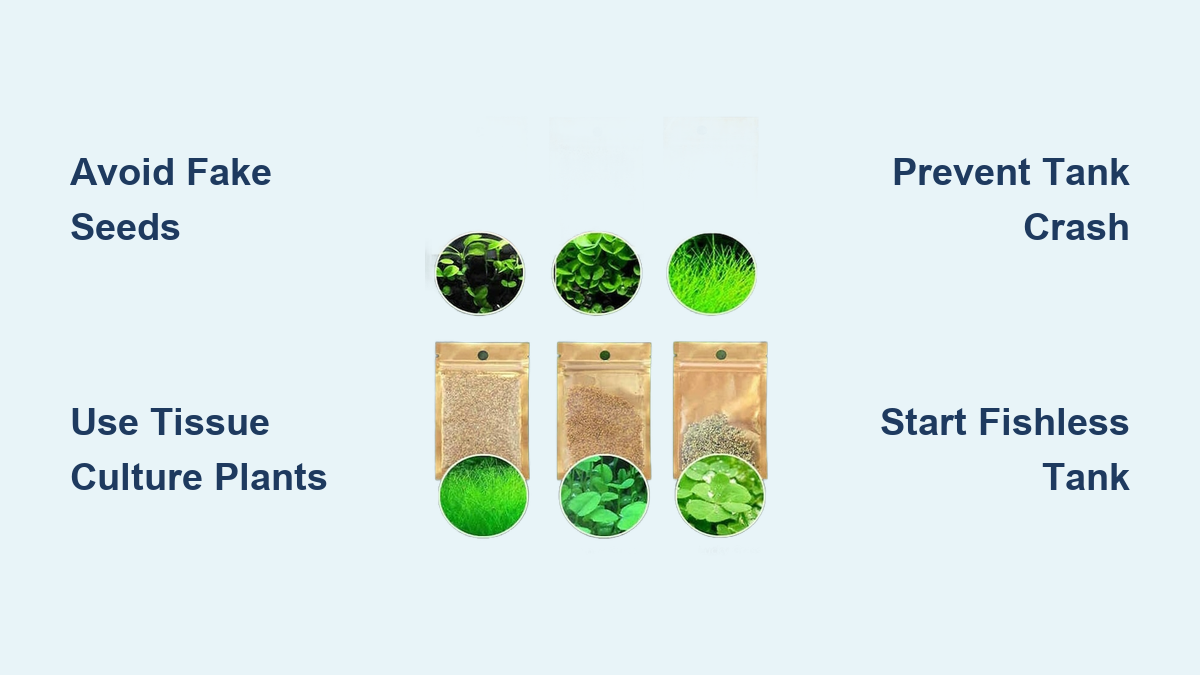
That $2.65 packet of “aquarium grass seeds” promises a lush underwater carpet with minimal effort. You’ve probably seen them—small vials labeled “dwarf baby tears seeds” or “Monte Carlo carpet grass” that seem like the perfect budget-friendly solution for your aquascape. But here’s the hard truth: these seeds will likely destroy your tank within weeks. The vast majority of seeds marketed as “aquarium grass seeds” aren’t aquatic plants at all—they’re terrestrial species like Dracaena, Selaginella, or clover that cannot survive long-term when fully submerged. This guide reveals exactly what happens when you plant these deceptive seeds and provides the only safe path forward if you’ve already taken the plunge.
Why Your “Aquarium Grass Seeds” Keep Dying Within Weeks
The Germination Trap That Lures Beginners
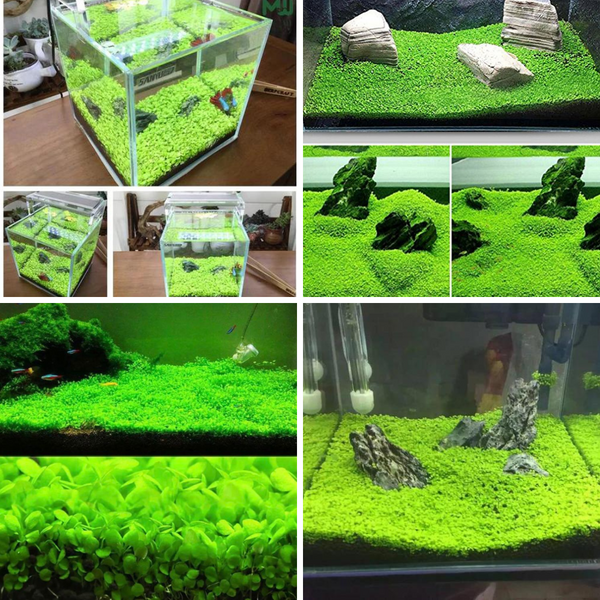
Those tiny brown seeds (typically 1-2mm) sprout quickly in moist conditions, creating a dense green carpet within 7-14 days that looks exactly like the underwater lawn you wanted. This initial success fools most hobbyists into believing they’ve found an affordable solution. But this lush appearance is temporary—these terrestrial plants are merely completing their natural life cycle before succumbing to the aquatic environment. The cotyledons (first leaves) often resemble clover, giving the false impression of healthy growth.
What Really Happens at Week 3: The Inevitable Meltdown
At the 3-4 week mark, your beautiful carpet begins deteriorating rapidly. The leaves turn translucent and slimy as the plant tissue “melts”—a clear sign these aren’t true aquatic species. Roots fail to anchor properly in the substrate, causing entire sections to float away. Within 4-8 weeks, you’ll face a tank crisis: decaying plant matter releases ammonia spikes that crash your nitrogen cycle, trigger explosive algae blooms, and endanger your fish and shrimp. This pattern repeats consistently across thousands of hobbyist reports.
The $2.65 Seed Packet Scam: What You’re Actually Buying
Common Misrepresentations to Watch For
That packet labeled “Hemianthus callitrichoides seeds” is almost certainly fake—true HC Cuba is never grown from seed in the aquarium trade. Similarly, “Monte Carlo seeds” don’t exist commercially; genuine Micranthemum tweediei is propagated vegetatively. Instead, you’re likely getting:
– Dracaena seeds: Terrestrial plants that die when submerged
– Selaginella species: Marketed as “aquatic moss” but actually forest floor plants
– Clover varieties: Cheap fillers that sprout quickly but melt underwater
– Ophiopogon or Acorus: Often sold as carpet plants but incompatible with full submersion
Why True Aquatic Plants Don’t Come as Seeds
Genuine carpeting species like Dwarf Baby Tears or Dwarf Hairgrass rarely produce viable, storable seeds in cultivation. They’ve evolved to propagate vegetatively through runners in aquatic environments. Reputable aquatic nurseries sell these plants as tissue culture cups or potted specimens—not seeds—because that’s how they naturally reproduce. If a seller offers “seeds” for these plants, it’s a red flag they’re selling terrestrial imposters.
How to Plant Aquarium Grass Seeds (With Realistic Expectations)
The Dry Start Method: Your Only Chance at Temporary Success
Only attempt this in an unstocked, fishless tank—planting these seeds in an established aquarium risks catastrophic failure.
- Drain and prepare: Remove all water and ensure your aqua soil substrate is level and slightly damp (not wet)
- Sprinkle sparingly: Distribute seeds evenly in a thin layer—overcrowding guarantees failure
- Mist and seal: Lightly mist with dechlorinated water, then cover the tank completely with plastic wrap
- Maintain humidity: Keep the tank covered for 2-3 weeks under 12-14 hours of light daily
- Monitor growth: Germination typically occurs in 7-14 days; resist the urge to flood the tank
The Critical 3-Week Window: What to Do Next
When your carpet reaches 1-2 inches tall (around week 3), you face a critical decision point. Flooding the tank now will trigger the inevitable die-off within days. Your only safe options:
– Option A (Recommended): Remove all plants and start over with true aquatic species
– Option B (High Risk): Gradually lower water levels over 2-3 weeks to acclimate plants (rarely succeeds)
– Option C (Emergency): Proceed to the tank rescue protocol below if plants show melting
Emergency Protocol: Saving Your Tank After Seed Die-Off
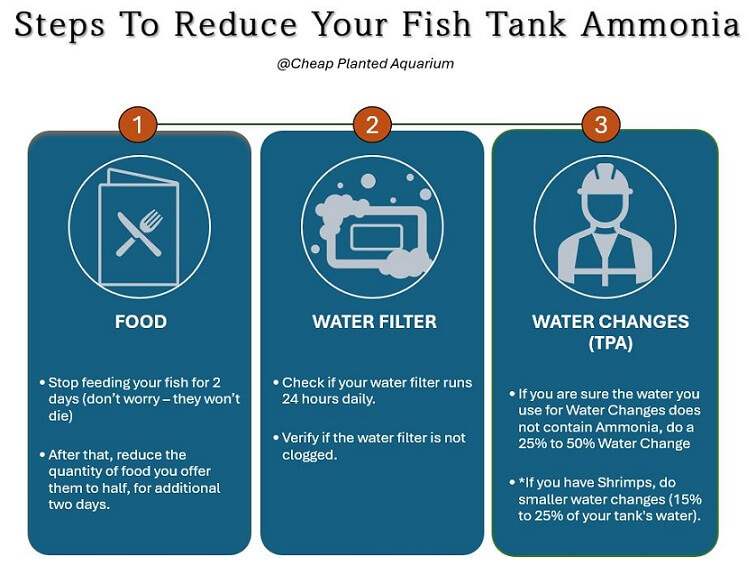
Immediate Action Steps When Melting Begins
If you see translucent, slimy leaves or floating plant sections, act within 48 hours:
1. Remove visible plants: Use tweezers to extract every green fragment from the substrate
2. Vacuum thoroughly: Siphon the top 1-2 inches of substrate to remove hidden seeds
3. Perform massive water changes: 50% immediately, then 30% daily for 5 days
4. Boost filtration: Add activated carbon and increase aeration to combat ammonia spikes
Testing and Recovery Timeline
After cleanup, monitor these critical parameters:
– Ammonia: Test daily for 10 days (should remain at 0 ppm)
– Nitrites: Check every other day (elevated levels indicate ongoing decomposition)
– pH stability: Significant drops suggest excessive organic decay
Do not add fish for at least 14 days—many beginners rush this step and lose livestock to residual ammonia. The tank must pass 5 consecutive days of zero ammonia and nitrites before considering restocking.
4 True Aquatic Carpet Plants That Won’t Crash Your Tank
Dwarf Hairgrass: The Beginner’s Best Bet
Eleocharis parvula spreads through runners to form a dense, grass-like carpet. Unlike seed scams, this true aquatic thrives submerged with:
– Low to medium light requirements
– No CO2 needed (though it helps growth)
– Slow but steady establishment (3-6 months for full coverage)
– Sold only as potted plants or tissue culture—never as seeds
Monte Carlo: The Popular Alternative (When Purchased Correctly)
Real Micranthemum tweediei creates a vibrant green carpet but requires:
– Medium to high lighting
– CO2 injection for optimal growth
– Patience (4-8 weeks to establish runners)
– Tissue culture purchase (avoid “seed” listings at all costs)
Why Tissue Culture Cups Are Worth 10x the Price of Seed Packets

The $2.65 vs. $25 Reality Check
That cheap seed packet seems economical until you factor in:
– Time lost: 4-8 weeks of failed growth
– Water quality damage: Potential fish losses
– Cleanup costs: Additional water treatments
– Replacement plants: You’ll still need to buy proper carpet plants
A $25 tissue culture cup of Dwarf Baby Tears delivers:
– Guaranteed species identification
– Pest and algae-free plants
– Immediate establishment potential
– No ecosystem risk to your tank
How to Verify Authentic Aquatic Plants
Before purchasing:
1. Check the packaging: Must say “tissue culture,” “in-vitro,” or “potted aquatic plant”
2. Research the seller: Stick to reputable aquarium plant specialists
3. Examine product photos: Real carpet plants show established root systems
4. Read the description: Should mention “submerged growth” not “seeds”
Beginner’s Checklist: Building a Stable Carpet Without Seed Disasters
Your First 30-Day Planting Plan
Week 1: Research proper carpet plants and purchase from trusted sources
Week 2: Set up tank with appropriate substrate (no seeds!)
Week 3: Plant small clusters of true aquatic carpet plants using tweezers
Week 4: Monitor growth and perform regular water tests
Critical Equipment You Actually Need
- Quality LED lighting: 6500K spectrum, 2-3 watts per gallon
- Nutrient-rich substrate: Aqua soil specifically for planted tanks
- Liquid fertilizers: Comprehensive macro and micronutrient solution
- CO2 system (optional but recommended): For faster carpet establishment
When to Call It Quits: Recognizing Hopeless Seed Situations
5 Warning Signs Your Seeds Are Doomed
- Rapid initial growth (more than 1 inch per week)
- Leaves growing above water line in dry start setups
- Translucent or slimy texture on any leaves
- Floating plant sections after minor water movement
- Ammonia readings above 0.25 ppm within 3 weeks
If you notice any of these signs, immediately begin the emergency protocol. Continuing to wait for “recovery” only increases the risk to your tank’s ecosystem.
The harsh reality is that planting “aquarium grass seeds” as marketed online is a high-risk gamble with near-certain failure. True aquatic carpet plants simply don’t come as seeds—reputable growers propagate them vegetatively through runners or tissue culture. While the initial cost seems higher, investing in verified aquatic plants saves money, time, and prevents heartbreaking tank crashes. Start with hardy species like Dwarf Hairgrass from trusted sellers, master the basics of planted tank care, and you’ll achieve that stunning underwater carpet—without risking your entire ecosystem. Your fish, shrimp, and future self will thank you when your lush carpet is still thriving months later, while others are cleaning up after their seed experiment failed. Skip the seeds, embrace authentic aquatic plants, and build an aquascape that lasts.