Can Guppies Live in a Bowl? What You Need to Know
That viral video of a “happy” guppy swirling in a crystal-clear bowl? It’s an illusion masking a slow-motion tragedy. Guppies cannot live in a bowl—not in any humane, sustainable way. While they might technically survive for weeks or even months in this cramped prison, they endure constant stress, toxic water, and a dramatically shortened lifespan. Bowls are biological dead zones that violate every fundamental requirement for tropical fish survival. If you’ve ever considered a bowl for your guppy, you’re unknowingly signing its death warrant through ammonia poisoning and oxygen starvation. This isn’t about “upgrading” your setup—it’s about preventing daily suffering. By the end of this guide, you’ll understand exactly why bowls kill guppies, recognize the subtle signs of bowl-induced distress, and have a clear, affordable path to building a habitat where your guppies thrive for 2-3 vibrant years.
Why Your Guppy’s Bowl Is a Toxic Death Trap

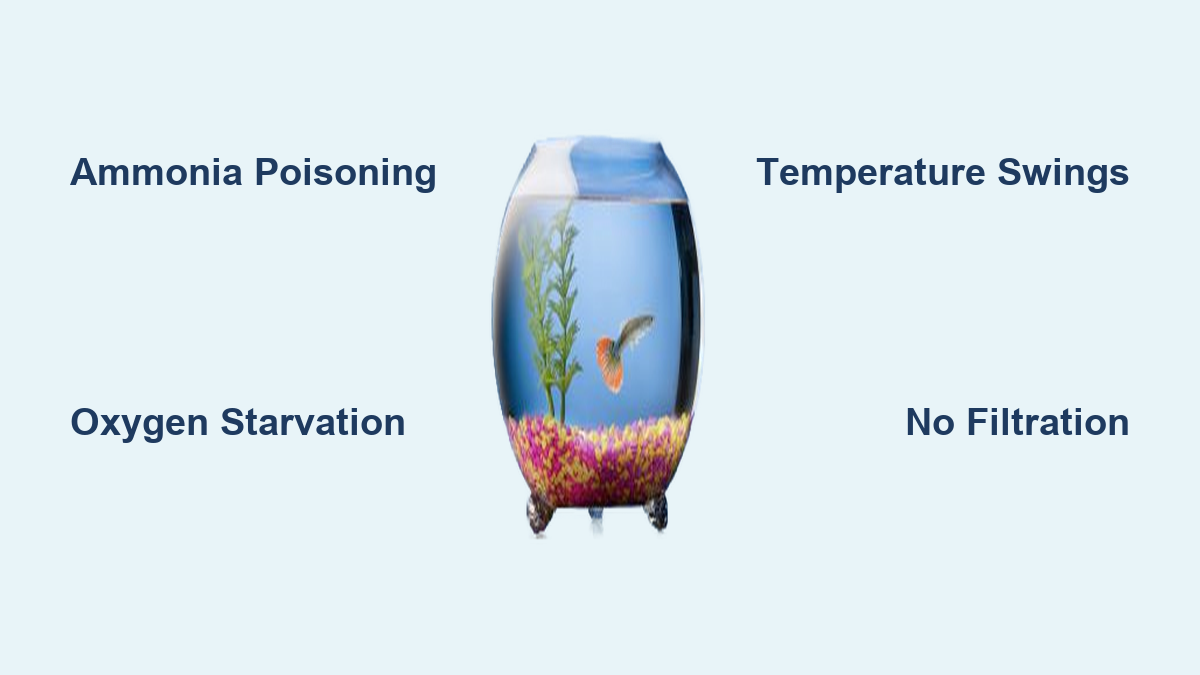
A bowl isn’t just inadequate—it actively generates lethal conditions through three interconnected failures that no amount of “care” can overcome. When you place a guppy in a bowl, you’re trapping it in a chemical reactor where waste turns to poison within hours.
How Ammonia Turns a Bowl Into a Fish Execution Chamber
Guppy waste and decaying food release ammonia, a toxin that burns gills and destroys internal organs. In a proper tank, beneficial bacteria convert this ammonia into safer compounds. In a bowl, this process fails catastrophically:
- Instant Toxicity: A single guppy’s waste can spike ammonia to 2.0+ ppm within 12 hours in a 1-gallon bowl (0.02 ppm is the safe limit). At this level, gills turn red and inflamed, suffocating the fish internally.
- Zero Filtration Surface: Bowls lack space for sponge filters or bio-media. Without these surfaces, ammonia-processing bacteria cannot establish. Your bowl is a sterile wasteland for essential microbes.
- Oxygen Starvation: The curved walls minimize surface area for gas exchange. Combined with ammonia poisoning, your guppy literally drowns in its own waste as oxygen plummets below 3 ppm (fish need 5+ ppm).
Visual clue you’re missing: If your guppy gasps at the surface, clamps fins, or develops red streaks on gills, ammonia is already burning it alive. These aren’t “quirks”—they’re death throes.
Temperature Swings That Shatter a Guppy’s Immune System
Guppies evolved in warm, stable Central American waters (72-80°F/22-27°C). A bowl’s tiny water volume makes temperature control impossible:
- Nighttime crashes: Room temperatures drop 10°F+ overnight. Your guppy’s metabolism slows, halting digestion and inviting bacterial infections.
- Daytime spikes: Sunlight through the glass can heat water 5°F in 30 minutes. Sudden warmth shocks organs and accelerates toxin production.
- No heater solution: Standard aquarium heaters (like the reliable Eheim Thermo 50W) won’t fit or function in bowl curves. Preset “betta heaters” lack precision for guppies.
Consequence: Daily temperature rollercoasters suppress immunity. Your guppy may look fine for weeks—then suddenly die from fin rot or ich that a healthy fish would resist.
The Space Crisis Crushing Your Guppy’s Spirit
Guppies are born swimmers—males darting in mating displays, females schooling for safety. A bowl’s cramped confines destroy natural behavior:
- Swimming space: A 1-gallon bowl offers < 300 square inches of surface area. Guppies need 12+ inches of open horizontal space to exhibit natural movement.
- Stress signals: Bowls force constant circling against glass (“glass surfing”), causing scale damage and exhaustion. No hiding spots mean zero stress relief.
- Social sabotage: Guppies thrive in groups (1 male: 2-3 females). A bowl can’t house even 2 fish without instant ammonia overload. Your “lone ranger” guppy is chronically lonely.
Emergency Bowl Protocol: Keeping a Guppy Alive for 72 Hours MAX
If you’re stuck with a bowl right now (e.g., rescued from a pet store), this is the bare-minimum life support—not a habitat. This buys time, not health. Follow these steps or your guppy won’t last 3 days:
NON-NEGOTIABLE Equipment for Short-Term Survival
- Bowl size: Minimum 5 gallons (e.g., a 12″ diameter bowl holding 3+ gallons water). Smaller = certain death.
- Air pump & stone: A Whisper 10i air pump ($8) with airstone creates surface agitation for oxygen. Without this, your guppy suffocates in 48 hours.
- Sponge filter: A Seachem Breeder 200 ($15) powered by the air pump adds critical biofiltration. Rinse media monthly in tank water only.
- Adjustable heater: Use a 25W Eheim Thermo ($15) set to 78°F. Tape the thermostat to the bowl’s outside bottom if it won’t submerge.
Daily Maintenance That’s Impossible to Sustain
- 50% water changes EVERY morning: Use a siphon to remove waste, then replace with dechlorinated water (Seachem Prime, $7). Test ammonia with strips ($5) before/after.
- Feed sparingly: 1-2 flakes once daily. Uneaten food = instant ammonia.
- Monitor 3x daily: Check for gasping (low oxygen), red gills (ammonia), or lethargy (temperature shock).
Reality check: This routine takes 15+ minutes daily. One missed change = lethal ammonia. Two weeks in this “care” would cost you $200+ in water bills alone. This isn’t fishkeeping—it’s triage.
Build a Real Guppy Home: Your 10-Gallon Starter Kit (Under $100)

A proper 10-gallon tank isn’t “luxury”—it’s the absolute baseline for humane guppy care. For less than the monthly cost of coffee, you give your guppies years of vibrant life. Here’s your battle-tested setup:
Essential Gear for a Thriving 10-Gallon Guppy Tank
| Equipment | Minimum Requirement | Why It’s Non-Negotiable |
|---|---|---|
| Tank | 10-gallon rectangular (20″x10″) | Provides 10x the stable water volume of a bowl |
| Filter | Aqueon QuietFlow 20 ($25) | Creates current for oxygen + houses ammonia-eating bacteria |
| Heater | Eheim Thermo 50W ($18) | Maintains stable 78°F—critical for immune health |
| Light | NICREW LED ($22) | Supports live plants that absorb toxins |
| Substrate | 3 lbs aquarium sand ($6) | Anchors plants + provides surface for beneficial bacteria |
Step-by-Step Tank Cycling: Avoid the #1 Beginner Killer
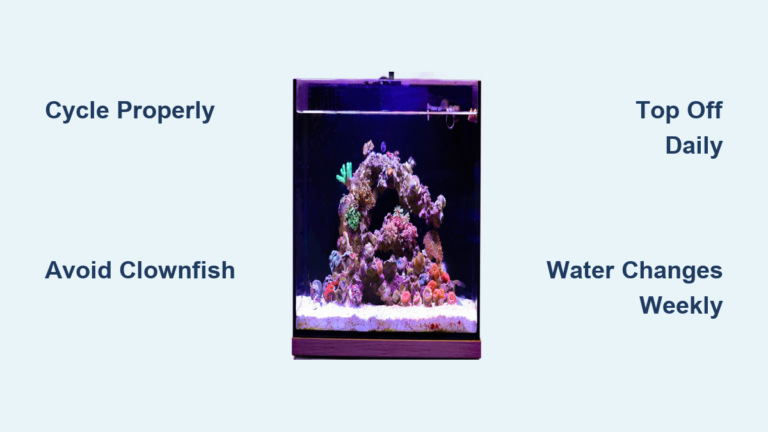
Skipping this step dooms your guppies to ammonia death. Cycling builds the bacterial colony that processes waste:
- Set up dry: Add sand, fill with dechlorinated water, install filter/heater. Plug in but no fish yet.
- Seed the cycle: Add 5 drops of FritzZyme TurboStart ($12) + 1 pinch of fish food daily.
- Test religiously: Use API Freshwater Master Test Kit ($25) to track ammonia → nitrite → nitrate.
- Ammonia spike (days 1-10): 1-2 ppm is normal. Do not add fish!
- Nitrite spike (days 5-15): 1+ ppm = bacteria converting ammonia. Still unsafe.
- Cycle complete (days 21-30): Ammonia/nitrite = 0 ppm after 24 hours with 1 ppm added.
- Add fish slowly: Introduce 2-3 guppies after cycling. Wait 2 weeks before adding more.
Pro tip: Cycle with hardy fish like zebra danios only if you test water twice daily. For guppies, fishless cycling is the only ethical choice.
The Lifesaving Upgrade: From Bowl Prison to Guppy Paradise
When you move your guppy from a bowl to a cycled 10-gallon tank, changes happen fast:
- Within 24 hours: Gasping stops as oxygen levels stabilize. Fins unclamp.
- Within 7 days: Appetite returns; colors intensify as stress fades.
- Within 30 days: Natural schooling behavior emerges. Females carry healthy fry.
This isn’t speculation—it’s aquarium science. Stable water parameters (ammonia 0 ppm, nitrite 0 ppm, nitrates <20 ppm) let guppies live to their full 2-3 year potential. In a bowl, that lifespan shrinks to 3-6 months of suffering.
Your Final Decision: Prison or Home?
Let’s be brutally clear: A bowl is not a habitat—it’s a slow torture device. That “low-maintenance” myth kills more guppies than disease. Every ammonia burn, temperature shock, and oxygen-starved gasp is preventable. The $85 investment in a 10-gallon starter kit (tank, filter, heater) is less than a single veterinary visit for a bowl-sick guppy. For the price of two takeout meals, you provide clean water, stable warmth, and space to swim—a home where your guppy doesn’t just survive, but dances with life. Don’t choose ignorance; choose action. Cycle your tank this week, adopt a small group of guppies, and witness the vibrant joy they deserve. Your fish’s entire existence depends on this one decision. Make it count.