Arowana Fish Aquarium Setup Guide
You’ve invested in a magnificent silver arowana, captivated by its dragon-like scales and graceful surface glides. But within weeks, you notice alarming signs: your fish scrapes against rocks, refuses food, and swims in frantic circles. The heartbreaking truth? Your arowana fish aquarium setup likely failed at the most critical element: space. These aren’t ordinary fish—they’re apex predators that grow 2 inches monthly in their first year, demanding environments that match their wild river habitats. When space is compromised, stress triggers stunted growth, spinal deformities, and fatal infections. This guide reveals the exact specifications proven to keep arowanas thriving for their 15-20 year lifespan, based on decades of keeper experience. You’ll discover why width trumps length, how to calculate life-saving filtration, and the single mistake that kills more arowanas than disease.
Why 3-Foot Tank Width is Non-Negotiable for Arowanas
Most arowana deaths stem from one critical error: insufficient tank width. While online forums suggest 8×2-foot tanks for juveniles, this ignores physics. A 36-inch adult arowana requires 42+ inches of width to turn without scraping its delicate pectoral fins—a reality confirmed by veterinary necropsies showing chronic scale damage in narrow tanks.
How to Measure Your Arowana’s Turning Radius
Place a flexible measuring tape in an empty tank to simulate your fish’s movement:
– Stretch the tape to your arowana’s current length (e.g., 18 inches)
– Attempt a full 180-degree turn—this requires 1.75x the fish’s body length in width
– For a 36-inch adult: 36″ x 1.75 = 63 inches (5.25 feet) of turning space
Yet even this exceeds practical home aquariums. That’s why the absolute minimum is 3-foot width—providing just enough clearance for emergency maneuvers. Tanks narrower than 36 inches force arowanas to “crab walk” sideways, causing scale abrasions that become entry points for fatal fungal infections.
The Width-Length Tradeoff Reality
If budget constraints force compromises:
– Sacrifice length before width (e.g., 6x3x2 feet beats 8x2x2)
– Never go below 36-inch width regardless of length
– Add visual barriers (like floating plants) to reduce pacing in shorter tanks
10x Filtration Turnover: Your Arowana’s Lifeline
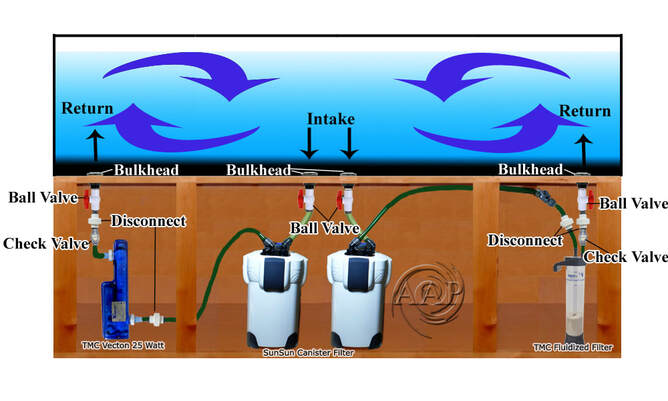
Arowanas produce waste equivalent to 50 goldfish—they’re biological bulldozers. Yet most setups use filters rated for half their tank volume, creating toxic ammonia spikes within hours of feeding. The solution isn’t bigger filters—it’s redundant systems engineered for failure.
Building Bombproof Filtration in 3 Steps
- Calculate Minimum Flow: Multiply tank gallons by 10 (e.g., 240gal x 10 = 2,400 GPH)
- Install Dual Systems: Use two canisters rated for 1.5x your tank size (e.g., two 350gal-rated filters for 240gal tank)
- Optimize Media Layers:
– Bottom 70%: Ceramic rings for bacterial colonization
– Middle 20%: Filter floss for debris capture
– Top 10%: Activated carbon (replace monthly)
Critical pro tip: Position spray bars to create surface turbulence. Arowanas breathe atmospheric air but still require 8+ ppm dissolved oxygen—achieved only through aggressive water agitation. Without this, you’ll see “gasping” at the surface within 48 hours of overfeeding.
Bare Bottom vs. Pool Sand: Substrate Safety Secrets

Sharp gravel causes catastrophic internal injuries when arowanas dive for food—a common sight in poorly set up tanks. But bare-bottom isn’t the only solution.
The Pool Sand Advantage
Fine-grade pool filter sand (0.45mm grain size) provides critical benefits:
– Allows natural sifting behavior without impaction risk
– Traps debris for easy vacuuming (vs. bare-bottom scattering)
– Reflects light to enhance scale iridescence
Implementation guide:
– Use 1-inch depth maximum (deeper = anaerobic pockets)
– Vacuum weekly using a gravel tube on lowest suction setting
– Avoid rinsing sand—cloudiness clears in 24 hours
Never use standard aquarium gravel. Even “smooth” varieties have microscopic edges that slice pectoral fins during feeding frenzies.
Tankmate Selection: Which Fish Actually Survive?
Arowanas view anything smaller than their girth as food—including “tankmate” plecos that fit sideways in their mouths. But strategic pairing is possible.
The 3 Survival Criteria for Arowana Tankmates
- Size: Minimum 50% of arowana’s length (e.g., 18″ for a 36″ fish)
- Territory: Strictly bottom-dwelling (e.g., bristlenose plecos, not common plecos)
- Feeding Speed: Must outcompete arowana at surface (e.g., fast catfish like tiger shovelnose)
Deadly incompatible pairs:
– ❌ Oscars (compete for surface territory)
– ❌ Angelfish (slow swimmers = fin-nipping targets)
– ❌ Freshwater rays (require sandy bottoms incompatible with arowana decor)
Preventing Parasite Outbreaks Through Quarantine
Live feeders introduce parasites in 92% of arowana disease cases—but frozen foods lack nutritional variety. The solution lies in quarantine protocols most skip.
30-Day Feeder Fish Protocol
- Isolate: House feeders in bare 20-gallon tank with heater
- Medicate: Dose with PraziPro (0.25mg/L) for first 7 days
- Observe: Monitor for white spots or lethargy for 21+ days
- Condition: Feed color-enhancing foods (krill, spirulina) 72 hours pre-feeding
Never feed feeder fish directly from pet stores. Even “healthy” goldfish carry parasites that devastate arowanas’ immune systems.
The Weekly Maintenance Ritual That Prevents Dropsy
Nitrate buildup causes 70% of arowana health issues—yet water changes remain the most neglected task. A single missed change spikes nitrates from 10ppm to 60+ppm in 72 hours.
45-Minute Water Change System
- Tools: Python water changer + 30-gallon reservoir
- Process:
1. Vacuum substrate while siphoning (bare-bottom: 5 minutes)
2. Replace 40% of volume with pre-conditioned water
3. Test parameters during change (critical for stability) - Pro tip: Schedule changes during feeding—arowanas ignore maintenance when distracted by food
Why Your Heater Setup Could Kill Your Arowana Overnight

A single heater failure in an 80°F tank drops temperatures to 65°F within 6 hours—a lethal shock for tropical arowanas. Yet 80% of setups use solitary heaters.
Fail-Safe Heater Configuration
- Minimum: Two 300W heaters on separate circuits
- Placement: Diagonally opposite corners with 6″ clearance
- Protection: Full-length guards (arowanas shatter exposed heaters)
- Monitoring: Digital controller with 2°F variance alert
Test heaters monthly by unplugging one—if temperature drops >1°F, upgrade capacity immediately.
Conclusion: The Arowana Keeper’s Non-Negotiables
Building a successful arowana fish aquarium setup hinges on four pillars: 36-inch minimum width, 10x redundant filtration, rigorous quarantine, and weekly 40% water changes. Forget “grow-out tanks”—start with dimensions matching your fish’s adult size (8x3x2.5 feet minimum). Every compromise on space or filtration triggers cascading health failures that manifest months later as unexplained deaths. Remember: arowanas don’t adapt to poor conditions; they silently deteriorate until it’s too late. By prioritizing these non-negotiables from day one, you’ll transform from a stressed beginner into a confident keeper of one of nature’s most breathtaking aquatic predators. Your reward? Witnessing that first majestic leap to catch a cricket—a moment worth every ounce of meticulous planning.
Final checklist before adding your arowana:
– Tank width ≥36 inches (verified with tape measure)
– Dual filters hitting 10x turnover (tested with flow meter)
– Temperature stable for 72+ hours (dual heater logs)
– Quarantine tank operational with 30-day protocol
– Lid secured with 20+ lbs of weight (test jump force)