How to Save Aquarium Fish Dying One by One
Waking up to find another fish belly-up in your tank while others hover near the surface gasping—that sinking feeling when your aquarium fish are dying one by one—is every aquarist’s nightmare. This isn’t random bad luck; it’s a screaming red alert from your tank’s ecosystem. Sequential deaths almost always point to a hidden, spreading crisis in your water chemistry or tank conditions. The good news? You can stop the carnage within 72 hours if you act fast and target the true culprit. This guide cuts through the panic with a step-by-step diagnostic protocol proven to save remaining fish and prevent future losses.
Your survival hinges on understanding one critical truth: when fish die one by one, it’s never about the fish. It’s about your water. Ammonia spikes from a crashed nitrogen cycle cause 80% of these tragedies—often triggered by cleaning your filter with tap water or adding too many new fish at once. In the next few minutes, you’ll learn exactly how to test for this silent killer, execute emergency water changes that actually work, and repair your biological filter without losing another life.
Why Your Fish Are Dying One by One: Top 5 Causes Revealed
Don’t waste hours guessing. These five culprits cause 95% of sequential fish deaths, with ammonia/nitrite poisoning leading the pack. Spotting which one is attacking your tank starts with reading the evidence your fish leave behind.
Ammonia/Nitrite Poisoning: The Silent Killer Behind Most Deaths
Check for these signs immediately:
– Fish gasping at the surface or near filter outlets
– Red, inflamed gills or blood streaks in fins
– Lethargic fish lying on the tank bottom
Ammonia above 0.25 ppm or nitrite above 0.5 ppm burns gills, suffocating fish slowly. This happens when your nitrogen cycle crashes—often after replacing filter media, overcleaning gravel, or adding too many fish at once. Critical fact: Even if your tank is “cycled,” a single dead fish left overnight can spike ammonia to lethal levels by morning. Test strips won’t cut it; you need a liquid test kit (like API Freshwater Master) for accurate readings. If ammonia/nitrite registers, treat it as a Code Red emergency—fish can die within hours.
Oxygen Starvation: Why All Fish Gasp at Dawn
Spot this emergency by:
– Every fish congregating at the surface at 5 AM
– Rapid gill movement even in cool water
– No ammonia spikes on your test kit
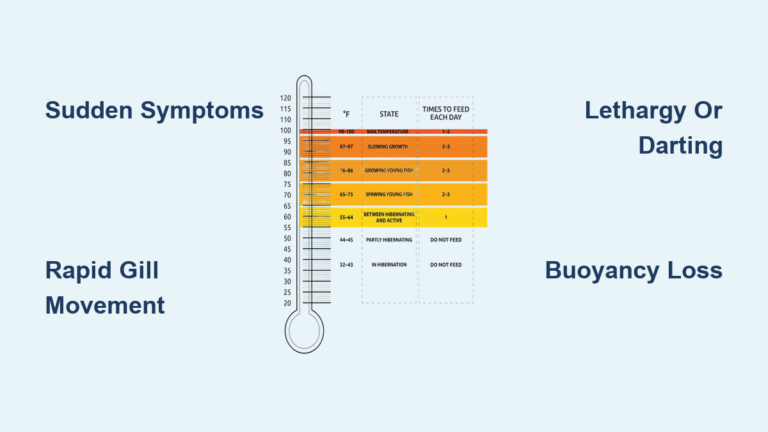
Plants and algae consume oxygen overnight, dropping levels below 5 mg/L by morning. High water temperatures (>80°F) worsen this. Pro tip: Place a thermometer near the surface—readings 2-3°F higher than mid-tank indicate poor circulation. Fix this immediately by adding an airstone or pointing your filter output toward the surface to create rippling waves. Never wait to test; low oxygen kills faster than ammonia.
Immediate Actions: What to Do in the First 60 Minutes of Crisis
:strip_icc()/water-changes-1381886_final2-63b5961634e043cfb7bb233be39f4cc9.png)
When you find a dead fish, your next moves determine whether others live or die. Forget “wait and see”—this buys time for toxins to multiply.
Remove Dead Fish and Stop Feeding NOW
Why this is non-negotiable:
– A single decaying fish releases 5 ppm ammonia in 24 hours
– Uneaten food from stressed fish doubles toxin production
Use a net to remove corpses immediately—don’t wait for water changes. Then fast your fish for 48 hours. Feeding during a crisis is like pouring gasoline on a fire; it generates more ammonia as bacteria break down waste. Starving fish briefly is safer than poisoning them.
Execute the Emergency Water Change Protocol
Do this within 1 hour:
1. Test water for ammonia, nitrite, and pH (record numbers)
2. Perform 50% water change with dechlorinated water matched to tank temperature (±1°F)
3. Dose double the normal amount of Seachem Prime to neutralize ammonia
4. Add an airstone or increase filter output to agitate the surface
Critical mistake to avoid: Using tap water straight from the faucet. Chlorine in just 10 gallons can kill your entire bacterial colony. Always treat new water with conditioner before adding it to the tank. If ammonia reads above 1.0 ppm, repeat this 50% change in 12 hours—don’t wait.
Repair Your Biological Filter Without Crashing the Cycle
Your filter houses billions of beneficial bacteria. Destroying them turns your tank into a toxin factory. Most “cycled” tanks die because owners clean filters wrong.
Rinse Media in Tank Water—Never Tap Water
Follow this exact process:
1. Turn off filter and remove media
2. Swish sponges/floss in a bucket of old tank water removed during your water change
3. Squeeze gently until water runs clear—never scrub
4. Reinstall media immediately
Tap water’s chlorine kills bacteria on contact. Replacing all media at once destroys your cycle. If you recently cleaned your filter, add Seachem Stability to jumpstart bacteria regrowth. Within 48 hours, test daily—ammonia should drop steadily. If it spikes again, you didn’t preserve enough bacteria.
Advanced Diagnostics: When Water Tests Are “Perfect” But Fish Still Die
If ammonia/nitrite are zero but fish keep dying, invisible killers are at work. These require detective work—not guesswork.
Chemical Contamination: Household Toxins in Your Tank
Suspect this if:
– Fish die suddenly with no gasping or flashing
– You recently used air fresheners, cleaners, or pesticides nearby
Aerosol sprays drift into tanks, poisoning fish within hours. Immediate fix:
– Perform 75% water change
– Add activated carbon to your filter (replace after 48 hours)
– Run Poly-Filter pads to pull out heavy metals
Test your tap water for copper if you have old pipes—it corrodes at low pH, killing sensitive fish like tetras. A single drop of perfume near the tank can be lethal; keep all chemicals out of the room.
Hidden Disease Outbreaks: Spotting Silent Killers
Key symptom combinations:
| Symptom | Likely Cause | Emergency Action |
|——————|——————–|——————|
| White spots + flashing | Ich parasite | Raise temp to 86°F + add 1 tbsp salt/5 gal |
| Red sores + frayed fins | Fin rot bacteria | Quarantine + Kanamycin treatment |
| Bloating + pineconing | Internal infection | Erythromycin in hospital tank |
Never medicate your main tank. Antibiotics destroy beneficial bacteria, causing worse crashes. Move sick fish to a 10-gallon quarantine tank with sponge filter. Always treat diseases after stabilizing water parameters—stressed fish can’t fight illness.
The 4-Point Prevention Plan to Stop Future Deaths Forever
One dead fish is a warning. Two is a crisis. Three is preventable with these non-negotiable habits.
Quarantine Every New Fish for 4 Weeks
This stops 90% of disease outbreaks:
– House new arrivals in a bare 10-gallon tank
– Dose with PraziPro for parasites on day 1
– Observe for flashing or clamped fins daily
– Only move to main tank after 14 symptom-free days
Skipping quarantine is like inviting a virus into a hospital. That “healthy” guppy from the store could carry ich that wipes out your entire tank in 72 hours.
Master the Weekly Water Change Ritual
Do this every 7 days without fail:
– Test water before changing (track trends in a log)
– Change 25% with temperature-matched, dechlorinated water
– Vacuum only 50% of substrate (clean half the tank each week)
– Rinse filter media in old tank water
Consistent small changes beat massive monthly cleans. A 25% weekly change keeps nitrates below 20 ppm—the safe threshold for long-term health. Set phone reminders until it becomes habit.
Feed Correctly: The #1 Cause of Ammonia Spikes

Follow these rules:
– Feed only what fish eat in 90 seconds
– Remove uneaten food after 3 minutes
– Fast fish one day weekly
– Use high-quality pellets (not flakes)
Overfeeding causes more crashes than any other mistake. Excess food rots, spiking ammonia overnight. If you see pellets on the bottom after feeding, you’ve given too much. Cut portions by half—you’ll be shocked how little fish actually need.
Final Lifesaving Tip: When in Doubt, Change the Water
If you’re overwhelmed by tests or symptoms, do this one thing: perform a 50% water change with dechlorinated, temperature-matched water. It dilutes toxins, adds oxygen, and buys critical time to diagnose. In 12 years of aquarium rescue, I’ve never seen a water change make sequential deaths worse. Your fish aren’t dying because they’re “weak”—they’re dying because their environment failed. Fix the water, and you’ll stop the deaths one by one for good.
Remember: Your test kit is your lifeline. Check water weekly before problems start. Keep a hospital tank ready. And never, ever clean your filter with tap water. These simple acts transform your tank from a death trap into a thriving ecosystem where fish live full lifespans—not just days. You have the power to save them. Start today.