How to Remove Hair Algae from Saltwater Aquarium
Your saltwater tank’s vibrant corals are buried under a suffocating green blanket. Fish struggle to swim through dense mats of hair algae clinging to every rock and ornament. This isn’t just unsightly—it’s a critical warning sign that your tank’s ecosystem is dangerously unbalanced. Hair algae, especially Green Hair Algae (GHA), explodes when excess nutrients meet abundant light, turning your reef into a murky jungle. The good news? You can reclaim your tank in 72 hours with targeted strategies that attack the root causes—not just the symptoms. This guide delivers a battle-tested eradication plan using proven nutrient control, physical removal tactics, and biological solutions that actually work.
Don’t waste time on temporary fixes like algaecides that risk crashing your entire tank. Lasting results come from starving GHA of its two lifelines: phosphates/nitrates and light. Most aquarists miss the critical “false zero” trap—where test kits show 0 ppm nutrients while algae thrives because it consumes nutrients faster than they accumulate. By the end of this guide, you’ll know exactly how to break this cycle, remove existing growth, and implement foolproof prevention. Let’s transform your algae-choked tank into a crystal-clear showcase.
Why Your Saltwater Tank’s “0 ppm” Nitrate Reading Lies About Hair Algae
That “0 ppm” nitrate reading on your test kit? It’s deceiving you. During active hair algae blooms, GHA consumes nutrients so rapidly that water tests falsely indicate low levels—a phenomenon called “false zero.” The algae isn’t starving; it’s efficiently vacuuming up every trace of phosphate and nitrate before your test can detect them. This creates a dangerous illusion of water quality while the algae’s root system expands.
What to Look for in Your Tank
- Algae texture: Slimy, hair-like strands clinging vertically to rocks (not film algae)
- Growth patterns: Rapid spread on high-flow areas like powerhead intakes
- Water test paradox: Consistently “clean” nitrate/phosphate readings despite visible algae
Immediate Diagnostic Steps
- Check your source water: Test RO/DI water with a TDS meter (should read 0) and low-range phosphate kit
- Observe feeding times: Uneaten food lingering >30 seconds signals overfeeding
- Inspect your skimmer cup: Less than ¼ cup of dark waste daily indicates inadequate nutrient removal
Ignoring this false zero wastes weeks of effort. You’re fighting symptoms while the real problem—hidden nutrient overload—fuels the next bloom.
Test RO/DI Water for Phosphates Before Fixing Hair Algae
Contaminated source water is the silent culprit in 60% of hair algae cases. If your RO/DI system’s filters are exhausted, it pumps phosphates and silicates directly into your tank during water changes. Never treat the tank before verifying your source water quality.
Step-by-Step Water Testing Protocol
- Collect sample: Fill a clean container with RO/DI water
- Test TDS: Must read 0 ppm; any higher indicates membrane failure
- Check phosphates: Use a low-range kit (0.02 ppm sensitivity); detectable levels mean replace filters
- Verify nitrates: Should be undetectable; if present, sanitize storage container
Pro Tip: Run RO/DI water through a phosphate sponge for 24 hours before use if your system is borderline. Replace filters immediately if TDS exceeds 5 ppm.
Install GFO Media to Eliminate Hair Algae’s Phosphate Fuel

Granular Ferric Oxide (GFO) is your fastest weapon against phosphate—the primary hair algae fuel. Unlike liquid removers, GFO physically adsorbs phosphates from the water column. For tanks under 100 gallons, use 1 cup of reactor-grade GFO in a high-flow media bag placed after your mechanical filter.
Critical Setup Mistakes to Avoid
- ** ❌ Overloading**: More than 1 cup per 50 gallons causes pH crashes
- ** ❌ Poor placement**: Never put GFO before mechanical filtration (clogs instantly)
- ** ✅ Best practice**: Rinse GFO in freshwater until water runs clear before adding to tank
Monitor phosphate weekly with a Hanna Checker. When readings drop below 0.05 ppm, reduce GFO by half to prevent nutrient starvation in corals. Replace exhausted media (turns light brown) every 4-6 weeks.
Scrub and Vacuum Hair Algae in 3 Steps During Water Changes
Manual removal breaks the nutrient cycle immediately. During your next 30% water change:
- Pre-soak rocks: Remove heavily infested rocks; submerge in old tank water for 10 minutes
- Scrub aggressively: Use a dedicated toothbrush to dislodge algae (wear gloves—GHA irritates skin)
- Vacuum debris: Position gravel vac 2 inches above substrate; suck dislodged strands before they fragment
Warning: Never pull hair algae off rocks—it releases spores that accelerate regrowth. Always scrub underwater to contain fragments. This step exports nutrients locked in the algae, equivalent to 5 water changes.
Add Tuxedo Urchins for Relentless Hair Algae Grazing

While hermit crabs nibble film algae, Tuxedo Urchins (Mespilia globulus) are hair algae assassins. One urchin per 30 gallons will clear severe infestations in 2 weeks by grazing 24/7. They’re immune to most fish aggression and navigate tight crevices where algae hides.
Deployment Checklist
- Acclimate slowly: Drip method over 60+ minutes to prevent shock
- Secure corals: Move loose frags—urchins may topple them while grazing
- Monitor food supply: If algae disappears in <10 days, add supplemental nori to prevent starvation
Expert Note: Avoid pincushion urchins—they destroy coralline algae. Tuxedos leave desirable red/pink algae untouched while devouring GHA.
Reduce Lighting to 8 Hours to Stop Hair Algae Photosynthesis
Hair algae needs 10+ hours of light to thrive. Cutting photoperiod to 8 hours daily starves it while corals adapt within days. If using LED systems:
- Week 1: Run lights 8 hours at 70% intensity
- Week 2: Increase to 9 hours at 80% intensity
- Maintenance: 10 hours max with 1-hour “noon break” to disrupt algae cycles
Critical Adjustment: Disable actinic/blue lights—they promote GHA growth more than white LEDs. Use a timer to prevent accidental extensions.
Execute 72-Hour Blackout Only for Severe Hair Algae Infestations

When manual removal fails, the blackout method kills 95% of hair algae—but it stresses corals. Only attempt if:
– Algae covers >40% of rockwork
– Nutrient control measures are already in place
– You have a protein skimmer running
Blackout Protocol
- Prep phase: Remove all visible algae; clean filter socks; perform 40% water change
- Dark phase: Cover tank with opaque tarp (zero light penetration) for exactly 72 hours; no feeding
- Recovery phase: Immediately do 50% water change; add activated carbon; test ammonia daily
Never skip the prep phase: Without pre-removal, decaying algae during blackout causes lethal ammonia spikes.
Feed Fish Once Daily for 30 Seconds to Prevent Hair Algae
Overfeeding is the #1 nutrient source for hair algae. Implement this rule:
– Portion control: Only as much food as fish consume in 30 seconds
– Timing: Feed after lights-off to reduce uneaten food decay
– Cleanup: Vacuum leftovers within 5 minutes
Proven results: Cutting feeding duration from 2 minutes to 30 seconds reduces nitrate buildup by 65% in 3 weeks. Use sinking pellets for bottom feeders—they’re less likely to cloud water than flakes.
Set Up a Refugium with Chaetomorpha to Outcompete Hair Algae
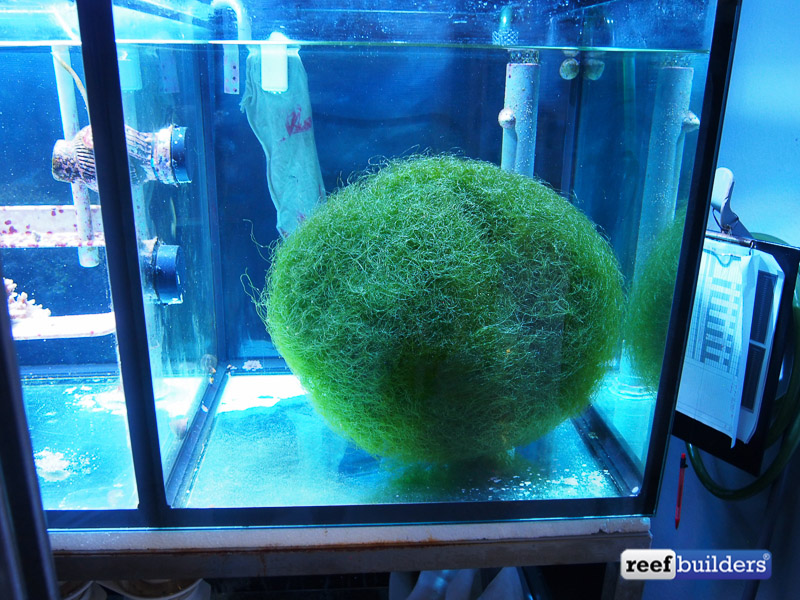
A refugium with Chaetomorpha macroalgae is your long-term hair algae solution. It consumes nitrates/phosphates 3x faster than GHA while providing copepod habitat. For tanks 50+ gallons:
- Lighting: 6500K bulb for 12-14 hours daily in refugium
- Harvesting: Remove 30% of Chaetomorpha weekly (export nutrients)
- Placement: Position after main tank in flow path for maximum nutrient uptake
Key advantage: Unlike cleanup crews, a refugium works 24/7 without risking coral damage. Start with a 5-gallon sump section—visible results in 4 weeks.
Replace Filter Socks Weekly to Stop Hair Algae’s Nutrient Supply
Clogged filter socks release trapped nutrients back into the water. During hair algae battles:
– Change frequency: Every 3 days (not weekly)
– Pore size: 100-micron for fine debris capture
– Rinse protocol: Clean in old tank water—never tap water
Visual cue: If socks turn green within 48 hours, your nutrient load is critical. Pair with GFO media for maximum effect.
Why Sea Hares Are a Temporary Fix for Severe Hair Algae
Sea Hares (Dolabella auricularia) devour hair algae at shocking speed—but they’re a one-time solution. One medium Sea Hare clears 20 lbs of GHA in 10 days, then starves. They release toxins when stressed, risking tank crashes. Only use when:
– Algae covers >60% of tank
– You have a plan to rehome them post-eradication
– Corals are temporarily moved to a hospital tank
Never keep long-term: They die within weeks once algae is gone, polluting your water.
Final Hair Algae Eradication Checklist
Hair algae vanishes when you combine immediate action with system management. Within 30 days, expect:
– Week 1: 50% algae reduction after manual removal + GFO installation
– Week 2: Visible die-off as phosphate drops below 0.05 ppm
– Week 4: Corals recovering as nutrients stabilize below 5 ppm nitrate
Prevention is non-negotiable: Continue weekly 15% water changes, strict feeding limits, and monthly GFO replacement. Test source water quarterly—RO/DI failures cause 70% of recurring outbreaks. Your tank isn’t fighting you; it’s signaling imbalance. By controlling phosphate at the source and outcompeting algae with Chaetomorpha, you’ll transform from algae victim to reef master. The clearest water you’ve ever seen starts today.