How to Clean Aquarium Sponge Filter: Best Schedule
That frustrating moment when your once-bubbling sponge filter sputters to a near-stop—only to discover it’s packed with debris after just three weeks. You know you need to clean it, but panic sets in: Will I destroy my tank’s delicate ecosystem? The truth is, how often to clean aquarium sponge filter isn’t about rigid calendars—it’s a precision dance between mechanical maintenance and biological survival. Clean too frequently with tap water, and you’ll obliterate the beneficial bacteria colonies keeping your fish alive. Wait too long, and reduced water flow starves your tank of oxygen. In this guide, you’ll learn the exact visual triggers for cleaning, the foolproof bacteria-preserving method, and why your goldfish tank needs weekly attention while your betta bowl can go months. Most importantly, you’ll discover why flow rate monitoring beats any calendar-based schedule.
Heavy vs. Light Stocking: Your Tank’s Bio-Load Dictates Cleaning Frequency
Forget one-size-fits-all advice—the exact answer to how often to clean aquarium sponge filter hinges entirely on your tank’s bioload. This measurement of fish waste production directly impacts clogging speed and bacterial colony health.
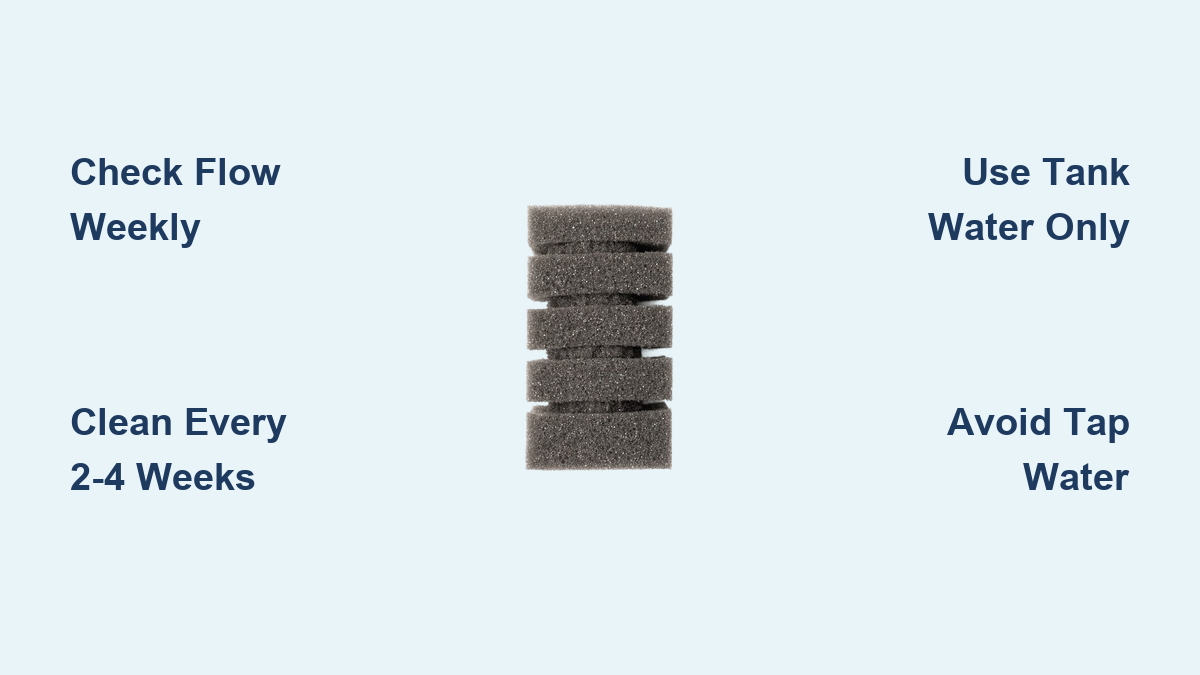
- Heavy bioload tanks (goldfish, cichlids, or 10+ small fish): Clean every 2-4 weeks without exception. These high-waste systems overwhelm sponges rapidly—goldfish alone produce 3x more waste than tropical fish. If your spray bar output visibly shrinks within 10 days, you’re dangerously overstocked.
- Moderate bioload (community tanks with 5-8 tetras/danios): Stick to monthly cleanings but monitor flow weekly. These balanced systems often maintain flow for 3-4 weeks before needing maintenance.
- Light bioload (single betta, shrimp colony, or nano tank): Extend to 6-8 weeks, but never exceed 6 months. Even sparse tanks accumulate anaerobic pockets that release toxic hydrogen sulfide.
Critical Bio-Load Red Flags You Can’t Ignore
- Overstocking warning: If you need to clean more than every 2 weeks consistently, your fish count exceeds tank capacity—reduce stocking immediately.
- New tank exception: During the first 6-8 week nitrogen cycle, never clean the sponge—disturbing nascent bacteria causes deadly ammonia spikes.
- Planted tank adjustment: Add 25% more frequent cleanings due to decomposing leaf matter accelerating clogs.
Water Flow Reduction: Your Sponge Filter’s Emergency Cleaning Signal
Your filter’s decreasing water flow is the universal distress signal overriding any calendar schedule. This visual indicator matters more than time elapsed—a clogged sponge directly threatens fish survival by reducing oxygen exchange and circulation.
How to Diagnose Flow Reduction in 60 Seconds
- Air-driven sponges: Compare current bubble streams to installation photos. If bubbles halve in volume or become intermittent, clean immediately.
- Powerhead-driven units: Place a fingertip near the outflow—healthy flow should create noticeable resistance. Weak flow feels like a gentle breeze.
- Surface agitation test: Watch the water surface. If ripples shrink to a 2-inch diameter (from original 6+ inches), flow has dropped 70%—critical cleaning territory.
When to Clean Immediately (Not Tomorrow)
- Visible debris coating 50%+ of the sponge surface
- Bubbles cease entirely for 1+ hours in air-driven filters
- Fish gasping at surface despite normal water parameters
- Sulfur-like “rotten egg” smell during maintenance (indicates deadly anaerobic zones)
The Bacteria-Saving Cleaning Protocol: Step-by-Step

Ripping out your sponge filter and rinsing it under tap water is the #1 cause of tank crashes. Chlorine in tap water annihilates the brown “biofilm” housing your ammonia-destroying bacteria. Here’s the only safe method:
1. Prepare Your Cleaning Station Correctly
- Bucket 1: Fill with 2-3 cups of old tank water from your last water change (never tap water!)
- Bucket 2: Empty for debris collection (line with paper towel to catch gunk)
- Critical tool: Timer set for 90 seconds (prevents over-cleaning)
2. Execute the Gentle Cleaning Process
- Remove sponge and immediately submerge in Bucket 1
- Squeeze-release rhythm: Compress sponge fully, then release slowly 5-7 times—never twist or wring
- Rotate sponge 90 degrees and repeat until water runs mostly clear (takes 3-5 cycles)
- Stop when: Sponge retains light brown tint (this is live bacteria!) and debris stops releasing
Pro Tip for Multi-Filter Systems
If using two sponge filters (e.g., for fry tanks), clean only one unit per session. Stagger cleanings by 7-10 days to maintain uninterrupted biological filtration—this prevents ammonia spikes that kill sensitive species like shrimp.
Critical Mistakes That Crash Your Tank in Minutes
Avoid these fatal errors that turn routine maintenance into disaster:
- Tap water exposure: Just 10 seconds under chlorinated water destroys 90% of beneficial bacteria—use only tank or dechlorinated water
- Over-cleaning: Rinsing until sponge turns white removes all biofilm—stop when water runs light brown
- Hot water use: Temperatures above 85°F (30°C) cook bacterial colonies—always use room-temperature water
- Sink contamination: Kitchen sinks harbor soap residues—clean only in dedicated aquarium buckets
Troubleshooting Rapid Clogging: Beyond the Cleaning Schedule

When your sponge clogs within days despite proper stocking, you’re facing hidden system imbalances.
Why Your Sponge Clogs in 72 Hours (and Fixes)
- Cause: Overfeeding (excess food decays into fine particulates)
Fix: Feed only what fish consume in 90 seconds—remove leftovers immediately with siphon - Cause: Crushed substrate (fine gravel creates “mud” that jams pores)
Fix: Vacuum substrate weekly and add coarse gravel layer under sponge intake - Cause: Algae blooms (green water clogs faster than fish waste)
Fix: Reduce lighting to 6 hours/day and add Amano shrimp for cleanup
Black Sludge Emergency Protocol
If you detect black, slimy patches or sulfur smells during cleaning:
1. Remove sponge and place in bucket of tank water
2. Gently tease apart layers with fingers to expose inner core
3. Rinse core section under dechlorinated water stream (not tank water—this is hazardous)
4. Reinstall and test ammonia levels hourly for 24 hours
Flow Still Weak After Cleaning? Diagnose These Hidden Failures

Don’t assume the sponge is the culprit when flow remains low post-cleaning—these components often fail:
| Component | Failure Sign | DIY Fix |
|---|---|---|
| Air pump diaphragm | Bubbles cease but motor runs | Replace diaphragm kit ($5) |
| Airline tubing | Kinks or milky biofilm inside | Soak in vinegar solution, replace if cloudy |
| Powerhead impeller | Humming sound but no flow | Disassemble and remove hair/debris |
| Check valve | Backflow when pump stops | Clean or replace silicone flap |
Your Custom Sponge Filter Maintenance Schedule
Adjust these intervals based on weekly flow checks—not arbitrary dates:
| Tank Type | Stocking Example | Cleaning Frequency | Flow Check Frequency | Critical Warning Signs |
|---|---|---|---|---|
| Heavy Bioload | 2 goldfish in 20-gallon | Every 2-3 weeks | 3x/week | Flow drops >50% in 10 days |
| Community Tank | 8 tetras + 2 corydoras | Every 4-5 weeks | 2x/week | Bubbles halve in volume |
| Shrimp/Betta | 5 cherry shrimp or 1 betta | Every 6-8 weeks | Weekly | Surface ripples shrink to 2″ |
Golden rule: Never exceed 6 months between cleanings—even in empty tanks. Stagnant zones develop toxic anaerobic pockets that release hydrogen sulfide when disturbed.
Long-Term Success: Monthly Maintenance Rituals
Prevent emergencies with these simple routines:
– Weekly: Place fingertip near outflow to gauge flow strength—note changes in logbook
– Monthly: Inspect sponge surface for black patches during water changes
– Quarterly: Gently squeeze sponge in tank to dislodge deep debris without removal
– Biannually: Replace worn sponges by adding new media alongside old for 4 weeks
The perfect how often to clean aquarium sponge filter schedule adapts to your tank’s unique needs—not generic advice. By prioritizing water flow as your primary indicator, using tank water for cleaning, and respecting your bioload limits, you’ll maintain crystal-clear water and thriving fish. Remember: a slightly discolored sponge is a healthy sponge. When in doubt, test ammonia levels before and 12 hours after cleaning—if they spike, you disturbed too much bacteria. Pair this with 25% weekly water changes, and your ecosystem will flourish for years. Your fish don’t care about calendar dates—they care that their filter breathes easy.