How Long Is a 20 Gallon Aquarium
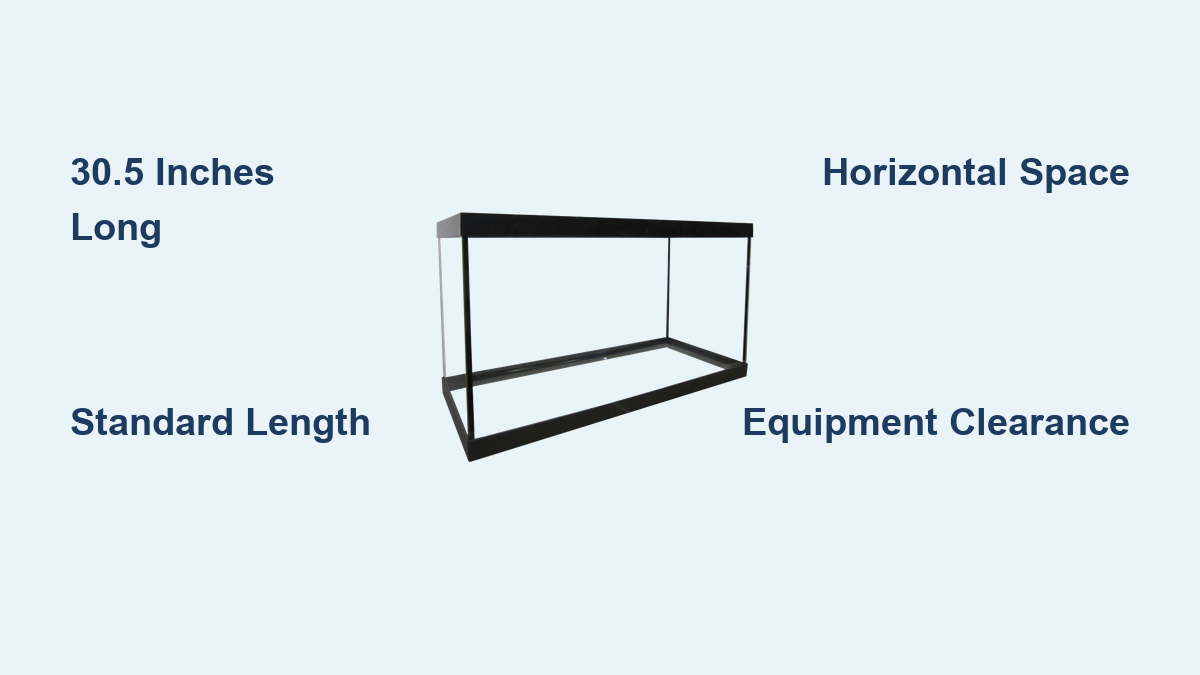
If you’re wondering “how long is a 20 gallon aquarium,” the answer is crucial for proper planning. The standard 20-gallon “long” aquarium measures precisely 30.5 inches in length, a measurement that determines whether it will fit in your space and support healthy aquatic life. Many beginners mistakenly assume all 20-gallon tanks share identical dimensions, only to discover their intended location won’t accommodate the actual footprint. Knowing the exact measurements prevents costly mistakes before you invest in stands, equipment, and livestock.
This seemingly simple question has significant implications for your entire setup. The 30.5-inch length provides critical horizontal swimming space that directly impacts fish health and tank maintenance. Unlike the taller but narrower 20-gallon “high” version, the standard long aquarium’s dimensions create a more natural environment for most fish species. Understanding these specifications helps you avoid the common pitfall of purchasing a tank that won’t fit your designated space or properly house your intended inhabitants.
30.5 Inches: The Exact Length of Your Standard 20-Gallon Aquarium
The industry-standard 20-gallon “long” aquarium, including popular models like the Aqueon 20-gallon, measures exactly 30.5 inches (77.5 cm) in length. This precise measurement isn’t arbitrary—it’s the result of standardized manufacturing that creates a tank holding 20 US gallons (75.7 liters) of water when filled to the recommended level. The full dimension breakdown includes:
- Length: 30.5 inches (77.5 cm)
- Width (Depth): 13 inches (33 cm)
- Height: 13.125 inches (33.3 cm)
Why These Specific Measurements Matter
The 30.5-inch length creates a critical horizontal swimming space that benefits most fish species. Unlike taller tanks with less surface area, this dimension provides optimal gas exchange at the water’s surface while giving fish room to establish territories. The width (13 inches) ensures adequate depth for substrate and decorations without wasting space, while the height (13.125 inches) prevents excessive evaporation while allowing proper lighting penetration.
How Manufacturers Determine These Dimensions
Tank dimensions follow precise mathematical calculations based on water displacement. A 20-gallon tank must contain approximately 5,200 cubic inches of space (20 gallons × 231 cubic inches per gallon). The 30.5 × 13.125 × 13 inch configuration creates this exact volume while maintaining structural integrity. Glass thickness (typically 1/4 inch for this size) and silicone seam width slightly reduce the internal capacity, which is why manufacturers design tanks to hold slightly more than the advertised volume when empty.
20-Gallon Long vs. 20-Gallon High: Critical Dimension Differences

Why Length Trumps Height for Most Aquatic Setups
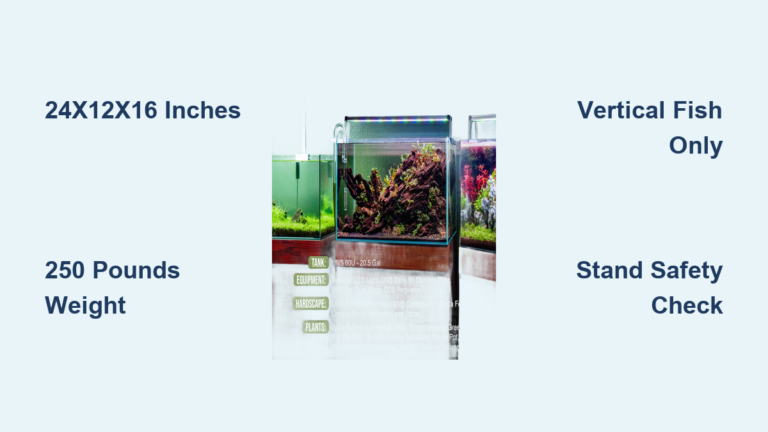
The standard 20-gallon “long” (30.5″ L × 13″ W × 13.125″ H) provides significantly more horizontal swimming space than the 20-gallon “high” (24″ L × 12″ W × 16″ H). This extra 6.5 inches of length creates a more natural environment for most fish, particularly active swimmers like tetras and danios. The longer footprint also increases surface area for better oxygen exchange—critical for maintaining healthy water parameters in a stocked tank.
Which Tank Type Should You Choose?
- Choose 20-gallon long for: Community fish tanks, planted aquariums, reptile habitats requiring horizontal space
- Choose 20-gallon high for: Tall cichlid tanks, certain marine setups where vertical space matters more
For beginners specifically searching “how long is a 20 gallon aquarium,” the long version is almost always the better choice. The 30.5-inch length accommodates more natural fish behavior and simplifies maintenance compared to the taller, narrower alternative.
What 30.5 Inches Looks Like in Your Space: Real-World Placement Tips

Measuring Your Space Like a Professional
Before purchasing your 20-gallon aquarium, measure your intended location with these critical considerations:
- Allow 1.5 inches of clearance on all sides for equipment access and ventilation
- Add 2 inches to the height measurement for lighting fixtures and maintenance access
- Include space for the stand’s base, which typically extends beyond the tank dimensions
Common Space Planning Mistakes to Avoid
- Underestimating weight: A filled 20-gallon tank weighs over 225 pounds—ensure your floor can support this
- Ignoring overhead clearance: You need at least 18 inches above the tank for feeding and maintenance
- Forgetting equipment space: Filters and heaters add 2-3 inches to the tank’s footprint
- Overlooking electrical access: Position within 3 feet of a GFCI-protected outlet
Stands & Furniture: Minimum Space Requirements for Your 30.5-Inch Tank
Finding the Perfect Stand for Your 20-Gallon Long Aquarium
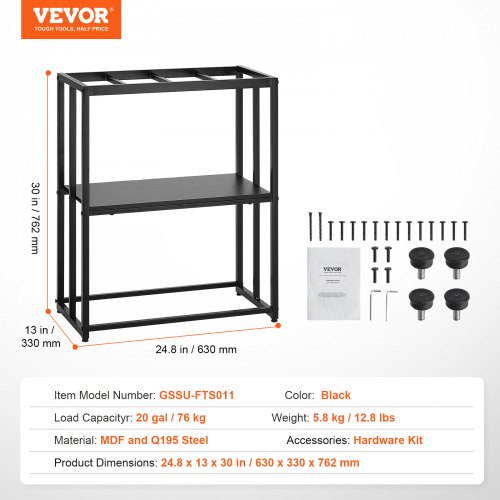
Your stand must accommodate the full 30.5-inch length plus additional space for equipment. Look for stands specifically rated for aquariums that:
- Measure at least 31.5 inches long to provide proper support
- Support 250+ pounds (empty tank: 10 lbs, water: 166 lbs, substrate/decor: 50+ lbs)
- Feature a completely flat, level surface without gaps
DIY Stand Considerations
If building your own stand, reinforce the top surface with plywood (minimum 3/4 inch thickness) to prevent uneven weight distribution. Place a 1/4-inch foam mat between the tank and stand to absorb minor imperfections in the surface. Never place your 30.5-inch aquarium on standard furniture not designed for aquarium weight distribution.
Stocking Guide: Max Fish Capacity for a 30.5-Inch Long Aquarium
Why Length Determines Your Fish Population
The 30.5-inch length of your standard 20-gallon tank directly impacts how many fish you can safely house. Horizontal swimming space matters more than total volume for active species. A longer tank allows fish to establish territories and reduces aggression compared to taller tanks with the same volume.
Recommended Stocking Levels by Species
- Small schooling fish (tetras, rasboras): 8-10 fish (provides natural schooling behavior)
- Community tanks: 15-20 small fish (with proper filtration and maintenance)
- Single centerpiece fish: 1 betta or dwarf gourami plus 6-8 small dither fish
- Reptiles: 1 leopard gecko or crested gecko (minimum requirement)
Species That Outgrow the 30.5-Inch Space
Avoid these common mistakes with your 20-gallon long aquarium:
– Goldfish: Even one fancy goldfish will quickly outgrow this space
– Common plecos: Can reach 18+ inches and need 55+ gallons
– Angelfish: Require taller tanks and more swimming room as adults
– Most cichlids: Need more territory than 30.5 inches provides
Setting Up Your 30.5-Inch Tank: Step-by-Step Placement Guide
Leveling Your 20-Gallon Long Aquarium Like a Pro
- Test floor levelness with a 24-inch carpenter’s level in both directions
- Place stand on foam mat (1/4 inch thick, cut to stand dimensions)
- Set empty tank on stand and check for rocking
- Adjust with cardboard shims under stand feet if needed (never under tank)
- Recheck level with tank filled 1/4 full before completing setup
Positioning Equipment in Your 30.5-Inch Space
Maximize your horizontal footprint with strategic equipment placement:
– Hang-on-back filter: Position at one end to create water flow across the entire length
– Heater: Place near filter output for even heat distribution
– Lighting: Ensure full coverage across the 30.5-inch span
– Decorations: Create visual interest with depth by placing larger items toward the back
Common Mistakes When Measuring Space for a 20-Gallon Long Aquarium
The 2-Inch Trap That Ruins Many Setups
Most beginners measure only the tank’s dimensions without accounting for equipment overhang. The filter alone typically adds 2-3 inches to the length, meaning your space must accommodate 32.5-33.5 inches total. Always measure your available space against the tank’s “working footprint” including all equipment.
Doorway and Hallway Clearance Issues
Before purchasing, verify your 30.5-inch aquarium can navigate through all doorways and hallways in your home. Standard interior doors are 28-32 inches wide—your tank may fit through when empty but require disassembly of door frames when filled. Measure diagonally across the tank (approximately 33 inches) to determine if it will turn corners.
Alternative Uses for a Standard 20-Gallon Long Aquarium
Beyond Fish: Maximizing Your 30.5-Inch Footprint
The versatile 30.5-inch length makes this tank ideal for multiple applications:
– Reptile habitats: Perfect minimum size for leopard geckos (30.5″ provides essential horizontal temperature gradient)
– Rodent housing: Accommodates 2-3 mice with proper ventilation modifications
– Brine shrimp hatchery: The length supports multiple hatchery setups side-by-side
– Quarantine hospital tank: Ideal size for isolating sick fish without wasting large tank space
Creative Modifications for Specialized Uses
Enhance your 30.5-inch tank for specific applications:
– Drill overflow holes for sump filtration in advanced setups
– Install mesh lids for reptile habitats requiring better ventilation
– Add custom lighting mounts that span the full 30.5-inch length
– Create divider systems for breeding or species separation
When to Choose a Different Size: Limitations of the 30.5-Inch Tank
Signs You Need More Than a Standard 20-Gallon Long
While the 30.5-inch aquarium works for many applications, upgrade when:
– You plan to keep goldfish (minimum 40 gallons for one fancy goldfish)
– Housing active swimmers like rainbowfish or larger tetra species
– Creating a heavily planted tank requiring more root space
– Planning to keep any turtle beyond juvenile stage
Space-Saving Alternatives for Limited Areas
If your space can’t accommodate the 30.5-inch length, consider:
– 15-gallon long aquarium (24″ L) for significantly smaller footprints
– Stacked nano tanks for vertical space utilization
– Custom-built corner tanks that maximize awkward spaces
Your 20-gallon aquarium’s exact 30.5-inch length determines everything from fish health to furniture requirements. This precise measurement creates the horizontal swimming space essential for most aquatic setups while fitting standard home dimensions. Always measure your space against the tank’s full working footprint—30.5 inches for the tank plus 2-3 inches for equipment. Whether you’re setting up your first community tank or converting to a reptile habitat, understanding these dimensions prevents costly mistakes and ensures a healthy environment for your inhabitants. Remember that proper leveling and weight distribution matter more with this length than with smaller tanks, so take time with your setup to enjoy years of trouble-free use.