How Aquarium Surface Skimmers Work
If you’ve ever stared at your aquarium only to notice an oily film clouding the surface or debris collecting where water meets air, you’ve encountered the exact problem surface skimmers solve. That thin layer of gunk might seem harmless, but it’s actually suffocating your aquatic ecosystem by blocking essential gas exchange and light penetration. Understanding how does aquarium surface skimmer work reveals why this seemingly simple device is non-negotiable for serious aquarists.
This persistent surface film forms because organic compounds from fish waste, uneaten food, and plant decomposition rise to the top, where surface tension traps them in a thin, iridescent layer. Left unaddressed, this film reduces oxygen exchange by up to 70%, creating dangerous conditions for your fish and plants. The good news is that properly functioning surface skimmers eliminate this problem by targeting only the top 1-3mm of water where contaminants accumulate.
In this guide, you’ll discover the precise mechanics behind surface skimming, learn which skimmer type matches your specific tank setup, and gain actionable maintenance techniques that keep your water crystal clear. Whether you maintain a freshwater community tank or a saltwater reef system, you’ll understand exactly how surface skimmers preserve that vital air-water interface your aquatic life depends on.
Why Surface Skimmers Target Only the Top Millimeter of Water
Surface skimmers operate on a critical principle: contaminants concentrate in the uppermost layer of water due to surface tension. This thin “skin” of water behaves differently than the water beneath it, creating a perfect trap for oils, proteins, and dust particles. Your skimmer exploits this physics by drawing precisely 1-2mm of surface water—no deeper—ensuring maximum contaminant removal without disturbing the main water column.
How Surface Tension Creates the Perfect Contaminant Trap
Water molecules at the surface cling tightly to each other, forming what scientists call the “air-water interface.” This cohesive force creates surface tension strong enough to support insects but also traps organic compounds like a sticky net. When fish food oils, decomposing plant matter, or airborne dust hit this surface, they get stuck rather than sinking. Your surface skimmer breaks this tension barrier by creating a controlled flow that pulls only this contaminated top layer into the filtration system.
Pro Tip: Test your tank’s surface tension by sprinkling pepper on the water. If it floats evenly, surface tension is intact. A working skimmer will quickly pull the pepper toward its intake, demonstrating effective surface disruption.
Laminar Flow: The Secret to Efficient Surface Skimming
Effective skimmers rely on laminar flow—smooth, non-turbulent water movement—to isolate the surface layer. Turbulent flow would mix surface water with deeper water, defeating the skimmer’s purpose. High-quality models achieve this through carefully engineered intake designs that create a gentle, directional current. When you adjust your skimmer’s flow rate, you’re optimizing this laminar flow to match your tank’s specific conditions.
Lily Pipe vs. Built-In Pump Skimmers: Which Works Better for Your Tank?
The two dominant surface skimmer designs solve the same problem through different mechanisms, making them suitable for specific aquarium setups. Understanding how does aquarium surface skimmer work in each configuration helps you select the right tool for your aquatic environment.
Built-In Pump Skimmers: Precision Control for Small Tanks
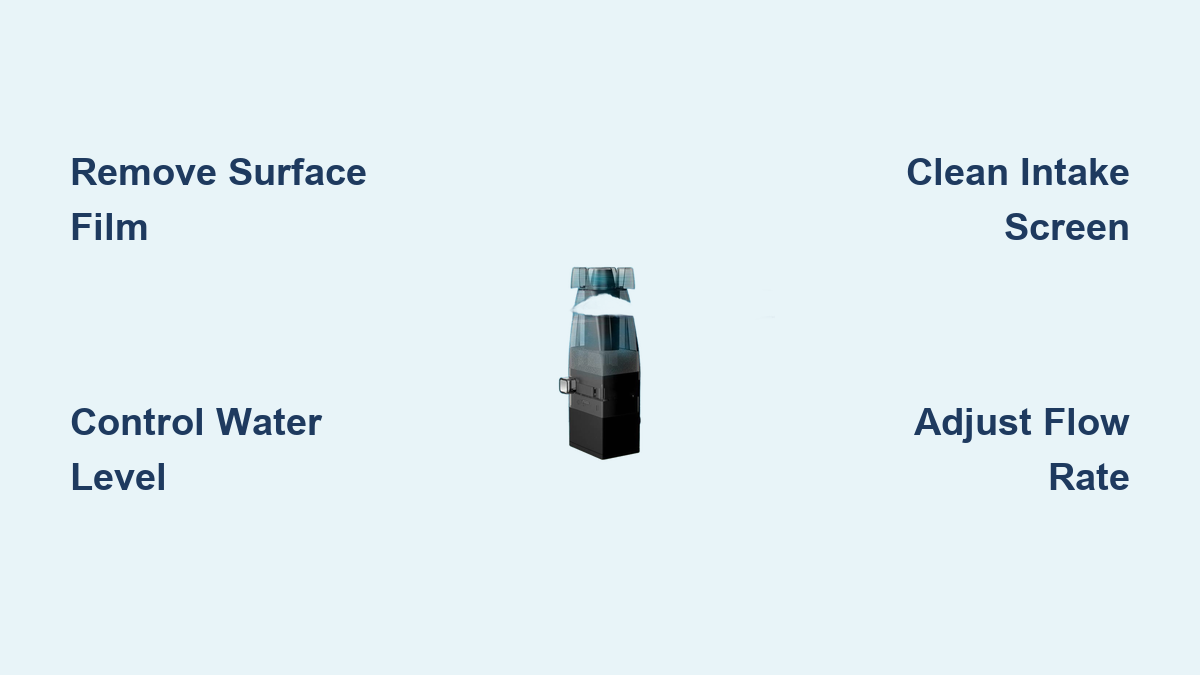
Self-contained units with integrated pumps excel in tanks under 50 gallons where precise surface control matters most. These skimmers create their own suction through a small impeller, drawing surface water through an adjustable weir (the thin edge that sits at water level). The magic happens when water passes through fine mesh or sponge filtration that traps protein films while returning cleaned water to your tank.
Key Installation Steps:
1. Position the skimmer away from filter returns to avoid competing water currents
2. Adjust the intake height so it sits precisely 1-2mm below the water surface
3. Set flow rate to create gentle surface movement without visible ripples
4. Angle the outflow to maintain consistent surface current toward the intake
Common Mistake: Placing the skimmer too close to tank walls reduces effectiveness by 40%—always position it at least 3 inches from glass for optimal surface flow.
Lily Pipe Systems: Energy-Efficient Skimming for Canister Filter Users
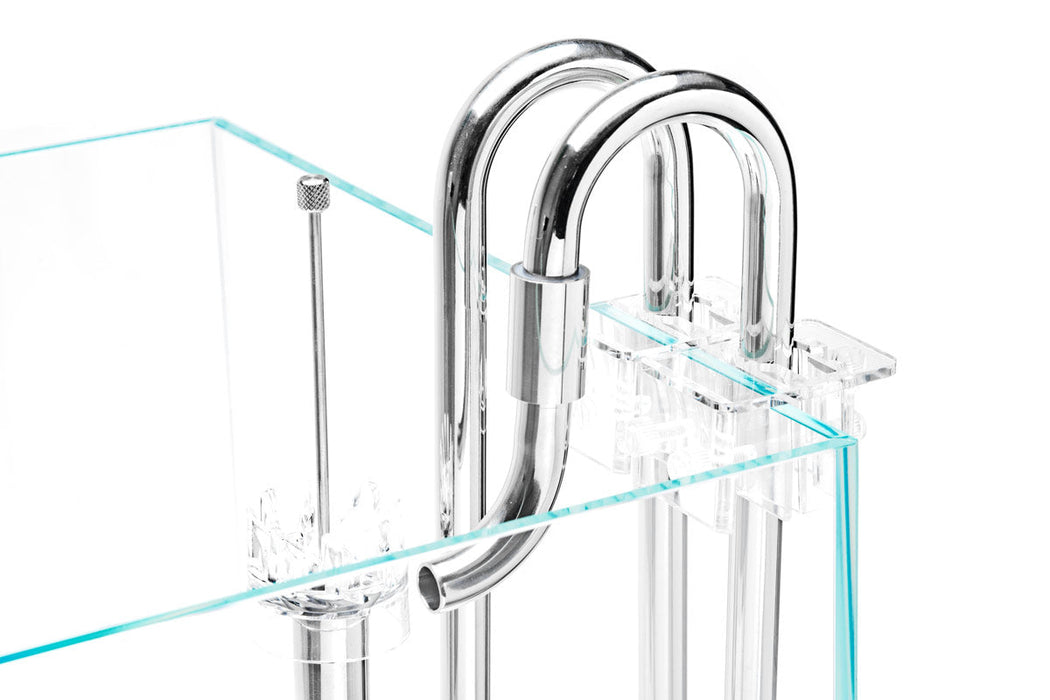
If your aquarium uses a canister filter, lily pipe surface skimmers offer brilliant efficiency by harnessing existing water flow. These attach to your canister’s intake tube and operate through the Venturi effect—when water accelerates through a narrow pipe, it creates suction that pulls surface water into the system. The lily pipe’s curved design creates a vortex at the water surface, drawing contaminants downward without additional energy consumption.
Why This Matters: Lily pipe systems reduce your aquarium’s energy use by eliminating the need for a second pump while maintaining superior surface cleaning. They’re particularly effective in planted tanks where excessive surface agitation could release valuable CO2.
What Your Skimmer Actually Removes: Beyond the Visible Film
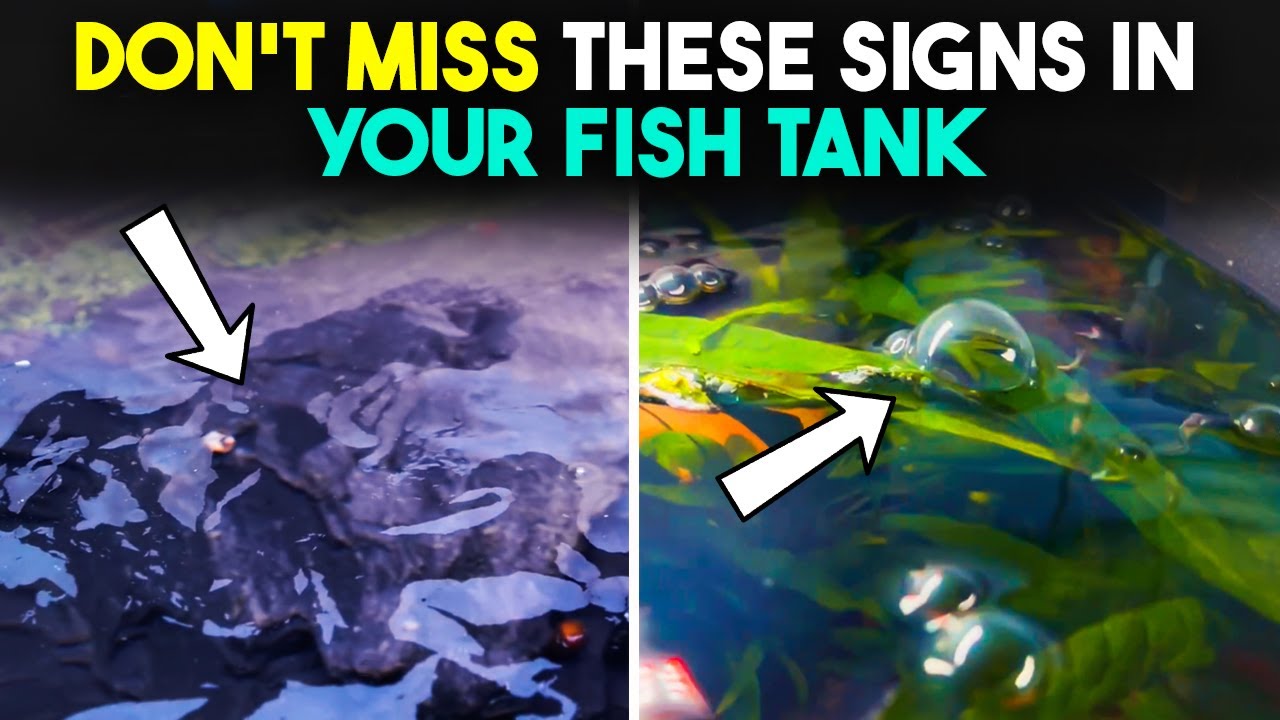
While the shiny surface film provides the most obvious indicator of trouble, your skimmer targets multiple invisible contaminants that threaten water quality. Understanding these hidden threats reveals why consistent surface skimming matters even when your water appears clear.
Protein Film Composition and Consequences
That iridescent sheen isn’t just unsightly—it’s a complex mixture of lipids (fats), proteins, and organic compounds that forms a physical barrier on your water’s surface. These compounds originate from:
– Fish food oils that rise after feeding
– Decomposing plant matter releasing organic compounds
– Fish waste breaking down into surface-active molecules
Critical Impact: This film reduces oxygen exchange by creating a physical barrier between air and water. In severe cases, oxygen levels can drop to dangerous levels within 48 hours, especially in heavily stocked tanks.
Airborne Contaminants You Never Notice
Your aquarium surface acts like a magnet for invisible airborne particles including:
– Cooking oils that drift through your home
– Household dust containing skin cells and fibers
– Pollen from outdoor plants
– Microscopic particles from cleaning products
Without consistent surface skimming, these contaminants accumulate, creating conditions where harmful bacteria thrive. The surface film essentially becomes a bacterial buffet that can trigger algae blooms and disease outbreaks.
Positioning and Maintenance: The Make-or-Break Factors for Skimmer Performance
Even the most advanced surface skimmer fails when improperly installed or neglected. These actionable techniques ensure your device operates at peak efficiency, delivering the crystal-clear water surface your aquatic ecosystem requires.
Finding Your Tank’s “Still Zone” for Optimal Placement
Every aquarium has areas of minimal water movement called “still zones”—typically opposite filter returns and away from wavemakers. Positioning your skimmer in this zone creates consistent surface flow without turbulence. To identify it:
1. Turn off all water movement devices
2. Gently stir the water surface
3. Watch where ripples dissipate slowest—that’s your still zone
4. Position the skimmer intake here for maximum surface film collection
Pro Tip: In tanks with strong currents, create artificial still zones using acrylic baffles that redirect water flow away from the skimmer area.
Weekly Maintenance Checklist for Peak Performance
Surface skimmers require minimal but critical upkeep to maintain effectiveness:
– Daily: Check that the intake sits precisely at water level (adjust for evaporation)
– Every 3 Days: Rinse mechanical filter media in tank water (never tap water)
– Weekly: Inspect for clogs in intake pipes and clean pump impellers
– Monthly: Replace filter media and check all connections for leaks
Warning: Never let mechanical filter media become completely saturated with organics—this creates a “contaminant dump” where trapped oils re-enter your water during cleaning.
Special Considerations for Different Aquarium Types

Surface skimming requirements vary dramatically between tank setups. Applying the right technique for your specific ecosystem prevents common problems while maximizing benefits.
Planted Tank Optimization: Balancing Skimming and CO2 Retention
In planted aquariums, excessive surface agitation releases valuable CO2 needed for plant growth. The solution? Use surface skimmers at the lowest effective flow rate that removes films without creating visible ripples. Position the outflow to create gentle surface movement in one direction only, minimizing gas exchange disruption while still removing contaminants.
Success Indicator: Your surface should remain completely clear while maintaining stable CO2 levels—test with a drop checker to verify.
Reef Tank Requirements: Aggressive Skimming for Coral Health
Saltwater reef tanks demand more aggressive surface skimming due to higher organic loads from corals and invertebrates. Protein films block critical light wavelengths needed for coral photosynthesis, making surface clarity essential. Use higher-flow skimmers positioned to create cross-tank surface currents that ensure complete surface coverage.
Expert Note: In reef tanks, surface skimming works synergistically with protein skimmers—surface skimmers remove visible films while protein skimmers target dissolved organics through foam fractionation.
Troubleshooting Common Surface Skimmer Problems in 5 Minutes
When your skimmer underperforms, these quick diagnostics solve 90% of issues without tools or replacement parts:
“My Skimmer Isn’t Removing Surface Film” – Quick Fixes
- Check water level: Evaporation drops often lower water below the intake—top off immediately
- Clean intake screen: A single strand of hair can reduce suction by 60%
- Verify flow direction: Outflow should create surface current toward intake
- Test for air leaks: Hissing sounds indicate air in the system breaking suction
Time-Saver: Keep a dedicated toothbrush for cleaning intake screens—it reaches tight spaces without damaging components.
“My Skimmer Causes Excessive Evaporation” – Simple Adjustments
- Reduce flow rate by 25% and monitor surface film for 24 hours
- Lower the intake height slightly (just 1mm can make a difference)
- Install a glass canopy to contain evaporation while maintaining surface access
- Add an automatic top-off system if reduction isn’t possible
Why Surface Skimming Is Non-Negotiable for Healthy Aquariums
Beyond clear water, consistent surface skimming delivers three critical benefits that sustain aquatic life:
- Optimal gas exchange—A clean surface allows 100% oxygen transfer efficiency while enabling proper CO2 release
- Prevented anaerobic conditions—Removing organic films stops the formation of toxic hydrogen sulfide gas
- Enhanced light penetration—Critical for plant photosynthesis and coral health in saltwater systems
Final Reality Check: Even with perfect filtration, without surface skimming your aquarium operates at only 60-70% of its potential health. That thin film represents a physical barrier to everything your aquatic life needs to thrive.
Understanding how does aquarium surface skimmer work transforms it from just another gadget into an essential component of your aquarium’s respiratory system. By targeting the critical air-water interface, these devices maintain the delicate balance that allows your fish, plants, and invertebrates to flourish. Whether you choose a simple lily pipe attachment or a sophisticated built-in pump model, consistent surface maintenance ensures your aquarium doesn’t just look healthy—it actually is.