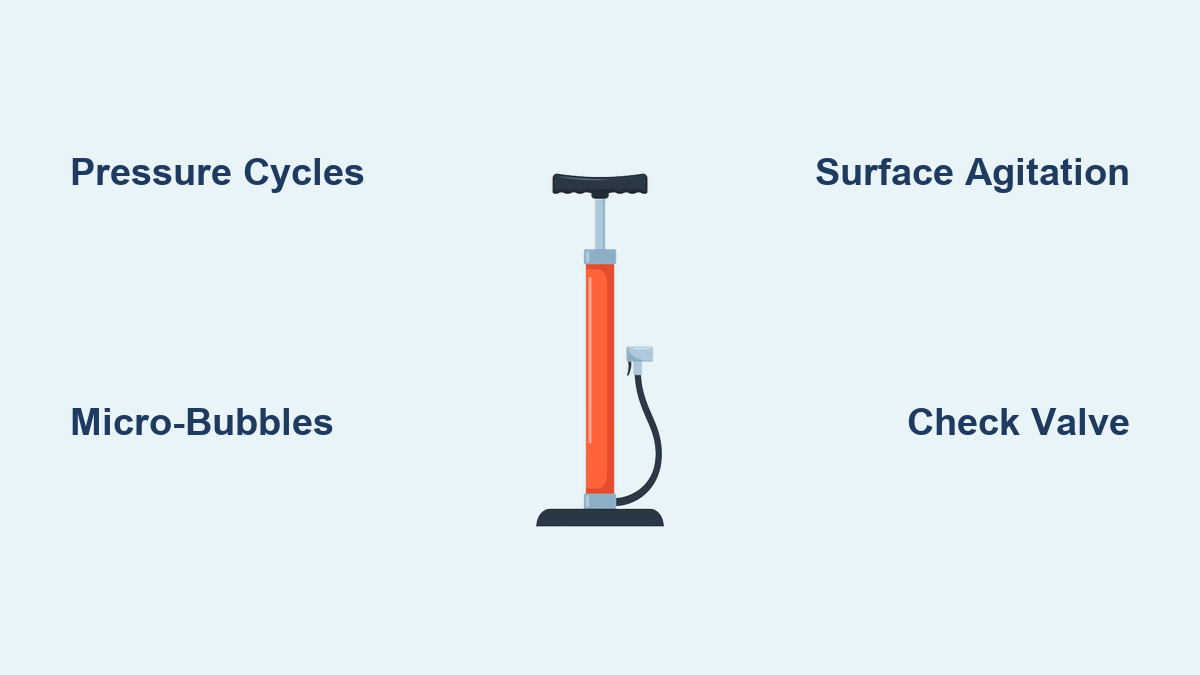
How Aquarium Air Pumps Work: Simple Guide
That gentle stream of bubbles rising from your aquarium’s gravel isn’t just decorative—it’s a lifeline for your fish. When oxygen levels drop below 5 ppm, fish gasp at the surface within minutes. Yet most hobbyists never consider what makes those bubbles possible. How does air pump work in aquarium systems to transform electricity into life-sustaining oxygen? The answer lies in clever physics, not magic. Understanding this process helps you troubleshoot weak bubbles, prevent deadly back-siphons, and ensure your tank never becomes an oxygen-depleted death trap. This guide reveals exactly how your air pump creates the circulation and gas exchange that keeps aquatic ecosystems thriving.
How Your Air Pump Creates Oxygen-Rich Bubbles Through Pressure Shifts
Your aquarium air pump functions as a miniature lung, using electromagnetic forces to manipulate air pressure. Unlike water pumps that push fluid, air pumps work by rapidly cycling between suction and compression phases. This pressure differential—typically just 0.1 to 0.3 PSI—is strong enough to draw atmospheric air into your tank but gentle enough to avoid harming delicate fish. When you plug in the pump, alternating current energizes an electromagnetic solenoid 50-60 times per second. This rapid cycling creates the distinctive pulsating bubble stream you see, with each “puff” representing a complete pressure cycle. Without this precise pressure manipulation, oxygen couldn’t penetrate your water column effectively.
Diaphragm Pumps: The Heartbeat of Most Aquariums
Over 90% of home aquariums use diaphragm pumps because they balance power and quiet operation. Here’s exactly how they turn electricity into bubbles:
- Intake Stroke (Suction Phase): When the solenoid energizes, it yanks a rubber diaphragm backward. This instantly expands the chamber volume, dropping internal pressure below atmospheric levels. The resulting vacuum forces the inlet valve open, sucking fresh air through the pump’s intake vent.
- Compression Stroke (Delivery Phase): As the solenoid de-energizes, a spring snaps the diaphragm forward. Chamber volume shrinks, compressing trapped air until pressure exceeds atmospheric levels. This slams the inlet valve shut while forcing the outlet valve open, blasting air into your airline tubing.
- Critical Timing: Valves must open/close within milliseconds. Worn rubber valves cause “air starvation,” where the pump runs but delivers weak bubbles—a common failure point after 1-2 years of use.
Piston Pumps: Power for Large or Multi-Tank Setups
For tanks over 75 gallons or systems powering multiple airstones, piston pumps deliver higher pressure (0.5+ PSI). Inside these units, an electric motor drives a piston rod in a precise back-and-forth motion:
– Pull Stroke: Piston retracts, creating low pressure that opens the intake valve. Air floods into the cylinder.
– Push Stroke: Piston compresses air, closing the intake valve and blasting air through the outlet.
While louder than diaphragm pumps, they handle deeper tanks better—essential when your airstone sits 18+ inches below the surface where water pressure resists bubble formation.
Why Micro-Bubbles from Airstones Oxygenate Water 300% Better

That white ceramic cube in your tank isn’t just for show—it’s an oxygen optimization machine. When pressurized air hits the airstone’s porous surface (typically 80-100 pores per inch), it fractures into micro-bubbles under 1mm in diameter. Here’s why this matters:
- Surface Area Explosion: A single 10mm bubble has 314mm² surface area. Shatter it into 1,000 micro-bubbles, and total surface area jumps to 9,420mm²—a 3,000% increase. Since oxygen transfer happens only at air-water interfaces, more bubbles mean faster oxygen dissolution.
- Extended Exposure Time: Micro-bubbles rise slower than large ones, spending 3-5x longer in the water column. This gives oxygen more time to diffuse into the water before reaching the surface.
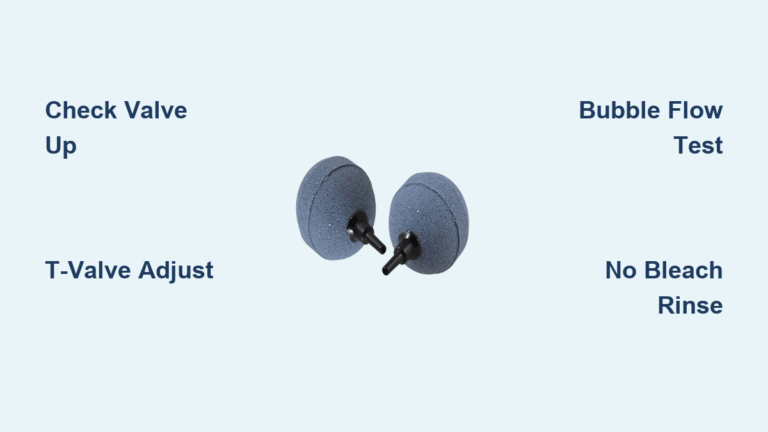
Pro Tip: Clean clogged airstones monthly by soaking in vinegar. Calcium deposits can reduce bubble count by 70%, crippling oxygen transfer even with a working pump.
Surface Agitation: The Real Oxygenation Hero Your Tank Needs
Forget what you’ve heard—bubbles themselves contribute less than 10% of dissolved oxygen. The true hero is the surface agitation they create. As micro-bubbles burst at the water’s surface, they generate microscopic ripples that:
- Break Surface Tension: Still water forms a “skin” that blocks gas exchange. Agitation disrupts this film, allowing atmospheric oxygen to dissolve directly into the water.
- Expel Toxic CO2: Rising bubbles carry carbon dioxide (a fish waste product) to the surface, where agitation releases it into the air. Without this, CO2 buildup can suffocate fish and crash pH below 6.0.
- Prevent Thermal Stratification: In deeper tanks, warm oxygen-rich surface water won’t mix with cooler, oxygen-poor bottom layers without circulation. Bubble-driven currents eliminate deadly “dead zones.”
Critical Insight: If your tank has strong filter output but no visible surface movement, add an air stone. Still water—even with filters running—can deplete oxygen overnight.
The 5 Non-Negotiable Parts of Your Air Pump System
Your pump is useless without these components working together. Skip any one, and you risk equipment damage or fish loss.
Check Valve: Your $3 Flood Prevention Lifesaver
Installed 6 inches above water level, this one-way valve stops water backflow if power fails. Without it, gravity siphons tank water into your pump, causing:
– 🔥 Electrical shorts that melt pump internals
– 💧 “Dry run” damage when restarting (diaphragms crack without water cushioning)
– 🐠 Contaminated water flooding your cabinet
Tubing and Splitters: Optimizing Airflow Distribution
Silicone airline tubing resists kinks better than vinyl. For multi-tank setups:
– Use gang valves to balance air between airstones
– Never exceed 50% of pump’s rated capacity per outlet (e.g., a 300L/hr pump maxes at 150L/hr per line)
– Replace yellowed tubing annually—micro-cracks cause air leaks
Diaphragm vs. Piston Pumps: Which Fits Your Tank?
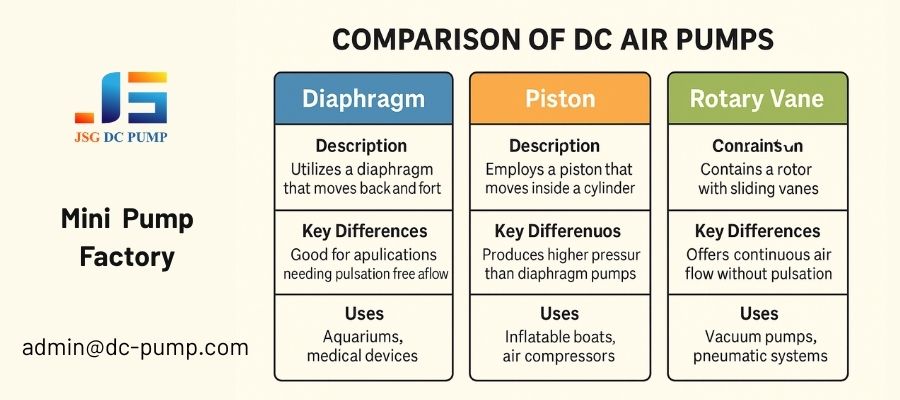
Choosing wrong strains your pump and wastes energy. Match pump type to your setup:
| Pump Type | Best For | Warning Signs of Mismatch |
|---|---|---|
| Diaphragm | Tanks < 55 gallons | Weak bubbles after 1 year |
| Sponge/undergravel filters | Loud buzzing (worn solenoid) | |
| Piston | Tanks > 75 gallons | Overheating (exceeds duty cycle) |
| Deep tanks (18″+ depth) | Oil leaks (seal failure) | |
| Linear | Noise-sensitive spaces | Intermittent airflow (coil issue) |
Real-World Fix: If your diaphragm pump struggles with a deep tank, move the airstone higher or add a second pump. Forcing one pump beyond capacity accelerates diaphragm fatigue.
Why Your Sponge Filter Dies Without an Air Pump

That fluffy filter in your betta tank relies entirely on air-driven circulation. Here’s the chain reaction when air stops:
1. Bubbles cease → water column stagnates
2. Oxygen drops below 2 ppm within 30 minutes
3. Beneficial bacteria on sponge die off
4. Ammonia spikes to lethal levels (1+ ppm)
5. Fish suffocate or suffer ammonia poisoning
Emergency Protocol: If air stops, immediately perform a 50% water change and add hydrogen peroxide (1ml per 10 gallons) to boost oxygen. Restart the pump within 1 hour to save your biofilter.
Maintaining Peak Performance: 3-Minute Monthly Routine
Prevent 90% of air pump failures with this checklist:
1. Check Valves: Blow through them—air should flow one way only. Replace if sticky.
2. Airstones: Soak in 1:1 vinegar/water for 30 minutes if bubbles enlarge (indicates clogging).
3. Tubing: Squeeze along its length. Hissing sounds mean micro-leaks—replace immediately.
4. Pump Vents: Vacuum dust from intake vents (clogs cause overheating).
Pro Tip: Place pumps on vibration-dampening pads. Excess shaking misaligns internal parts, reducing output by 40% over time.
Conclusion: Beyond Bubbles—Your Oxygen Insurance Policy
Understanding how does air pump work in aquarium systems transforms it from a decorative accessory into a precision life-support tool. Remember: the bubbles themselves are merely the delivery mechanism—the real oxygenation happens through surface agitation and water circulation. A properly maintained air pump with clean airstones and a check valve ensures dissolved oxygen stays above 6 ppm, preventing fish stress and supporting critical nitrifying bacteria. For most tanks, a single diaphragm pump running 24/7 provides all the aeration needed. If you notice gasping fish or sluggish airstones, revisit these pressure principles—they’ll guide your fix. Keep your pump humming, your surface rippling, and your aquatic ecosystem will thrive for years.