Blackwater Aquarium Setup Guide: Easy Steps for 2026
You’ve seen those stunning amber-tinted aquariums that look like a slice of the Amazon rainforest—where fish glow with vibrant colors against a backdrop of drifting leaves and weathered wood. This isn’t murky water; it’s a meticulously crafted blackwater aquarium setup designed to replicate slow-moving forest streams in South America and Southeast Asia. Unlike traditional tanks, blackwater environments thrive on soft, acidic water (pH 4.0–6.5) stained by tannins from decaying botanicals. In this guide, you’ll discover exactly how to create this unique ecosystem—avoiding common pitfalls that sabotage beginners—while boosting fish health, reducing disease, and unlocking natural behaviors. Forget crystal-clear water; here’s how to build a thriving habitat where your fish truly feel at home.
Why Your Fish Thrive in Blackwater Conditions
Blackwater aquariums aren’t just visually striking—they solve critical health issues for sensitive species. Neon tetras, cardinal tetras, and apistogramma dwarf cichlids evolved in tannin-rich waters where humic acids suppress pathogens. Without this environment, chronic stress weakens their immune systems, dulls colors, and shortens lifespans. The tea-colored water isn’t dirt; it’s a natural shield. Tannins create mild antibacterial and antifungal properties, mimicking the protective leaf litter of Amazonian streams. Species like bettas and wild angelfish display bolder colors and more active spawning behaviors here. Crucially, the soft, acidic water reduces osmotic stress on gills and scales—something hard-water tanks can’t replicate. If your fish seem “off” despite perfect ammonia readings, mismatched water chemistry is likely the culprit.
How Tannins Protect Against Disease Outbreaks
Tannins and humic substances disrupt bacterial cell membranes—a natural defense against ich and fin rot. In blackwater setups, fish like discus and rummy-nose tetras show 30–50% fewer disease incidents compared to neutral-pH tanks. The key is stability: sudden parameter shifts cause more harm than “imperfect” but consistent conditions. Never chase an exact pH number; prioritize stable low KH (0–3 dKH) to prevent dangerous swings.
Species That Demand Blackwater Conditions
Cardinal tetras, wild-caught angelfish, and apistogramma cacatuoides won’t thrive long-term without soft, acidic water. Even bettas—often kept in subpar conditions—exhibit richer reds and blues when KH stays below 3 dKH. Avoid mixing these with hard-water species like guppies or African cichlids; their conflicting needs doom the entire tank.
Essential Blackwater Tank Components That Define Your Ecosystem
Substrate: The Foundation for Stable Water Chemistry
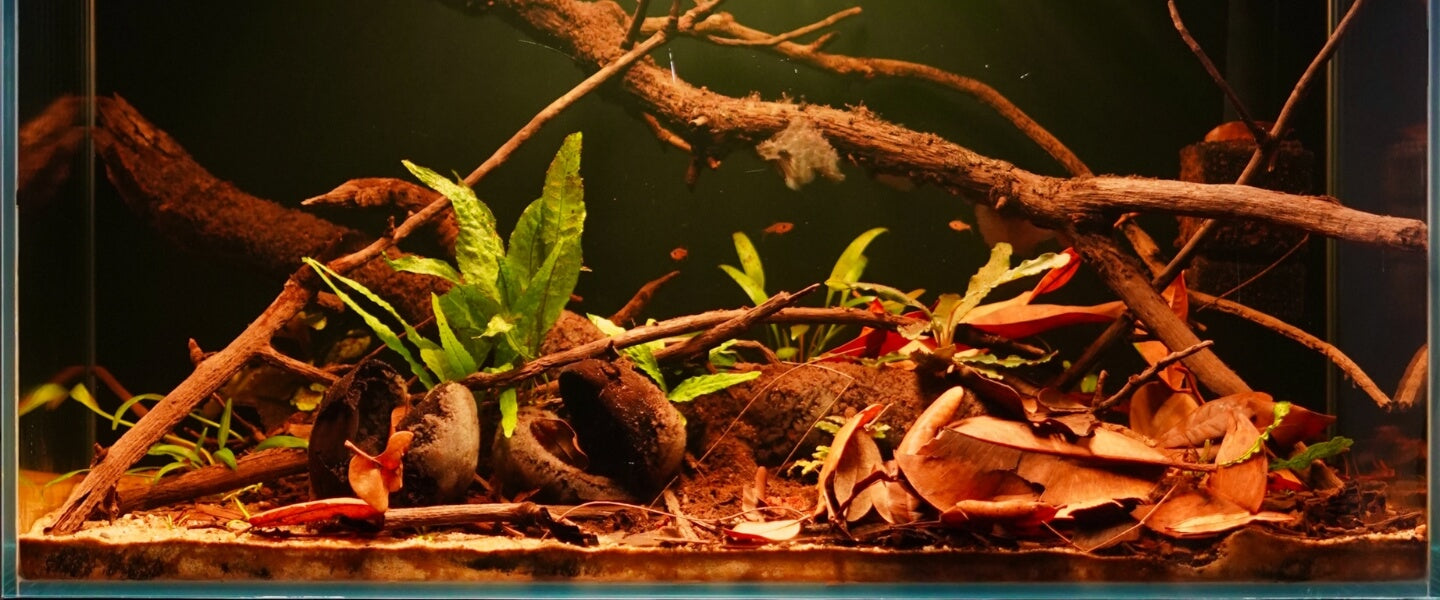
Use inert dark sand or fine gravel—never limestone-based substrates. Pool filter sand or CaribSea Super Natural Moonlight Sand won’t leach minerals that harden water. Dark substrates enhance fish colors and mimic riverbeds where leaf litter accumulates. Avoid aquasoils unless specifically labeled “buffering”; most lower pH temporarily but fail in long-term blackwater stability.
Hardscape: Driftwood as Your Tannin Engine
Malaysian driftwood or mopani wood must anchor your setup. These woods leach tannins for 12–18 months, creating the signature amber hue. Soak new wood for 72 hours (changing water daily) to remove excess tannins that could crash pH initially. Secure it with stainless steel screws—never glue—since botanicals will eventually cover attachment points. Pair with slate or lava rock; avoid any stone that fizzes in vinegar (a sign of calcium carbonate).
Managing Water Chemistry: The Blackwater Make-or-Break Factor

Why RO/DI Water Is Non-Negotiable
Tap water usually contains high KH (carbonate hardness) that fights pH drops. You cannot create stable blackwater conditions without reverse osmosis/deionized (RO/DI) water. Test your tap: if KH exceeds 3 dKH, mix 50–70% RO/DI with treated tap water. For pure blackwater, use 100% RO/DI, then add a GH booster (like Seachem Equilibrium) to reach 3–6 dGH—without raising KH. Re-mineralize before adding water to the tank; never dump minerals directly into your display.
The KH-PH Connection You Must Master
KH is your pH’s “anchor.” High KH (>5 dKH) makes acidic conditions impossible. Target 0–3 dKH for blackwater stability. If your KH creeps up:
1. Test source water immediately
2. Increase RO/DI ratio in water changes
3. Add peat moss to filter media (use mesh bags)
4. Never use pH-down chemicals—they cause toxic crashes
Step-by-Step Blackwater Aquarium Setup Without Cycling Failures
Day 1: Tank Assembly and Water Preparation
- Rinse inert substrate; add 1.5–2 inches to tank
- Position driftwood and rocks (no substrate underneath)
- Fill slowly with pre-mixed RO/DI water (aged 24 hours with 1–2 catappa leaves)
- Install sponge filter—never activated carbon
- Add bacterial starter (Seachem Stability) and 1 pinch fish food
Week 1–4: Cycling and Tannin Infusion
Do not add fish yet. Drop in pre-boiled botanicals:
– 3–5 Indian almond leaves (sink them with a rock)
– 2–3 alder cones (boil 10 minutes first)
– Replace leaves monthly as they disintegrate
Test KH/pH daily for first week. Once KH stabilizes at 1–2 dKH and ammonia/nitrite hit zero, you’re ready for fish.
Best Fish and Shrimp for Your Blackwater Ecosystem

Top Species That Flourish in Tannin-Rich Water
- Tetras: Cardinals, embers, and rummy-nose (school of 10+)
- Dwarf cichlids: Apistogramma agassizii (1 male + 2–3 females per 20 gallons)
- Shrimp: Crystal red shrimp (Caridina) require pH 5.5–6.5; neocaridinas tolerate wider ranges
- Bottom dwellers: Corydoras habrosus (avoid bronze corys—they need harder water)
Critical Acclimation Technique for Sensitive Fish
Drip-acclimate over 90+ minutes. Store water often has high KH—rushing causes fatal osmotic shock. Use a battery-operated air pump to slowly add tank water to the transport bag.
Critical Blackwater Maintenance Steps You Can’t Skip
Weekly Water Change Protocol
- Prepare replacement water 24 hours ahead: RO/DI + GH booster + 1 catappa leaf per 5 gallons
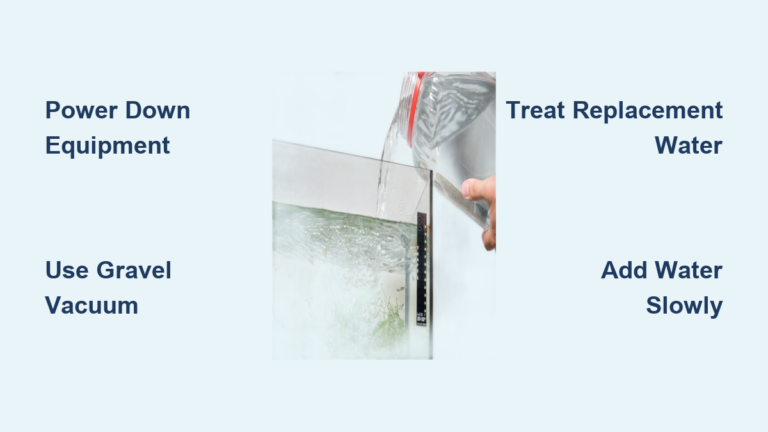
- Siphon 15% water gently—avoid disturbing leaf litter
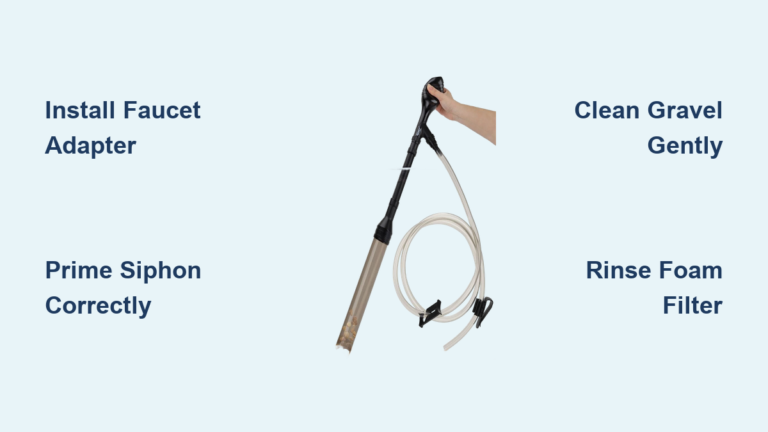
- Vacuum only heavy debris; leave fine particles for shrimp to graze
- Match temperature within 0.5°F to prevent stress
Botanical Replacement Schedule
| Item | Lifespan | Replacement Tip |
|---|---|---|
| Catappa leaves | 4–6 weeks | Add new leaves before old fully decay |
| Alder cones | 8–12 weeks | Boil new cones first to prevent mold |
| Seed pods | 10–14 weeks | Rinse in tank water before adding |
Fixing Common Blackwater Tank Problems Before They Escalate
Cloudy Water After Adding Botanicals
Cause: Bacterial bloom from excess organic matter.
Fix: Reduce botanicals by 30%, increase aeration, and skip feeding for 48 hours. Never use water clarifiers—they remove beneficial bacteria.
Fish Gasping at Surface
Cause: Low oxygen from tannin overload or overstocking.
Fix: Add an air stone, remove half the botanicals temporarily, and reduce bioload. Blackwater tanks need 0.5x more surface agitation than clear-water setups.
pH Creeping Upward
Cause: Substrate or rocks leaching minerals.
Fix: Test all hardscape with vinegar—if it bubbles, replace it. Use peat moss in filter media as a pH buffer.
Final Note: A successful blackwater aquarium setup hinges on three pillars: RO/DI water with near-zero KH, slow tannin infusion via botanicals, and patient cycling. Start simple—100% RO/DI water, Malaysian driftwood, and catappa leaves—in a 20-gallon tank with cardinal tetras and crystal red shrimp. Within six weeks, you’ll see fish displaying natural behaviors like leaf-foraging and vibrant spawning colors impossible in standard tanks. Remember: stability trumps perfection. Test KH weekly, replace botanicals gradually, and let your tank mature. The reward? A living ecosystem where every flick of a neon tetra’s tail feels like a window into the Amazon. For ongoing success, bookmark water parameter logs and join blackwater-focused forums like The Planted Tank’s botanical section—your next-level habitat starts now.