Best Betta Aquarium Setup (2026 Guide)
Forget everything you’ve seen about bettas in tiny bowls. The truth is, those cramped, unfiltered environments cause unnecessary stress and dramatically shorten your fish’s lifespan. A proper betta aquarium setup isn’t just about aesthetics—it’s about creating a stable ecosystem where your betta can thrive, display vibrant colors, and live its full 3-5 year potential. This guide reveals exactly what you need to build the best betta aquarium setup that supports natural behaviors while being manageable for beginners.
Most betta owners don’t realize that a cramped environment directly causes the lethargy, faded colors, and frequent illnesses they see. By investing in the right setup from day one, you’ll avoid the common pitfalls that lead to suffering fish and frustrated owners. Let’s build an environment where your betta feels secure, has space to explore, and shows off its magnificent fins without constant health battles.
Why 5 Gallons Is the Absolute Minimum for Betta Survival
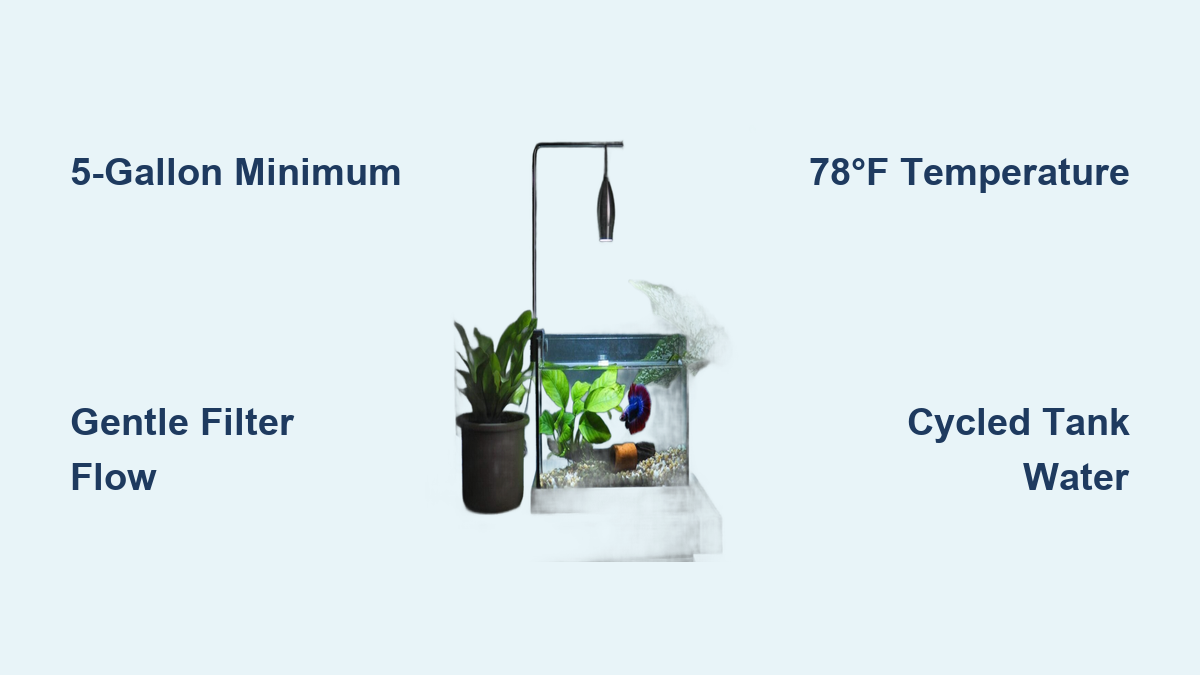
That tiny vase or bowl you see in pet stores is a death sentence for your betta. These labyrinth fish evolved in shallow rice paddies of Southeast Asia, not stagnant containers with no filtration. The minimum 5-gallon requirement isn’t arbitrary—it’s the smallest volume that dilutes toxic ammonia to safe levels between water changes.
Horizontal Tanks Beat Tall Tanks Every Time
Bettas are surface breathers but prefer horizontal swimming space. A 20-gallon “long” tank (30″ x 12″ x 12″) provides ideal dimensions—low height with maximum swimming room. Tall tanks force your betta to expend unnecessary energy diving deep, causing stress that weakens their immune system over time.
Jump Prevention Isn’t Optional—It’s Essential
Bettas are notorious escape artists. A tight-fitting lid maintains the warm, humid air layer they need for proper labyrinth organ function while preventing fatal jumps. Ensure all filter and cord openings are sealed with fine mesh—your betta can squeeze through gaps smaller than you’d believe.
The Essential Equipment Trio You Can’t Skip

Your betta’s survival depends on three non-negotiable components working together. Skip any one of these, and you’re gambling with your fish’s health.
Why Your Betta Needs a 78°F Constant Temperature
Bettas thrive at 78-80°F (25.5-26.5°C). Below 75°F, their metabolism slows, making them vulnerable to diseases like fin rot. Use a submersible heater (50W for 5-10 gallons) with external temperature control—preset heaters often malfunction, creating dangerous temperature swings.
Filter Selection: Gentle Flow Is Non-Negotiable
Strong currents damage delicate betta fins and cause chronic stress. Your best options:
– Sponge filters: The gold standard with ultra-gentle flow
– Baffled HOB filters: Direct outflow toward tank wall, add filter floss to reduce current
– Canister filters: Only if flow rate is adjustable below 4x tank volume per hour
Thermometer and Test Kit: Your Early Warning System
Daily temperature checks and weekly water tests catch problems before they become emergencies. The API Freshwater Master Test Kit is worth every penny—it measures the ammonia, nitrite, and nitrate levels that determine your betta’s survival.
Water Parameters That Keep Your Betta Vibrant and Healthy
Clear water doesn’t mean healthy water. Your betta’s stunning colors and active personality depend on precise chemical balance that beginners often overlook.
The Nitrogen Cycle: Your Invisible Lifesaver

This biological process converts deadly ammonia into less toxic compounds. You must complete this 4-6 week cycle before adding your betta:
1. Add pure ammonia to reach 2-4 ppm
2. Introduce bottled bacteria (Seachem Stability)
3. Test daily until ammonia and nitrite read zero
4. Perform large water change before adding fish
Critical Parameters You Must Monitor
| Parameter | Safe Level | Danger Zone |
|---|---|---|
| Ammonia | 0 ppm | >0.25 ppm |
| Nitrite | 0 ppm | >0.5 ppm |
| Nitrate | <20 ppm | >40 ppm |
| Temperature | 78-80°F | <75°F or >82°F |
| pH | 6.5-7.5 | <6.0 or >8.0 |
Creating a Natural Habitat That Reduces Stress
Bettas don’t just survive—they thrive—in environments that mimic their natural habitat. This isn’t about decoration; it’s about meeting biological needs.
Substrate and Plant Selection That Works With Nature
Smooth sand or fine gravel (2-3mm) prevents injury while supporting plant growth. For live plants:
– Anubias and Java Fern: Attach to driftwood (never bury rhizomes)
– Floating plants: Frogbit provides surface cover bettas love
– Avoid plastic plants: Sharp edges tear delicate fins during exploration
Strategic Zone Design for Behavioral Health

Create distinct areas in your tank:
– Open swimming zone: Clear space in front third of tank
– Security zone: Dense plant cover in back corners
– Resting zone: Near surface with floating plants
– Feeding zone: Open area where pellets won’t get trapped
Feeding Your Betta for Maximum Color and Longevity
What you feed directly impacts your betta’s vibrancy and lifespan. Generic flakes won’t cut it for these carnivorous fish.
The Perfect Betta Diet Formula
High-quality pellets should form 70% of your betta’s diet, supplemented with:
– Frozen bloodworms: Once weekly treat (high protein)
– Live brine shrimp: Boosts color and activity
– Daphnia: Natural fiber source prevents bloating
Pro Tip: Soak pellets for 5 minutes before feeding—they expand in water and can cause fatal bloating if eaten dry.
Portion Control: Why Less Is More
Feed 3-4 pellets twice daily—no more than your betta can consume in 2 minutes. One fasting day weekly improves digestion and prevents obesity-related issues. Overfeeding causes 60% of common betta health problems, including deadly swim bladder disease.
Weekly Maintenance That Prevents 90% of Health Issues
A well-designed betta aquarium requires just 30 minutes weekly of focused maintenance. Skip these steps, and you’ll face constant health battles.
The 25% Water Change Protocol That Works
- Unplug heater and filter
- Siphon 25% of water while vacuuming substrate
- Treat new water with Seachem Prime (1-2 drops per 5 gallons)
- Match temperature within 2°F of tank water
- Refill slowly to avoid disturbing substrate
Monthly Deep Clean Checklist
- Rinse filter media in old tank water (never tap water)
- Scrape algae from viewing panels only
- Remove and clean decorations in tank water
- Test heater accuracy with separate thermometer
- Prune overgrown plants to maintain open swimming areas
Troubleshooting Common Betta Setup Problems
Even with perfect setup, issues arise. Knowing these quick fixes saves your betta’s life.
Why Your Betta’s Fins Are Clamped (And How to Fix It)
Clamped fins signal stress or illness. First check:
– Water temperature (below 75°F causes clamping)
– Ammonia levels (even 0.25 ppm stresses bettas)
– Recent tank changes (decor rearrangement causes stress)
Immediate action: Perform 30% water change with Prime, check heater function, add aquarium salt (1 tsp per 5 gallons).
Green Water Bloom: The 72-Hour Fix
Cloudy green water indicates algae bloom from excess nutrients. Solve it by:
1. Turning off tank lights for 72 hours
2. Adding fast-growing plants like hornwort
3. Reducing feeding by 50% for one week
4. Installing a UV sterilizer if recurring
Final Checklist for the Best Betta Aquarium Setup
Before adding your betta, verify these essentials:
– ✅ 5+ gallon horizontal tank with tight-fitting lid
– ✅ Submersible heater maintaining 78-80°F constantly
– ✅ Sponge filter or baffled HOB with gentle flow
– ✅ Cycled tank showing 0 ammonia and 0 nitrite
– ✅ Smooth plants/decor with multiple hiding spots
– ✅ API liquid test kit and Seachem Prime on hand
A properly set up betta aquarium transforms from a chore into a captivating living display. Your fish will display brighter colors, more active behaviors, and live years longer than bowl-bound bettas. Remember: the best betta aquarium setup isn’t about what looks pretty to you—it’s about creating conditions where your betta feels secure enough to show its true personality. Start right, and you’ll enjoy your magnificent companion for years rather than months.