Aquarium Plant Care Guide: Easy Tips for a Healthy Tank
Your vibrant planted tank turned into a green mess overnight? You’re not alone. Over 70% of new aquascapers battle algae within the first three months, often because they miss one critical truth: aquarium plant maintenance isn’t about perfection—it’s about stability. Plants thrive when light, CO2, and nutrients stay consistent, not when you chase ideal parameters. Whether you’re wrestling with black beard algae on your Anubias or watching stem plants stretch desperately toward the light, this guide delivers field-tested fixes from day-one setup to advanced troubleshooting. You’ll learn exactly how to prune for explosive growth, spot-treat algae without harming shrimp, and create a self-sustaining ecosystem where plants outcompete invaders. Let’s transform your tank from a frustration into a living masterpiece.
Stop New Tank Algae Before It Starts (4 Critical Steps)
New tanks almost always experience algae blooms as bacteria colonies establish. Instead of panicking, implement these stability-focused actions immediately:
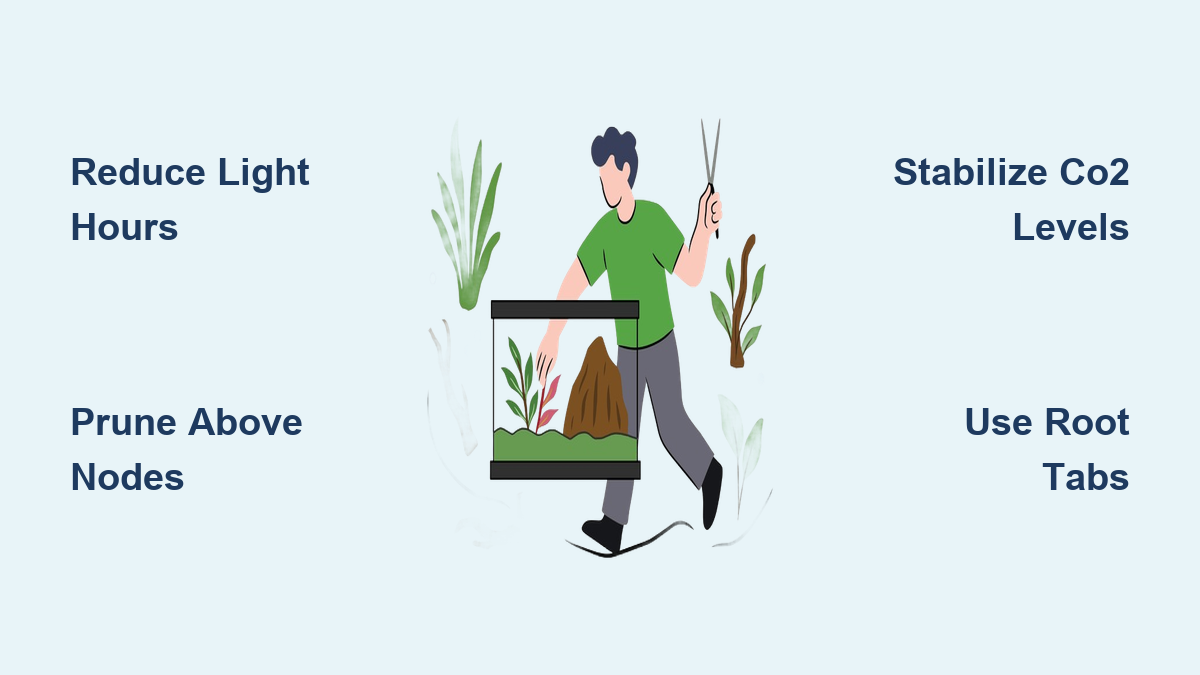
Reduce light to 4-6 hours daily for the first 30 days. This simple step prevents light energy from feeding algae while plants acclimate. Use a $5 timer—never rely on manual control. For persistent green hair algae, switch to a “siesta schedule”: 4 hours on, 4 hours off, then 4 hours on. This prevents midday CO2 crashes that trigger algae explosions.
Perform 25-50% water changes weekly with dechlorinated water matched to tank temperature. Never change more than 50% at once—this destabilizes beneficial bacteria. Vacuum only the top layer of substrate to avoid disturbing root zones. After each change, dose liquid fertilizer at half-strength to avoid nutrient spikes.
Add floating plants like frogbit within the first week. These nutrient sponges absorb excess nitrates before algae can, while providing shade for light-sensitive plants like Cryptocoryne. Aim for 20% surface coverage—enough to block light but not suffocate gas exchange.
Never clean plant leaves aggressively. Beneficial biofilm on leaves feeds shrimp and snails. Gently wipe stubborn algae with filter floss wrapped around a chopstick. If using bleach dips (19:1 water:bleach), limit to 2 minutes max and rinse thoroughly.
Fix Leggy Stem Plants in 3 Pruning Steps
When stem plants like Rotala or Ludwigia grow sparse with large gaps between leaves, they’re starving for light. Don’t just trim—they need strategic surgery to trigger bushy regrowth:
Cut Above Leaf Nodes to Force Side Shoots
Using curved aquascaping scissors, make a clean cut 1 inch above a leaf node (where leaves attach to the stem). Discard any woody, brown lower stems. The remaining plant will produce 2-3 new shoots from that node within 7-10 days.
Replant Tops Immediately for Instant Density
Remove bottom leaves from the cut top section and plant 3-5 stems together 1-2 inches deep using tweezers. Space groups 2 inches apart—this creates instant fullness while the original stems regrow. For carpet plants like Dwarf Hairgrass, plant clumps 1 cm apart.
Dose Potassium After Trimming to Prevent Holes
Within 24 hours of pruning, add potassium-rich fertilizer. Leggy growth often masks potassium deficiency, which causes holes in new leaves. Use 1 ml per 10 gallons—this fuels explosive regrowth without triggering algae.
Pro Tip: Trim stem plants every 2-3 weeks. Waiting longer causes light deprivation at lower leaves, creating a vicious cycle of legginess.
Eradicate Black Beard Algae Without Harming Shrimp

Black beard algae (BBA) on driftwood or slow-growing plants signals CO2 instability. Chemical removers kill shrimp—use this targeted method instead:
Stabilize CO2 Levels First (The Real Fix)
Attach a drop checker mid-tank. If it turns blue (CO2 too low), increase bubbles to 1-2 per second for 20-30 gallon tanks. BBA thrives when CO2 fluctuates daily—consistency for 72 hours stops new growth.
Spot-Treat Existing BBA With Hydrogen Peroxide
At lights-off, use a syringe to apply undiluted 3% hydrogen peroxide directly onto algae patches. Wait 10 minutes, then stir water gently to disperse. Repeat for 3 nights. Never exceed 10 seconds of direct contact—this kills algae but spares plant tissue.
Boost Flow Around Problem Areas
Position a small powerhead to create ripple on the water surface near infected zones. BBA clings to stagnant spots—increased flow prevents regrowth. Aim for surface movement visible from 3 feet away.
Critical Warning: If BBA covers more than 30% of plants, manually remove affected leaves first. Spot-treating large patches risks oxygen depletion during die-off.
Root-Feeding Plant Maintenance That Actually Works
Amazon Swords and Cryptocoryne waste away in nutrient-poor gravel. These root-dependent plants need precise substrate care:
Layer Substrate Like a Pro (No Cloudiness)
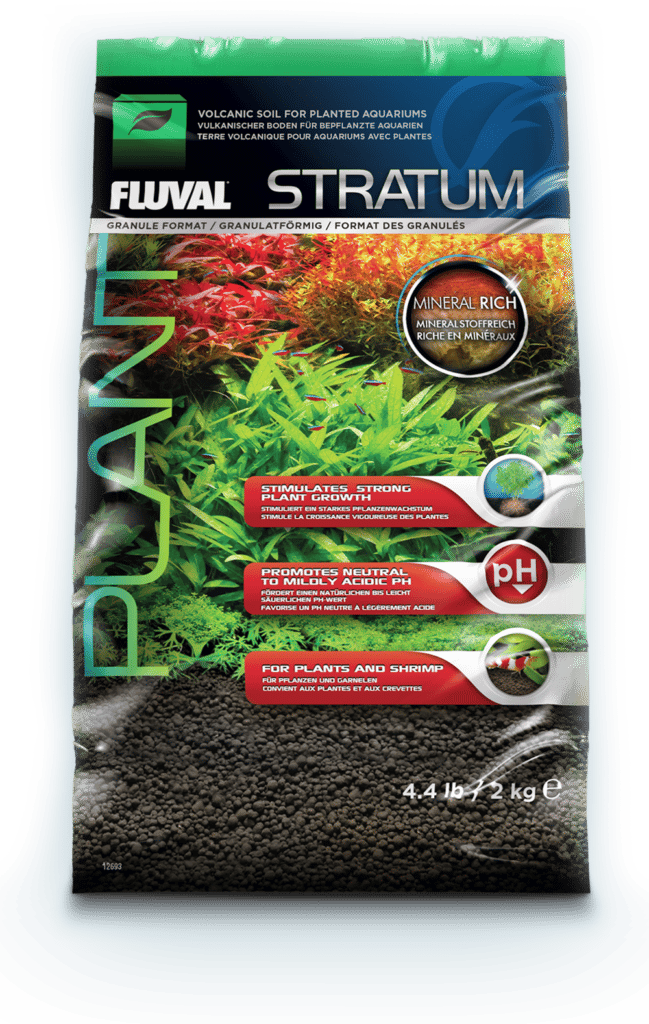
Create a nutrient sandwich: 1 inch laterite/clay balls → 2 inches planted tank soil (Fluval Stratum) → cap with 1 inch fine gravel. Rinse cap layer until water runs clear before adding to tank. This prevents muddy water while feeding roots.
Place Root Tabs Like a Surgeon
Use planting tweezers to push tabs 2-3 inches deep near plant bases—never on the surface. Space tabs 4 inches apart in a grid pattern. For heavy feeders like Swords, add one tab per plant every 4 months. Signs of success: New leaves 20% larger than old ones within 3 weeks.
Spot the “Root Hunger” Emergency Signs
Yellowing lower leaves + stunted new growth = immediate action needed. This isn’t normal aging—it means roots can’t access nutrients. Add root tabs today, not “later.” Within 14 days, new leaves should emerge vibrant green.
Why Your CO2 Isn’t Working (And the 30-Minute Fix)
Plants with holes in leaves or slow growth often suffer from CO2 starvation—even with injection running. Here’s how to diagnose:
Check for CO2 “Mist” at Dawn
When lights turn on, watch the diffuser. You should see a steady stream of tiny bubbles creating “mist” in the water column. No mist? Your CO2 isn’t dissolving. Clean the diffuser with vinegar or replace ceramic discs.
Verify Levels With the Drop Checker Test
At 6 PM, your drop checker should be lime green (indicating 20-30 ppm CO2). Yellow means too high (risk to fish), blue means too low (algae city). Adjust regulator until it hits lime green within 1 hour of lights-on.
Fix CO2 Crash During Peak Light
If plants show stress at noon (curling leaves), add a midday CO2 boost. Set a second regulator valve to release 50% more bubbles from 10 AM-2 PM. This counters photosynthesis-driven CO2 depletion.
Prevent Melting When Adding New Plants
That shredded Cryptocoryne isn’t dying—it’s adapting. Follow this protocol to minimize melt:
- Quarantine plants 3 days in low-light container with liquid fertilizer
- Remove rockwool completely—even small traces leach ammonia
- Plant immediately without rinsing (saves beneficial bacteria)
- Dose 50% extra potassium for first week to support new growth
Leave melting leaves in place—they feed new shoots. Within 14 days, healthy submerged leaves will replace emersed growth. Never remove a melting plant—that guarantees death.
Weekly Maintenance That Takes 15 Minutes
Forget complex routines. This streamlined checklist prevents 90% of problems:
- Monday: 30% water change + dose liquid fertilizer (Thriva or Easy Green)
- Wednesday: Vacuum substrate surface only + remove dead leaves
- Friday: Trim fast-growing stems + wipe glass with algae magnet
- Daily: Check drop checker color + verify timer settings
Time-Saver: Keep all tools (scissors, syringe, fertilizer) in one caddy by the tank. This routine takes 12-15 minutes weekly versus 45+ for reactive fixes.
Final Note: Successful aquarium plant maintenance hinges on three non-negotiables: rock-solid lighting consistency, root-zone nutrition for heavy feeders, and immediate algae spot-treatment. Start with low-light champions like Anubias that tolerate beginner mistakes, then graduate to CO2-dependent carpets. Remember—the healthiest tanks look slightly “lived in” with a few snails grazing on glass. If you implement just one thing today, set that light timer. Within 30 days, you’ll see fewer algae outbreaks and denser plant growth. For your next step, test your tank’s phosphate level—keeping it below 1 ppm is the secret weapon against green spot algae on slow growers. Your underwater garden awaits.