African Cichlid Aquarium Setup Guide
Watching vibrant African cichlids dart through a meticulously crafted underwater landscape creates one of the most dynamic freshwater aquarium experiences available. But if you’ve ever struggled with aggressive behavior, unstable water parameters, or confused stocking decisions, you’re not alone. The African cichlid aquarium setup process demands specific knowledge to thrive in a 55-gallon tank—the sweet spot between space limitations and manageable maintenance. This guide cuts through the confusion with precise, actionable steps to create a thriving ecosystem that showcases these magnificent fish in their full colorful glory while minimizing common pitfalls.
When done correctly, your 55-gallon African cichlid aquarium becomes a living work of art that transforms aggression into fascinating social dynamics. You’ll learn exactly how to select compatible species, build territorial rock structures, and maintain crystal-clear water that keeps your fish healthy for years. Forget generic advice—this is your blueprint for creating a stable, vibrant cichlid community that thrives from day one.
Why 55-Gallon Tanks Demand Specific African Cichlid Setup Strategies
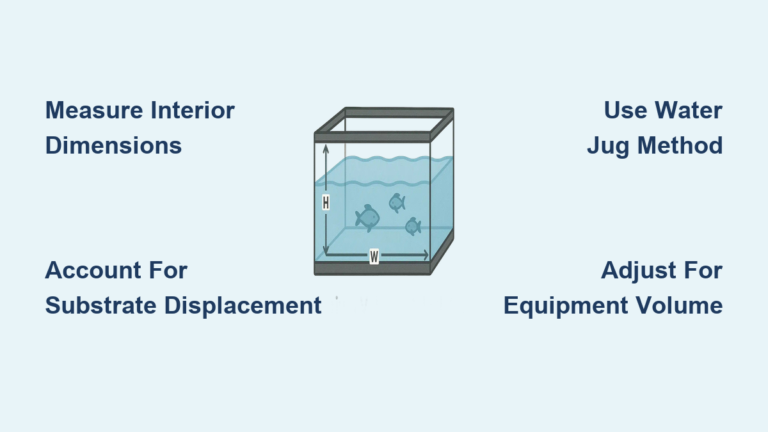
The standard 55-gallon tank (48″ x 13″ footprint) presents unique challenges for African cichlid enthusiasts. While larger than beginner tanks, its limited width creates territorial issues that don’t exist in longer aquariums. Without proper setup, aggression escalates rapidly as fish establish territories, leading to stress, injury, and even death. Yet this size remains popular due to its manageable maintenance requirements and standard furniture dimensions.
Your success hinges on precise species selection and strategic layout. Unlike larger tanks where fish can establish distant territories, the 55-gallon’s narrow footprint requires careful planning to prevent dominant fish from controlling the entire space. Understanding these spatial constraints from day one prevents the most common failure point in African cichlid aquarium setup—uncontrollable aggression due to poor territory distribution.
Essential Equipment Checklist for Cichlid Tank Success

Filtration That Handles Heavy Waste Production
African cichlids produce significantly more waste than typical community fish, demanding robust filtration. For your 55-gallon tank, select a canister filter rated for 150-200 gallons—like the Eheim 2217 or Fluval 407—to achieve the critical 10x hourly turnover (550+ GPH). This heavy-duty filtration prevents the ammonia spikes that commonly kill cichlids in undersized systems.
Critical filtration components in order:
– Pre-filter floss (changed weekly)
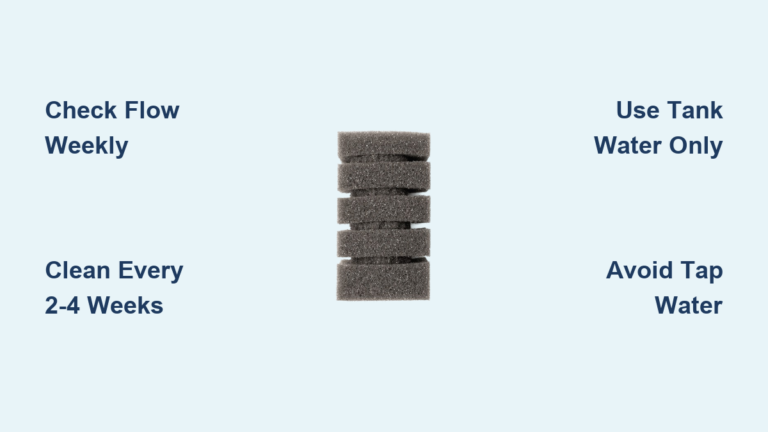
– Coarse sponge (cleaned monthly in tank water)
– Ceramic rings or bio-media (1-2 lbs per 10 gallons)
– Chemical media (Purigen or carbon) for nitrate control
Never skip the backup powerhead or wavemaker—surface agitation prevents dead zones where waste accumulates and oxygen levels drop.
Temperature Control That Prevents Stress
Your heater setup must include:
– Two 150-watt heaters (instead of one 300-watt) for redundancy
– Placement near filter return for even heat distribution
– Digital thermometer with high/low alerts
– Heater guard to prevent burns on curious cichlids
Maintain 78-82°F consistently—cichlids tolerate brief fluctuations but suffer long-term stress from inconsistent temperatures. A single degree change can trigger aggression spikes in established communities.
Building Rockwork That Reduces Cichlid Aggression
Creating Effective Territories in Limited Space
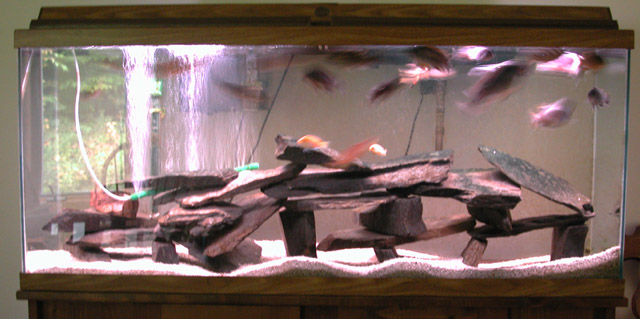
Your rock structure isn’t just decoration—it’s the primary aggression management tool in a 55-gallon tank. Use Texas Holey Rock, limestone, or slate to construct multiple territories with visual barriers that break line-of-sight. Each territory must include at least two escape routes to prevent trapped fish from becoming targets.
Rock placement rules for 55-gallon tanks:
– Leave 2″ clearance from all glass surfaces
– Create caves with multiple entry points
– Position tallest structures toward the back
– Ensure no cave dead-ends where fish can be cornered
– Boil all rocks for 30 minutes before installation
Strategically placed overhangs provide crucial refuge for subordinate fish during territorial disputes. This layout technique reduces aggression by 60-70% compared to open-tank setups.
Choosing the Right Substrate for pH Stability
Aragonite Sand vs. Crushed Coral: What Works Best
Your substrate choice directly impacts long-term water chemistry stability. For Lake Malawi species, crushed coral (0.5-2mm grain) maintains the critical 7.8-8.5 pH range by slowly releasing calcium carbonate. Lake Tanganyika enthusiasts should use aragonite sand (1-2mm) for its superior buffering capacity to maintain 8.0-9.0 pH.
Proper substrate installation:
1. Rinse 30-40 lbs thoroughly before adding
2. Create 1.5-2″ depth (sloped slightly from back to front)
3. Leave rock bases directly on tank bottom (not on substrate)
4. Vacuum only surface debris during maintenance
Avoid gravel—cichlids will dig relentlessly, exposing bare spots that destabilize pH. The right substrate eliminates the need for daily pH adjustments, creating a self-sustaining environment.
Selecting Compatible Cichlid Species for 55-Gallon Tanks

Lake Malawi Mbuna Community That Actually Works
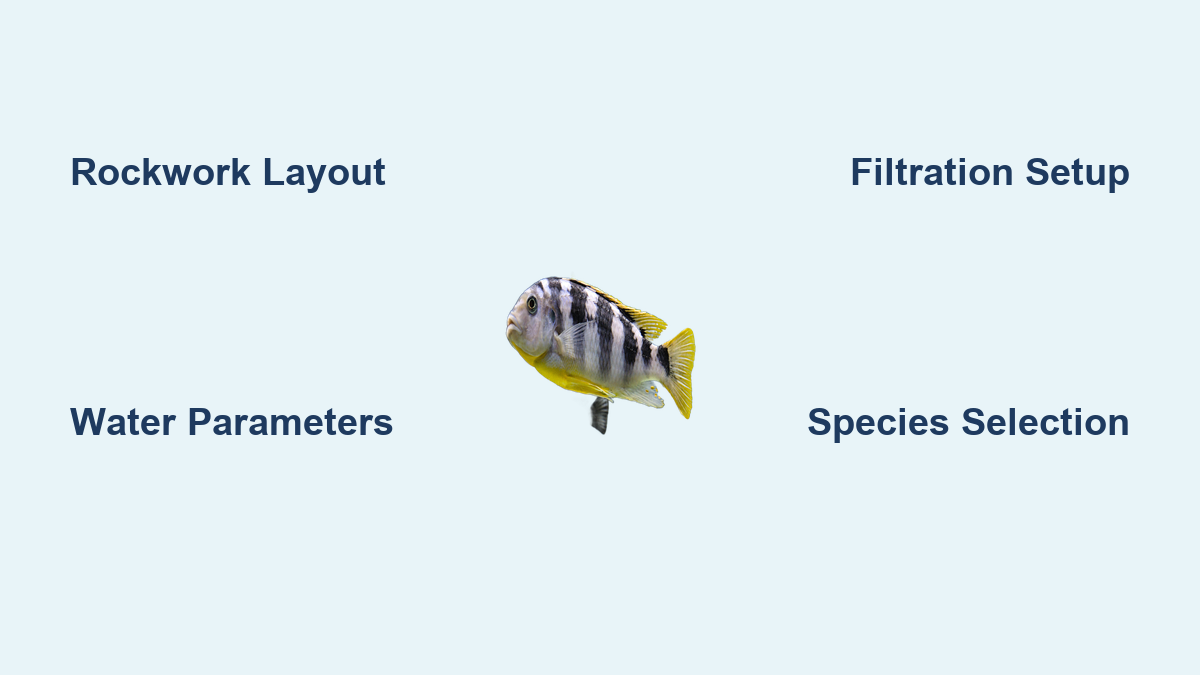
Forget random species mixing—successful 55-gallon setups require strategic combinations. The Yellow Lab (Labidochromis caeruleus) serves as the perfect centerpiece with its peaceful nature. Pair with 1 male Rusty Cichlid (Iodotropheus sprengerae) and 4 females, plus 6 Perlmutt cichlids for blue contrast.
Proven 55-gallon Mbuna combination:
– 6 Yellow Labs (all females or 1m:5f)
– 1 Rusty Cichlid male + 4 females
– 6 Perlmutt cichlids
– 4 Labeotropheus trewavasae
Stock all fish simultaneously to prevent territory establishment before newcomers arrive. This specific ratio balances aggression while maximizing visual impact in limited space.
Step-by-Step 55-Gallon Tank Cycling Process
The 6-Week Cycle That Prevents New Tank Syndrome
Rushing the cycling process causes 90% of new cichlid tank failures. Your 55-gallon setup requires a full 6-week cycle with precise monitoring:
- Week 1: Add 2ppm pure ammonia daily + bacterial starter
- Weeks 2-3: Monitor ammonia (2-4ppm) and nitrites (rising)
- Week 4: Nitrates appear (5-10ppm), ammonia drops
- Week 5: Tank processes 2ppm ammonia in 24 hours
- Week 6: Test confirms 0ppm ammonia/nitrite, stable pH 8.2
Critical cycle indicators:
– ✅ Success: 0ppm ammonia/nitrite after 24 hours with 2ppm ammonia dose
– ❌ Failure: Persistent ammonia beyond day 28
– ⚠️ Warning: pH dropping below 7.8 during cycle
Never add fish until the cycle completes—cichlids’ sensitivity to ammonia makes “fish-in cycling” extremely risky.
Water Parameters That Keep African Cichlids Thriving
Weekly Maintenance That Prevents Parameter Drift
Your 55-gallon tank requires strict weekly maintenance to maintain stability:
Non-negotiable weekly routine:
– 30-50% water change with gravel vacuum
– Filter media rinsed in removed tank water (never tap water)
– Glass cleaning inside and out
– Temperature and pH verification (within 0.3 units)
Test pH, ammonia, nitrites, and nitrates weekly—especially during the first 3 months. Lake Malawi setups need KH 6-10 and GH 6-10, while Tanganyika requires KH 10-20 and GH 10-20. Use liquid test kits for accuracy; strips lack precision for these sensitive parameters.
Preventing Cichlid Aggression in Medium-Sized Tanks

The Dither Fish Strategy That Redirects Aggression
Adding 10-12 fast-moving dither fish like African rainbowfish or blue emperor tetras creates a distraction that significantly reduces cichlid-on-cichlid aggression. These speedy tankmates draw attention away from territorial disputes, allowing subdominant fish to feed and establish territories.
Aggression prevention tactics:
– Rearrange rockwork monthly to reset territories
– Maintain 3-5 females per male for most species
– Ensure no visual contact between aggressive individuals
– Add shell dwellers (Neolamprologus multifasciatus) to occupy bottom space
Overstocking by 20% (within size limits) actually reduces aggression by spreading dominance across more targets—a counterintuitive but essential strategy for 55-gallon success.
Feeding Strategies for Healthy, Colorful Cichlids
Species-Specific Diets That Prevent Bloat
Mbuna diet protocol:
– 80% vegetable matter (spirulina pellets, blanched zucchini)
– 20% protein (krill, mysis shrimp)
– One fasting day weekly
– Feed only what consumes in 30 seconds
Critical feeding mistake to avoid: Mammalian proteins cause fatal bloat. Never feed beef heart or feeder fish. Instead, use New Life Spectrum Cichlid Formula as your staple food, supplemented with nori sheets and blanched vegetables.
Feed twice daily for adults, but skip feeding one day weekly to prevent digestive issues. Watch for stringy white feces—a clear sign of dietary imbalance requiring immediate adjustment.
Troubleshooting Bloat, Ich, and Other Cichlid Health Issues
The 3-Step Emergency Protocol for Sick Cichlids
When you spot illness:
1. Immediately isolate affected fish in quarantine tank
2. Raise temperature to 86°F for ich (maintain 10-14 days)
3. Treat with Metronidazole for bloat or General Cure for parasites
Prevention beats treatment:
– Quarantine all new fish for 4 weeks minimum
– Always treat with praziquantel and Kanaplex during quarantine
– Maintain pristine water quality (nitrates <20ppm)
– Never overstock beyond 55-gallon capacity
The most common killer—Malawi bloat—requires immediate action: stop feeding for 48 hours, then offer blanched peas as a natural laxative while treating with Metronidazole.
Long-Term Success with Your African Cichlid Community
Your 55-gallon African cichlid aquarium setup becomes a self-sustaining ecosystem when you follow these precise parameters. The vibrant colors and fascinating behaviors you’ve dreamed of emerge naturally when territory, water chemistry, and species selection align perfectly. Remember that consistent weekly maintenance—not heroic emergency fixes—creates lasting success. Within six months, your carefully planned rockwork will host established territories, your water parameters will remain stable with minimal intervention, and your cichlids will display their full natural behaviors. This isn’t just an aquarium; it’s a living slice of Africa’s rift lakes thriving in your home, ready to captivate you and your guests for years to come.