30 Gallon Saltwater Aquarium Setup Guide
Nothing beats the mesmerizing beauty of a thriving saltwater aquarium in your living space. But if your 30-gallon tank keeps crashing with algae blooms or stressed fish, you’re not alone. This compact marine ecosystem demands precision—its smaller water volume amplifies every parameter shift. I’ve seen countless beginners struggle with unstable salinity, nutrient spikes, and livestock loss in 30-gallon setups. The solution? A methodical approach that respects the unique challenges of this popular starter size. By the end of this guide, you’ll master the critical equipment choices, nitrogen cycle timing, and maintenance rhythm that transform your tank from unstable to spectacular. Forget generic advice—you’ll learn exactly how to build a resilient nano reef or fish-only system where corals flourish and fish thrive for years.
Choosing the Right Filtration System for 30-Gallon Stability

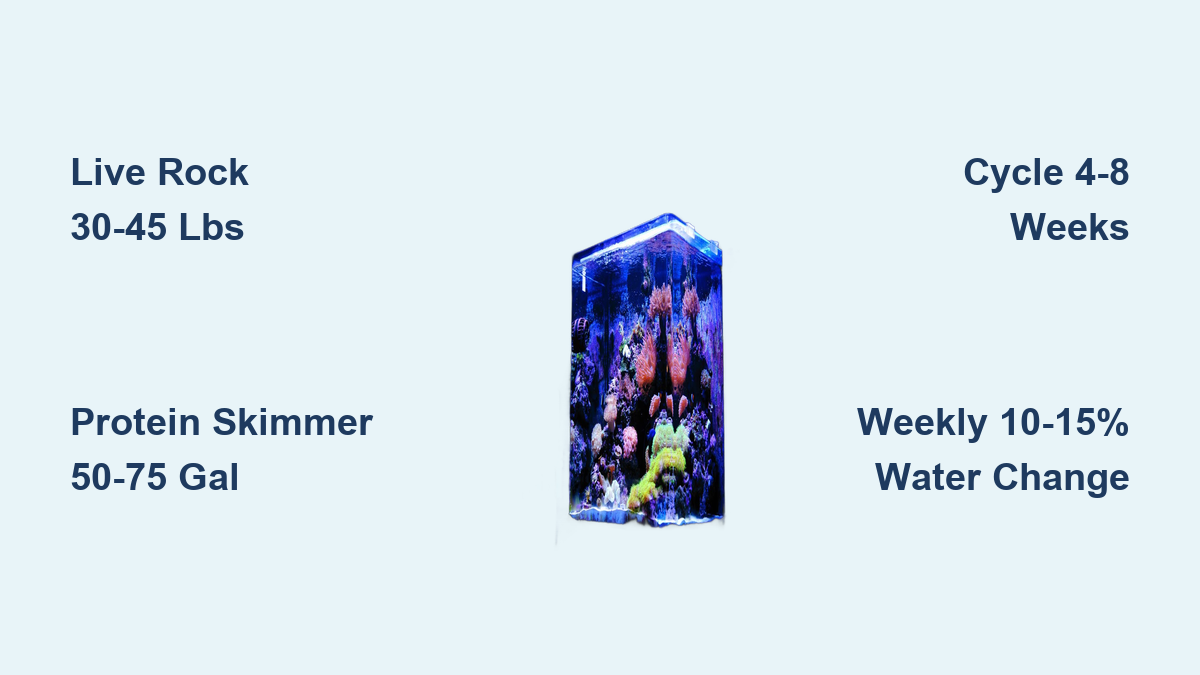
Your filtration setup makes or breaks a 30-gallon saltwater aquarium. Unlike freshwater tanks, marine systems require layered filtration to handle delicate parameter stability. Start with 30-45 pounds of live rock as your biological foundation—it hosts beneficial bacteria that process fish waste. Pair this with a Seachem Tidal 55 hang-on-back filter for mechanical and chemical polishing; its large media capacity handles particulate matter before it decays. If building a sump, use a 20-gallon long tank underneath your display to increase water volume by 30%, dramatically improving parameter stability. Never skip a protein skimmer—even a hang-on-back model rated for 50 gallons pulls organic waste before it becomes nitrate. Remember: in a 30-gallon saltwater aquarium setup, over-filtering prevents the toxic swings that kill new tanks. I’ve seen hobbyists save months of frustration by installing dual filtration from day one.
Why Live Rock Quantity Matters for Bioload Control
Understocking your rock is the silent killer of small marine tanks. At 1-1.5 pounds per gallon, 30-45 pounds provides enough surface area for nitrifying bacteria to handle your livestock. Too little rock? Ammonia spikes when you add fish. Too much? Dead spots trap detritus. Arrange rocks in a pyramid formation with open channels—this creates natural flow paths while maximizing bacterial colonization. Cure dry rock for 4-6 weeks with strong water movement before adding livestock, or buy pre-cured to jumpstart the cycle. Your rock structure isn’t just decoration; it’s the engine of your entire ecosystem.
Protein Skimmer Sizing Mistakes to Avoid
Most beginners undersize skimmers, causing persistent nitrate issues. For a 30-gallon saltwater aquarium setup, choose a skimmer rated for 50-75 gallons. Why? Small tanks need aggressive organic removal due to limited water volume. A too-small skimmer produces wet, ineffective foam while a properly sized unit creates dry, coffee-ground-like skimmate. Position the skimmer in your sump’s first chamber or use a hang-on model that draws water from the tank’s surface where oils accumulate. Run it 24/7—skimming stops the second you turn it off, allowing organics to break down into nutrients.
Strategic Livestock Selection for Small Marine Tanks

Overstocking destroys 90% of new 30-gallon saltwater aquariums. That “1 inch of fish per gallon” myth? Discard it immediately. Your real limit is 2-3 small fish max—a pair of Ocellaris clownfish plus one peaceful goby like a Diamond Watchman. Damsels seem hardy but turn territorial in confined spaces; skip them entirely. For corals, begin with softies: Green Star Polyps withstand parameter swings, while Zoanthids add color with minimal care. Wait 8 weeks after cycling before adding your first coral—early additions often starve without established microfauna. Always dip new corals in a iodine solution to prevent hitchhiking pests. Remember: in a 30-gallon saltwater aquarium setup, every organism strains your system’s capacity. Less truly is more.
The Critical First Fish Addition Sequence
Adding livestock in the wrong order guarantees disaster. Start with cleanup crew snails (Trochus and Cerith) during week 2 of cycling—they eat nuisance algae without stressing the cycle. After 4 weeks with 0 ammonia/nitrite, introduce your hardiest fish: a single clownfish. Wait 3 weeks before adding a second. Only after 8 weeks with stable parameters should you consider a small blenny. Never add multiple fish simultaneously—the bioload spike will crash your cycle. I’ve watched beginners lose entire tanks by adding a “starter school” of fish on day one. Patience here prevents months of re-cycling.
Mastering the 30-Gallon Nitrogen Cycle Timeline

The nitrogen cycle isn’t optional—it’s your tank’s immune system. In a 30-gallon saltwater aquarium setup, this process takes 4-8 weeks and requires daily monitoring. Begin by dosing pure ammonia to 2 ppm or placing a shrimp piece under rocks. Test twice daily: when ammonia drops to zero within 24 hours and nitrite appears, you’ve entered phase two. When nitrite then crashes to zero while nitrate rises, the cycle is complete. But don’t add fish yet! New tanks hit the “ugly stage” next: diatoms coat everything in brown slime for 2-4 weeks as silicates deplete. This isn’t failure—it’s progress. Resist cleaning; let your cleanup crew handle it. Only after 2 weeks of 0 ammonia/nitrite and visible diatom decline should you introduce livestock.
Diagnosing Cycle Stalls in Small Tanks
If your ammonia won’t drop below 0.5 ppm after 10 days, you’ve hit a stall. Common culprits in 30-gallon setups: low oxygen (add an air stone), insufficient bacteria (dose Dr. Tim’s One & Only), or incorrect temperature (keep at 78°F). Never skip water changes during cycling—replace 10% with new saltwater if nitrite exceeds 5 ppm to prevent bacterial die-off. Most stalls resolve within 3 days of addressing the root cause. Track your progress with a spreadsheet; seeing daily improvements keeps you motivated through the waiting game.
The First 30 Days: Critical Maintenance Windows
Your actions in the first month determine long-term success. Days 1-7: Run all equipment without lights to establish bacteria. Top off daily with RO/DI water using an auto-top-off system—salinity swings kill new tanks. Days 8-14: Add cleanup crew snails once ammonia hits zero. Test alkalinity daily; it will crash as coralline algae grows. Dose buffer to maintain 7.5-8.5 dKH. Days 15-30: After confirming 0 ammonia/nitrite for 7 days, add your first clownfish. Feed tiny amounts (what vanishes in 15 seconds) and test nitrate every 48 hours. If nitrate exceeds 10 ppm, perform a 15% water change immediately. This precise rhythm prevents the nutrient spikes that derail small marine systems.
Weekly Water Change Protocol for Nano Tanks
Water changes aren’t chores—they’re your primary nutrient control tool. Every Sunday, perform these steps:
1. Mix new saltwater 24 hours ahead to 1.025 SG at 78°F
2. Siphon 10-15% of tank water while vacuuming sand (remove detritus but avoid deep digging)
3. Test old water for nitrate—ideal is 1-5 ppm
4. Top off with pre-mixed saltwater slowly to avoid shocking corals
Never change more than 20% weekly in a 30-gallon saltwater aquarium setup—large changes destabilize parameters. Use Tropic Marin Pro Reef salt for consistent trace elements. Keep a log: tanks with regular weekly changes see 70% fewer algae issues than those with sporadic large changes.
Troubleshooting Common 30-Gallon Tank Emergencies
Hair Algae Explosion Within 2 Weeks
This signals phosphate overload. First, test source water—tap water often contains phosphates. Switch to pure RO/DI water (0 TDS). Next, manually remove 80% of algae during water changes. Add a GFO reactor bag to your filter running at 200 GPH; replace media monthly. Within 14 days, phosphate drops below 0.10 ppm and algae recedes. Never add algae eaters prematurely—most fish ignore hair algae until it’s too late.
Coral Recession After Adding LPS
If your hammer coral shrivels within days, check alkalinity stability. LPS corals demand consistent 7.5-8.5 dKH. Test twice daily for 3 days—if levels swing more than 0.5 dKH, dose buffer in small increments. Also verify flow: LPS need moderate, indirect current. Reposition powerheads so water glances the coral rather than blasting it. Most recession reverses within 72 hours of correcting these factors.
Upgrading Filtration for Mature 30-Gallon Systems
After 6 months, add a refugium to your sump running on reverse lighting (on when display lights are off). Fill it with 2 inches of aragonite sand and Chaetomorpha macroalgae under a Kessil H80 light. This natural filter consumes nitrates while breeding copepods that feed your fish. For persistent phosphate issues, install a media reactor with GFO media—set flow to 200 GPH to avoid aluminum leaching. These upgrades transform your 30-gallon saltwater aquarium setup from maintenance-intensive to self-sustaining, allowing you to safely add that coveted mandarin goby.
Final Note: Consistent weekly water changes and patience with livestock additions separate thriving 30-gallon saltwater aquariums from failed experiments. Start with just clownfish and soft corals for the first 4 months—your tank will reward you with vibrant growth once stability takes hold. Remember: every successful marine tank is built on boring routines, not flashy shortcuts. Test parameters religiously, resist overstocking, and in 12 months you’ll have a miniature ocean that outshines most larger tanks. The journey begins with your next water change—make it count.