Ideal TDS for Aquarium: Complete Guide
Your aquarium’s water looks crystal clear, but hidden beneath the surface could be a silent threat to your fish’s health. Total Dissolved Solids (TDS) is one of the most overlooked water parameters that directly impacts fish osmoregulation, plant growth, and overall tank stability. While most hobbyists monitor pH and ammonia, neglecting the ideal TDS for aquarium can lead to unexplained stress, algae outbreaks, and even fish loss. In this guide, you’ll discover exactly what TDS levels your specific tank needs, how to measure it accurately despite common meter limitations, and practical strategies to maintain optimal water quality for your unique aquatic ecosystem.
What Your TDS Meter Actually Measures (And Why Readings Vary)

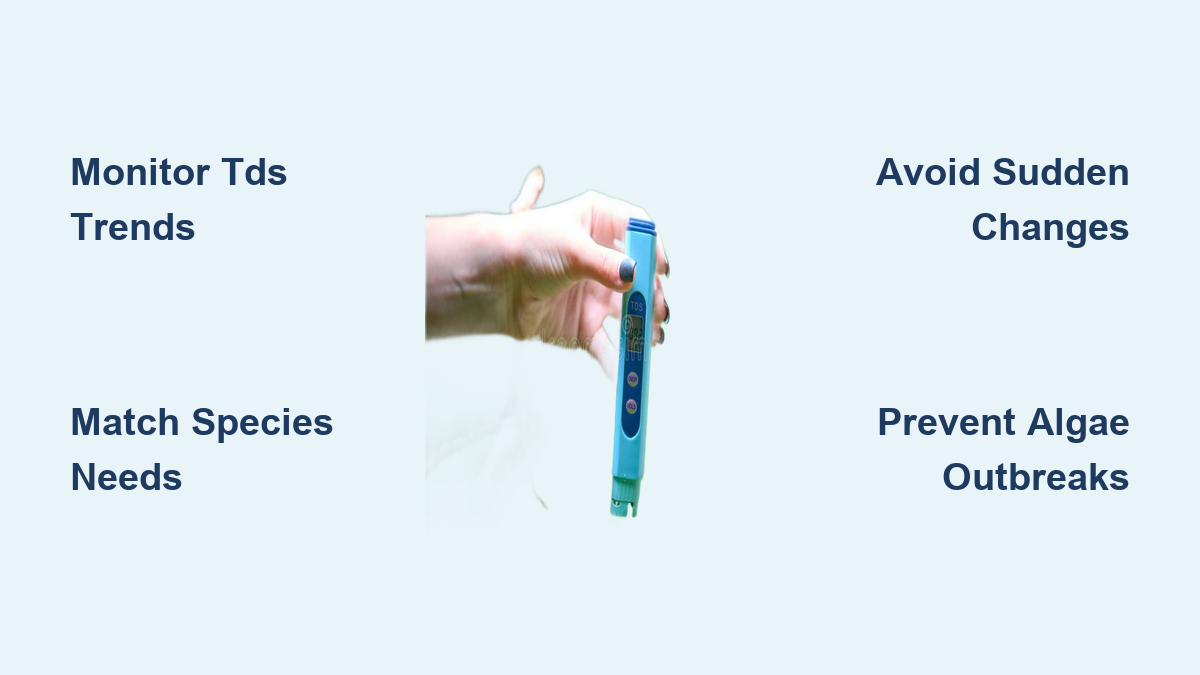
TDS meters don’t directly measure dissolved solids—they calculate an estimate based on electrical conductivity (EC) and apply a conversion factor (typically between 0.5 and 0.8). This fundamental limitation explains why two different meters might show significantly different readings for the same water sample. The conversion factor varies because different dissolved substances conduct electricity differently, meaning your TDS number is actually an educated guess rather than an absolute measurement.
Why Absolute TDS Numbers Are Less Important Than You Think
Focus on relative changes rather than absolute values for practical aquarium management. Consistent use of the same meter allows you to track trends that reveal what’s happening in your tank. A steady increase between water changes indicates normal accumulation from feeding and waste, while sudden spikes signal potential problems. One experienced aquarist successfully maintains multiple tanks by tracking TDS changes from a baseline rather than chasing specific numbers.
The Critical Measurement Protocol You Must Follow
For reliable TDS monitoring:
– Always use the same meter for consistency
– Measure at the same time of day and water temperature
– Stir water gently before testing for uniform distribution
– Record readings alongside other parameters (pH, GH, KH)
– Note water change dates and fertilizer dosing to correlate patterns
Danger Signs of Improper TDS Levels in Your Aquarium
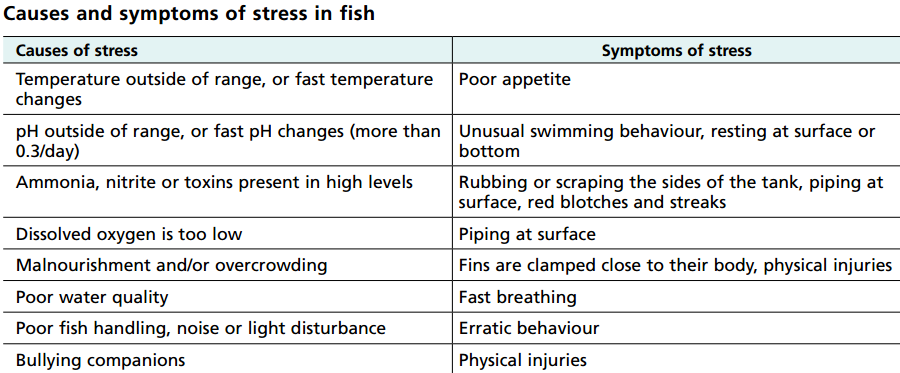
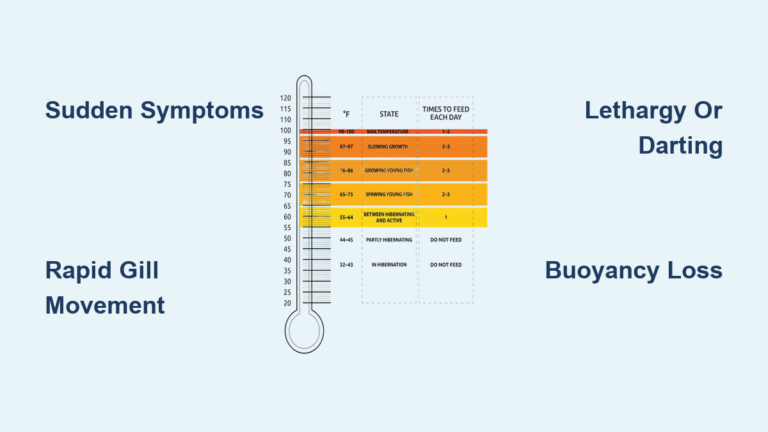
Your fish can’t tell you when TDS is wrong, but they show clear physical symptoms when water parameters stress their osmoregulation systems. Recognizing these warning signs early prevents serious health issues and potential tank crashes.
Fish Stress Symptoms Linked to TDS Problems
Watch for these critical indicators that your TDS levels may be outside the ideal range for your species:
– Increased gill movement (rapid breathing even in well-oxygenated water)
– Lethargic behavior or unusual hiding patterns
– Loss of appetite despite normal feeding routines
– Clamped fins that remain close to the body
– Visible stress stripes appearing on normally colorful fish
Plant Health Clues Hidden in Your TDS Readings
Plants reveal TDS issues through subtle growth patterns:
– Stunted growth despite adequate lighting and nutrients may indicate TDS too low
– Yellowing leaves with green veins often signals micronutrient imbalance related to TDS
– Algae outbreaks frequently correlate with sudden TDS spikes from over-fertilization
– Brown leaf tips can indicate excessive dissolved solids damaging delicate tissues
Ideal TDS Ranges for Your Specific Freshwater Setup
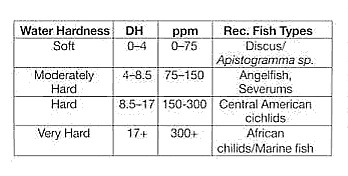
Forget one-size-fits-all recommendations—the ideal TDS for aquarium depends entirely on your livestock and tank type. Understanding species-specific needs prevents the common mistake of applying generic guidelines to incompatible setups.
Matching TDS to Your Fish Species
Different fish have evolved to thrive in specific water conditions:
– Soft Water Species (tetras, discus, angelfish): 50-150 ppm TDS with stable parameters
– Hard Water Species (African cichlids, mollies, livebearers): 300-500+ ppm TDS
– Shrimp and Sensitive Invertebrates: 100-200 ppm with absolute stability (±5 ppm)
– Community Tanks (guppies, platies, barbs): 150-250 ppm TDS
Critical TDS Thresholds Every Aquarist Must Know
Stay below these danger zones to prevent tank disasters:
– 500 ppm: Threshold where reproduction problems begin for many species
– 1000 ppm: Upper safe limit for most freshwater fish (not ideal)
– 2000 ppm: Danger zone where many freshwater species experience severe stress
How to Accurately Track TDS Changes Between Water Changes
The most valuable TDS information comes from monitoring how your levels change over time, not single measurements. This approach reveals your tank’s unique patterns and helps you optimize maintenance routines.
Establishing Your Personal TDS Baseline
- Test your source water (tap, RO, or well) to determine starting point
- Measure aquarium water after full cycling and stabilization
- Calculate the difference to understand your tank’s natural accumulation rate
- Record both numbers in your maintenance log for future reference
Interpreting Normal vs. Problematic TDS Trends
- Healthy Pattern: Steady increase of 30-50 ppm between weekly water changes
- Warning Sign: Sudden jump of 75+ ppm indicating overfeeding or decay
- Red Flag: TDS rising more than 100 ppm between changes requires immediate action
- Critical Alert: Rapid decrease after water changes signals osmotic shock risk
3 Proven Methods to Lower High TDS Levels Safely
When TDS climbs too high, use these targeted approaches that address the root cause rather than just masking symptoms.
Strategic Water Change Protocol for TDS Reduction
- For moderate increases (50-100 ppm above baseline): 30-40% water change with lower TDS source water
- For severe spikes (100+ ppm): Two 25% changes 12 hours apart to avoid parameter shock
- Critical tip: Match temperature AND TDS of new water as closely as possible to tank water
- Pro move: Measure TDS of new water before adding to ensure gradual adjustment
Fertilizer and Feeding Adjustments That Directly Impact TDS
- Reduce feeding to what fish consume in 2 minutes (excess food = dissolved solids)
- Switch to every-third-day fertilization instead of daily dosing
- Use substrate-based iron sources (like Mexican pottery clay) instead of liquid supplements
- Remove uneaten food immediately with a siphon to prevent dissolution
The 48-Hour TDS Stability Rule Every Aquarist Must Follow
Rapid TDS changes—even within “safe” ranges—cause more fish deaths than absolute values. This simple rule prevents osmotic shock during critical transitions.
Acclimating New Fish to Your Tank’s TDS
- Float the bag for temperature adjustment (15-20 minutes)
- Add 10% of tank water to the bag every 15 minutes for 2 hours
- Measure TDS of bag water and tank water before release
- Never release fish if TDS differs by more than 10%—extend acclimation time
Water Change Technique for Maximum Stability
- Mix new water with 25% old tank water before adding
- Add new water slowly over 30-60 minutes using a drip system
- Never replace more than 50% of tank volume at once for sensitive species
- Monitor TDS during changes to ensure no sudden drops
Using TDS as Your Secret Weapon Against Algae Outbreaks
Experienced aquarists track TDS to predict and prevent algae before it becomes visible. This proactive approach solves the root cause rather than treating symptoms.
Connecting TDS Spikes to Specific Algae Types
- Black beard algae: Often follows TDS increases above 250 ppm in planted tanks
- Green water outbreaks: Correlate with rapid TDS jumps from overfeeding
- Staghorn algae: Appears when TDS climbs steadily without water changes
- Solution: Note your “algae threshold” TDS and trigger water changes 10 ppm below it
TDS-Based Water Change Scheduling That Prevents Algae
- Set personal TDS thresholds for water changes (e.g., “change at +40 ppm”)
- Adjust change volume based on TDS increase rate (faster rise = larger changes)
- Time changes before TDS reaches problem levels rather than on fixed schedule
- Document TDS at first algae appearance to refine your prevention strategy
Creating Your Personalized TDS Maintenance Schedule
The ideal TDS for aquarium isn’t a fixed number—it’s a dynamic range specific to your tank’s ecosystem. This step-by-step process helps you determine your optimal maintenance routine.
7-Day TDS Tracking Protocol for New Insights
- Day 1: Full water change, record starting TDS
- Days 2-6: Measure TDS daily at same time
- Day 7: Record final TDS before next change
- Calculate daily increase rate (final-starting)/6
- Adjust water change frequency to keep TDS in ideal range
The TDS Sweet Spot Formula for Your Tank
Ideal Maximum TDS = Species Requirement + 50 ppm Buffer
Example for neon tetras: 100 ppm (requirement) + 50 ppm = 150 ppm maximum
Trigger water change when TDS reaches 140 ppm to maintain buffer zone
Essential TDS Tools for Shrimp and Sensitive Species Tanks
Shrimp keepers live and die by TDS stability—these specialized techniques prevent the sudden deaths that plague beginners.
The Exact Water Matching Technique for Shrimp Tanks
- Fill container with source water for water change
- Test and adjust TDS to match tank within ±2 ppm
- Adjust pH and temperature to identical levels
- Add water slowly over 2+ hours using a drip system
- Never mix waters directly in tank—always pre-mix
Critical TDS Stability Thresholds for Shrimp
- Crystal Red Shrimp: Maintain within 100-200 ppm (±5 ppm stability)
- Neocaridina (Cherry Shrimp): Tolerate 150-250 ppm (±10 ppm)
- Warning: 50 ppm sudden change can kill sensitive shrimp within hours
- Pro tip: Keep spare pre-mixed water at exact TDS for emergency changes
Final Note: Your ideal TDS for aquarium isn’t found in generic charts—it’s discovered through consistent monitoring and observation of your specific tank’s response. By tracking relative changes rather than absolute numbers, matching TDS to your species’ needs, and prioritizing stability over perfection, you’ll create water conditions where fish thrive and plants flourish. Remember that TDS is just one piece of the water quality puzzle; always interpret it alongside other parameters and direct observation of your tank inhabitants. Start implementing the 7-day TDS tracking protocol today, and within weeks you’ll develop an intuitive understanding of your aquarium’s unique water chemistry needs.