How to Test Fish Aquarium Water Quality
That sudden flicker of your betta gasping at the surface isn’t just a bad day—it’s your water chemistry screaming for help. Without regular fish aquarium water testing, invisible toxins silently poison your aquatic ecosystem while algae blooms choke your plants. I’ve seen beginner tanks collapse in 72 hours because owners skipped this non-negotiable ritual. Proper water testing transforms guesswork into precision, letting you detect ammonia spikes before fins fray or pH crashes before fish float belly-up. In this guide, you’ll discover exactly which parameters to monitor, how to interpret those color-coded results, and critical fixes for common disasters—all based on proven aquarium science.
Why Skipping Fish Aquarium Water Testing Guarantees Tank Disasters
Your fish don’t just live in water—they breathe it, eat in it, and excrete waste directly into it. Unlike wild ecosystems with natural buffers, your closed aquarium amplifies every chemical imbalance within hours. When ammonia hits 0.02 ppm—a concentration invisible to your eyes—it burns delicate gill tissues and triggers neurological damage. Nitrite at 0.1 ppm suffocates fish by blocking oxygen transport, causing “brown blood disease” that turns gills muddy brown. Without weekly fish aquarium water testing, you’re flying blind through a minefield of invisible threats. Think of it as your tank’s EKG: those numbers reveal life-threatening conditions long before your angelfish stops flaring its fins or your neon tetras lose their glow.
The 5 Non-Negotiable Water Tests for Every Fish Tank

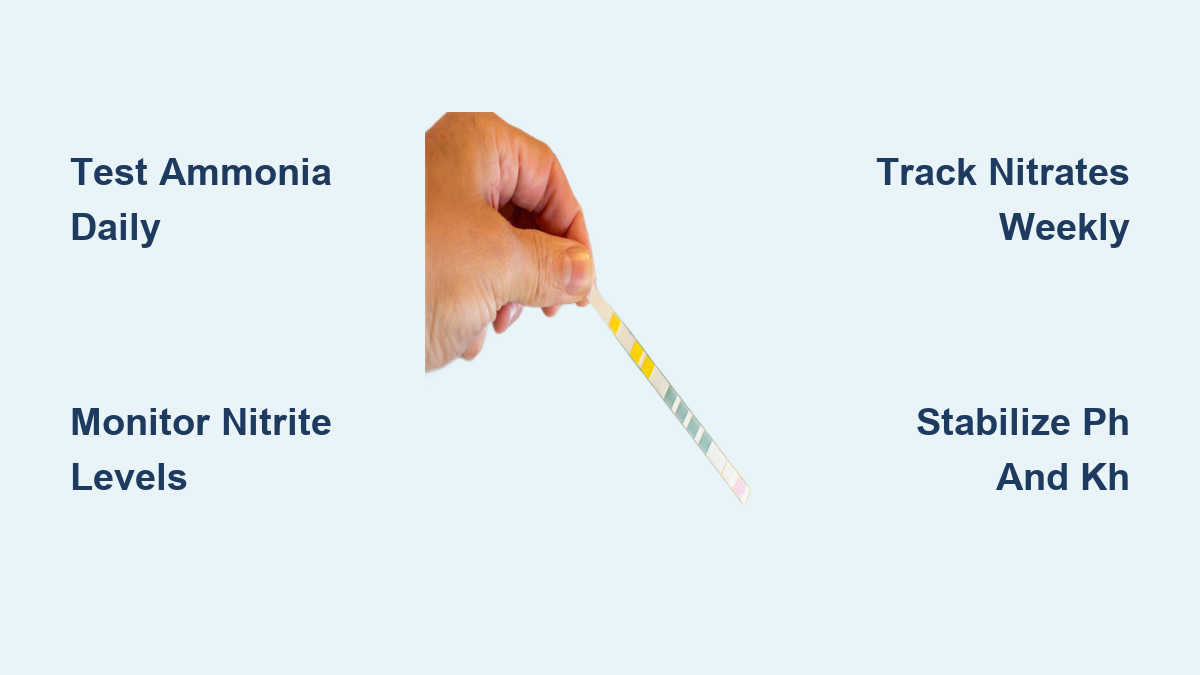
Forget vague “water quality” myths—these five parameters make or break your aquarium’s survival. Test them religiously using liquid reagent kits (not strips) for lab-grade accuracy.
Stop Ammonia Poisoning Before Fish Gasping Starts
Ammonia isn’t just dangerous—it’s the #1 killer of new tanks. During cycling (weeks 1-8), test daily: any reading above 0.25 ppm demands immediate action. In established tanks, 0 ppm is the only safe ammonia level. Spot the danger signs: fish gulping at the surface, red streaks on gills, or lethargic hovering near filters. When your test vial turns yellow (instead of green), execute this emergency protocol:
1. Perform a 50% water change with dechlorinated, temperature-matched water
2. Add 1 capful of water conditioner per 10 gallons (e.g., Seachem Prime)
3. Stop feeding for 24 hours to reduce waste production
4. Dose with bacterial booster (e.g., Tetra SafeStart) to accelerate detoxification
Crush Nitrite Threats with Oxygen Rescue Tactics
Nitrite’s toxicity hides in plain sight—it turns fish blood brown (methemoglobinemia), starving them of oxygen even in oxygen-rich water. Any reading above 0.1 ppm requires urgent intervention. If your test shows pinkish-red results, act within hours:
– Add 1 tablespoon aquarium salt per 5 gallons to reduce nitrite absorption
– Increase aeration to max flow—surface agitation boosts oxygen diffusion by 300%
– Test every 12 hours until nitrite hits 0 ppm (usually 2-3 days)
Pro Tip: Never vacuum gravel during nitrite spikes—disturbing anaerobic zones releases trapped toxins.
Nitrates: The Silent Algae Fuel You Can’t Ignore
While less toxic, nitrates above 40 ppm stress fish and ignite explosive algae growth. In planted tanks, keep nitrates at 10-20 ppm for optimal growth. When your test vial shows dark purple:
– Immediate fix: 40% water change using RO water (low in nitrates)
– Long-term solution: Add fast-growing floaters like frogbit—they absorb nitrates 5x faster than rooted plants
– Critical mistake: Over-relying on water changes alone. Pair with nitrate-eating snails (Nerites) or a deep sand bed for biological reduction
pH and KH: Why Stability Trumps “Perfect” Numbers
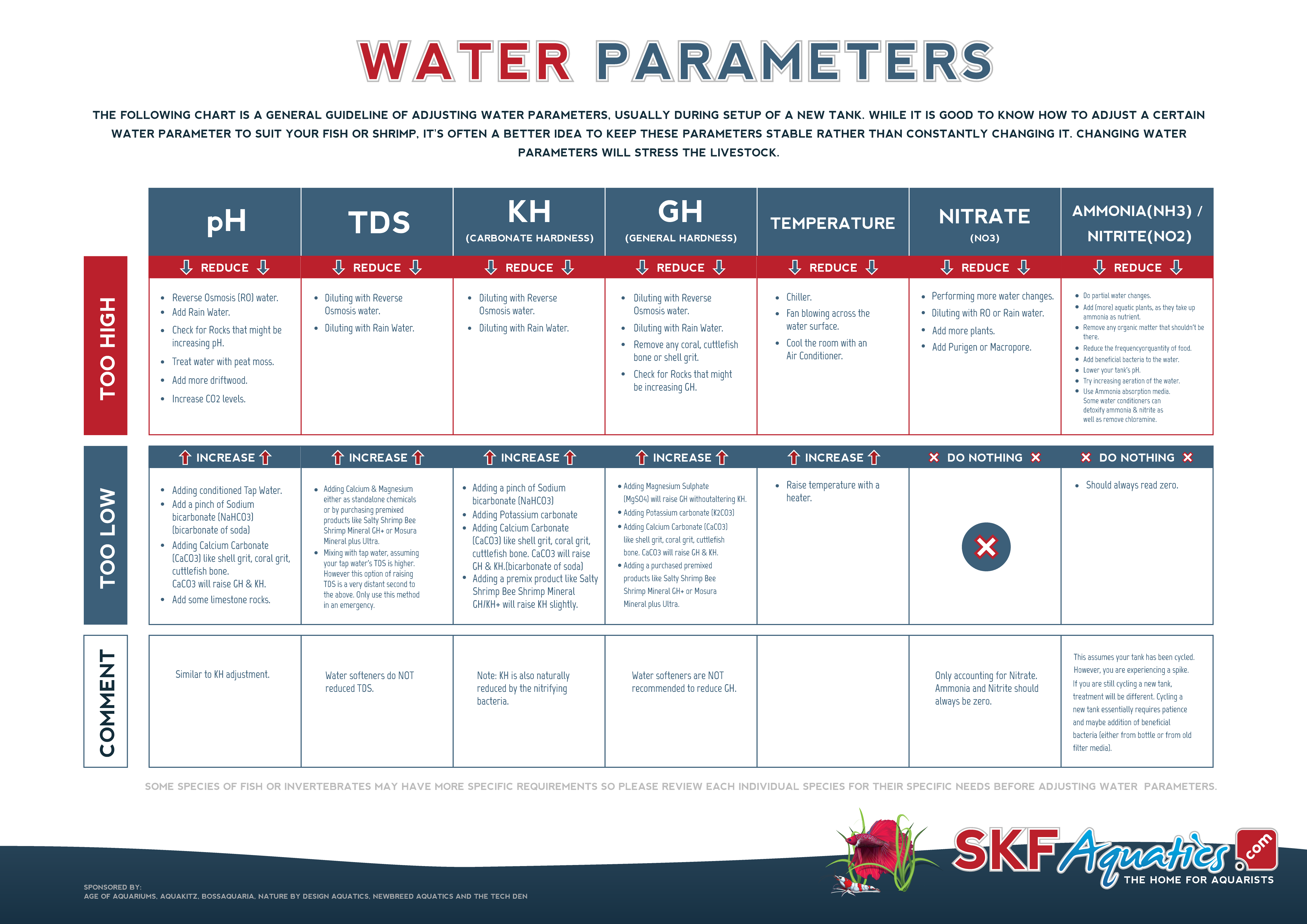
Forget chasing mythical “ideal” pH values—wild swings kill faster than slightly “wrong” levels. KH (carbonate hardness) is your pH guardian, buffering against crashes. Test KH weekly:
– Below 4 dKH? Your tank risks a pH crash (sudden drop to 5.0) within days
– Between 4-8 dKH? Stable for most community fish (tetras, guppies, corydoras)
– Above 8 dKH? Hard water species only (livebearers, African cichlids)
Urgent fix for low KH: Dissolve 1 teaspoon baking soda per 10 gallons—raises KH by 3 dKH instantly. Never adjust more than 1 dKH daily!
Phosphate: The Algae Ignition Switch
Phosphates above 0.5 ppm turn your tank into an algae factory. Test monthly: if results exceed 0.5 ppm, implement this 3-step shutdown:
1. Vacuum substrate thoroughly to remove decaying matter
2. Install phosphate-removing media (e.g., Seachem PhosGuard) in filter
3. Reduce feeding by 30%—uneaten food is phosphate’s #1 source
Pro Tip: Test your tap water first. Municipal water often contains phosphates—use RO water for changes if levels exceed 0.3 ppm.
How to Avoid False Readings That Sabotage Your Tests
90% of testing errors come from flawed technique—not bad kits. For lab-accurate results:
– Sample correctly: Dip vial mid-water column (not near filter outflow)
– Time reagents precisely: 60-second tests require exact timing—set a phone timer
– Light matters: Compare colors under natural daylight (not LED bulbs)
– Pre-rinse vials: Swirl with tank water before filling to avoid residue
Critical warning: Prime water conditioner causes false 0 nitrite readings on API kits. If treating ammonia, use the “dilution method” (mix sample with distilled water).
Your Custom Water Testing Schedule (Based on Tank Age)
Stop guessing when to test—follow this battle-tested timeline:
| Tank Stage | Daily Tests | Weekly Tests | Monthly Tests |
|---|---|---|---|
| New Tank (Cycling) | Ammonia, Nitrite | pH, Temperature | — |
| Established (3+ months) | Temperature, Behavior | Nitrate, pH, KH | GH, Phosphate |
| Reef/Planted Tank | Alkalinity, Temp | Calcium, Nitrate, Phosphate | Magnesium, Iron |
Key insight: Test immediately after adding new fish—ammonia spikes often hit within 6 hours.
Emergency Fixes for 3 Deadly Water Crises
When Nitrate Hits 80+ ppm (Algae Takeover Imminent)
Don’t just change water—attack the root cause:
1. Remove all visible algae with a toothbrush
2. Install a UV sterilizer (runs 8 hours daily) to kill free-floating spores
3. Add 2-3 Amano shrimp—they consume algae 24/7 without harming plants
Timeframe: Algae clears in 5-7 days with consistent action.
Persistent Ammonia in Cycled Tanks (Filter Failure Alert)
This means your biological filter collapsed. Diagnose fast:
– Smelly filter media? → Replace 30% of media (never 100%!)
– Cloudy water + high ammonia? → Overfeeding—reduce portions by half
– Zero flow from filter? → Clean impeller with vinegar soak
Pro Tip: Keep a spare sponge from old filter—squeeze into tank to seed new bacteria.
pH Crash Below 6.0 (Acid Bomb Scenario)
Low KH (<2 dKH) causes this emergency. Stabilize within 24 hours:
1. Perform 25% water change with KH-buffered water (baking soda solution)
2. Place crushed coral in filter media bag for gradual pH rise
3. Add airstone—agitation releases CO2 that acidifies water
Never do: Add straight vinegar or pH adjusters—they cause lethal swings.
Pro Maintenance Habits That Prevent 90% of Water Issues
- Log religiously: Track trends in a free app like Aquarium Log—it spots slow KH drops before crashes
- Test source water: Know your tap’s baseline (most municipal water has 40+ ppm nitrates)
- Refrigerate reagents: Liquid kits last 2x longer when stored at 40°F (check expiration dates!)
- Calibrate digital meters: Use buffer solutions weekly—uncalibrated pH meters drift 0.5 units monthly
Final Word: Transform From Tank Owner to True Aquarist
Fish aquarium water testing isn’t a chore—it’s your superpower. By mastering these five core parameters and responding to their silent language, you’ll prevent 95% of aquarium disasters before a single fish shows stress. Remember: crystal-clear water means nothing if nitrates are poisoning your neon tetras from within. Start today with one test—ammonia—and watch your confidence grow as your tank thrives. Within weeks, you’ll interpret color changes like a pro, adjusting KH before pH crashes or spotting nitrate trends before algae blooms. This is the difference between replacing dead fish monthly and watching your angelfish raise fry in a vibrant, balanced ecosystem. Your aquatic world depends on what those test vials reveal—so grab your kit and become the aquarist your fish deserve.