Can You Put Coral in a Freshwater Tank?
You’ve spotted that striking piece of dead coral at the pet store and wonder: Can you put coral in a freshwater tank without killing your fish? The answer isn’t simple—it depends entirely on your fish species and water chemistry. While living coral (the vibrant, growing kind in saltwater reefs) will die in freshwater, dead coral skeletons made of calcium carbonate can be a powerful water-modifying tool. But here’s the critical catch: this isn’t inert decoration. That beautiful coral piece actively dissolves in your tank, permanently altering pH and hardness. For African cichlids or livebearers, it’s essential. For tetras or discus, it’s a slow-motion disaster. Get this wrong, and you’ll chronically stress your fish until they succumb to disease. Let’s cut through the confusion with exactly how coral impacts freshwater systems and whether it belongs in your tank.
How Crushed Coral Instantly Changes Your Water Chemistry

Forget decorative rock—coral skeletons are chemical reactors. When submerged, calcium carbonate (CaCO₃) dissolves through a natural process that directly impacts three critical parameters. Understanding this reaction prevents catastrophic mistakes.
The Exact Chemical Process That Raises pH and Hardness
Coral doesn’t just “make water hard”—it triggers a specific chemical reaction:
CaCO₃ + H₂O + CO₂ ⇌ Ca²⁺ + 2HCO₃⁻
This means:
– Carbonate ions (HCO₃⁻) buffer acidity, pushing pH upward by 0.5–1.5 units
– Calcium ions (Ca²⁺) increase general hardness (GH) by 1–4 dGH per pound per 10 gallons
– Dissolution accelerates in soft, acidic water (pH < 7.2) but stalls in alkaline conditions (pH > 8.0)
Pro Tip: Test your tap water’s KH before adding coral. If KH is below 4 dKH (70 ppm), coral will dissolve aggressively—start with half the recommended amount.
Why Your Water Parameters Shift Overnight
That “stable” pH you measured yesterday? Coral disrupts equilibrium. In soft water tanks, expect:
– Day 1–3: Rapid pH rise (0.3–0.5 units/day) as coral dissolves fast
– Day 4–7: Gradual stabilization as carbonate builds up
– Day 8+: Slow, sustained buffering if KH remains low
Critical Warning: A pH jump from 6.8 to 7.8 in 48 hours causes lethal osmotic stress in soft-water fish. Always test pH daily for 2 weeks after adding coral.
Fish That Thrive With Coral vs. Species That Will Die
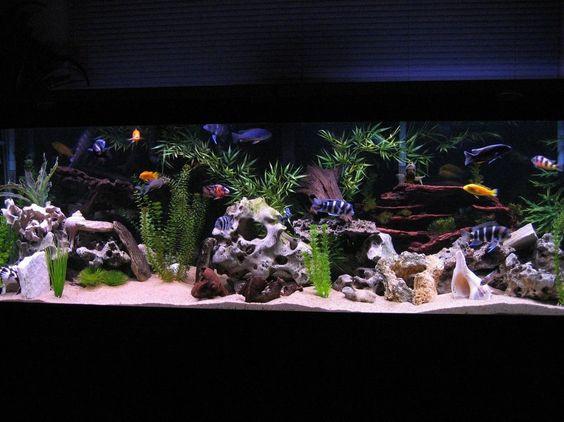
Your fish’s natural habitat dictates everything. Coral isn’t “good” or “bad”—it’s about matching chemistry to biology. Get this wrong, and no amount of water changes will save your tank long-term.
African Cichlids and Livebearers: Coral Is Non-Negotiable
These fish require coral’s chemical impact:
– Lake Malawi cichlids (mbuna, peacocks): Need pH 7.8–8.5 and 10–20 dGH. Without coral, their gills deteriorate from acidic water.
– Mollies and guppies: Thrive at pH 7.5–8.2. Coral prevents “shimmies” (neurological disease from low calcium).
– Mystery snails and crayfish: Coral dissolves calcium directly into the water—essential for shell growth. Without it, snails develop pitting and cracks within weeks.
Pro Tip: For African cichlid tanks, use 2–3 lbs crushed coral per 20 gallons as substrate. Watch for brighter colors and reduced aggression within 30 days.
Why Coral Kills Tetras, Discus, and Rams
Soft-water fish evolved in acidic blackwater environments. Coral forces their bodies into constant crisis:
– Neon tetras: At pH >7.0, their osmoregulation fails—water floods cells, causing bloating and pop-eye.
– Discus: Below pH 6.5, they absorb toxins easily; above pH 7.5, ammonia becomes 10x more toxic. Coral pushes pH into the danger zone.
– German blue rams: Require pH 5.5–6.5. Coral-induced pH >7.0 causes rapid gill necrosis.
Urgent Action: If you spot gasping at the surface or clamped fins in a coral tank, test ammonia immediately. At pH 8.0, even 0.25 ppm NH₃ is lethal. Do a 50% water change with RO water and remove coral.
Exactly How to Add Coral to Your Freshwater Tank (Without Killing Fish)
Throwing coral in your tank is like dosing medicine blindfolded. Precision prevents disaster. Follow this protocol whether you’re setting up a new cichlid tank or troubleshooting pH crashes.
Choose the Right Coral Format for Your Goal
| Method | Best For | Dosage (per 10 gal) | Time to Effect |
|---|---|---|---|
| Crushed coral substrate | African cichlid tanks | 2–3 lbs | 3–7 days |
| Filter bag | Livebearer tanks, pH stabilization | 0.5–1 lb | 1–3 days |
| Decorative pieces | Snail/shrimp tanks (calcium source) | 1 large piece | 2–4 weeks |
| Reactor chamber | Planted tanks with CO₂ fluctuations | 0.5 lb | Immediate |
Critical Step: Rinse crushed coral in a bucket of old tank water until water runs clear. Tap water rinsing causes cloudiness from dust.
The 14-Day Coral Implementation Protocol
- Day 1: Add 50% of target dose (e.g., 0.5 lb/10 gal for livebearers)
- Days 2–3: Test pH/KH daily. If pH rises >0.5 units/day, remove half the coral
- Days 4–7: Add remaining coral if parameters stabilize
- Days 8–14: Test every other day. Target: Stable pH within species range (e.g., 7.5–8.0 for guppies)
Pro Tip: Place coral in your filter’s outflow chamber. This maximizes dissolution while keeping it hidden—ideal for community tanks needing mild buffering.
Troubleshooting Coral Disasters: Fix pH Spikes in 24 Hours

Even careful aquarists face emergencies. These fixes address critical issues before fish die.
pH Skyrockets to 8.5+ Overnight
Why it happens: Overdosing in soft water (KH < 2 dKH) causes runaway dissolution.
Immediate action:
1. Remove 100% of coral now
2. Do 50% water change with RO water (not tap!)
3. Add 1 tbsp aquarium-safe peat moss in filter bag
4. Retest pH hourly until below 8.0
Never do this: Add vinegar or acid buffers—they crash pH dangerously. Peat moss lowers pH gradually.
Cloudy Water After Adding Coral
Cause: Fine dust from unrinsed crushed coral.
Fix:
– Run filter 24/7 with activated carbon
– Add 2 alder cones to tank—they release tannins that bind particles
– Do not clean filter media—beneficial bacteria will clear cloudiness in 48 hours
Snail Shells Dissolving Despite Coral
Cause: Low calcium bioavailability, not lack of coral.
Solution:
1. Boil 1 tbsp crushed coral in 1 cup tank water for 10 minutes
2. Cool and dose 1/4 cup daily for 7 days
3. Add cuttlebone clipped to tank wall—direct calcium source
Long-Term Coral Maintenance: Avoiding Parameter Collapse
Coral isn’t “set and forget.” Its dissolution rate changes with seasons and tank maturity—neglect monitoring, and parameters crash.
The 90-Day Coral Replenishment Schedule
- Month 1–3: Test pH/KH weekly. Coral dissolves fastest initially.
- Month 4–6: Test biweekly. Top up with 25% fresh coral if KH drops >20%.
- Month 7+: Test monthly. Replace 50% of coral when pieces become chalky/soft.
Warning sign: If pH drops 0.3 units overnight, coral is spent. Delaying replacement causes pH crashes that kill fish.
Summer vs. Winter Coral Management
- Summer: Warm water = faster CO₂ loss = accelerated coral dissolution. Reduce dose by 20%.
- Winter: Cold water = slower dissolution. Add 10% more coral if pH drops.
Pro Tip: Keep spare coral in a mesh bag outside the tank. When parameters shift, drop it in—no guessing on dosage.
The Final Verdict: Should You Put Coral in Your Freshwater Tank?
Yes, you can put coral in a freshwater tank—but only if:
✅ Your fish need hard, alkaline water (African cichlids, mollies, snails)
✅ You test pH/KH weekly and adjust coral before parameters shift
✅ You start with half the recommended dose and monitor for 14 days
Never use coral if:
❌ You keep soft-water species (tetras, discus, rams, angelfish)
❌ Your tap water KH exceeds 10 dKH (coral will cause dangerous spikes)
❌ You won’t commit to weekly water testing
Coral transforms freshwater tanks from unstable to rock-solid—but only when matched to your fish’s biology. For African cichlid keepers, it’s indispensable. For blackwater biotope enthusiasts, it’s poison. The difference lies in understanding that single chemical reaction: CaCO₃ + H₂O + CO₂ ⇌ Ca²⁺ + 2HCO₃⁻. Test your water, know your fish’s origins, and let coral work for you—not against you. Your next step? Grab your pH test kit today and measure your tank’s starting point. If KH is below 4 dKH and you keep cichlids or livebearers, crushed coral in your filter bag could be the game-changer your tank needs.