How to Clean Aquarium: Quick Steps
You just finished cleaning your aquarium, but now your fish are gasping at the surface. The water turned cloudy overnight, and ammonia levels are spiking. This common disaster happens when well-intentioned aquarists disrupt the delicate nitrogen cycle—the invisible ecosystem keeping your fish alive. The best way to clean aquarium systems isn’t about sterility; it’s strategically removing waste while preserving the beneficial bacteria living in your filter media and substrate. In this guide, you’ll learn exactly how to perform weekly maintenance and deep cleans without triggering dangerous ammonia spikes, including why vacuuming more than 50% of your gravel in one session could be fatal to your fish.
Forget “spotless” tanks—your goal is stable water parameters. When done correctly, regular cleaning prevents algae explosions, maintains crystal-clear water, and extends the life of your aquatic pets. You’ll discover why replacing all filter media at once is the #1 mistake beginners make, how to remove stubborn algae without scratching acrylic, and the precise water change percentage that keeps nitrates in check. Let’s transform your cleaning routine into a safe, sustainable practice that protects your tank’s invisible cleanup crew.
How Overcleaning Triggers Ammonia Spikes (Nitrogen Cycle Explained)

Your aquarium isn’t just water and fish—it’s a living filtration system powered by beneficial bacteria. These microbes live primarily on surfaces: inside your filter media, embedded in substrate, and coating decorations. They convert toxic ammonia (from fish waste) into nitrite, then into less harmful nitrate. Aggressive cleaning destroys this bacterial colony, causing “new tank syndrome” in an established tank. Within 48 hours, ammonia levels can soar above 0.5 ppm—lethal to most fish.
Why Your Filter Media Is a Living Organism
Never treat filter media as disposable. Ceramic rings and sponges host billions of nitrifying bacteria that take 4-6 weeks to fully establish. When you rinse media under tap water, chlorine instantly kills these microbes. Even temperature shock from cold tap water can decimate colonies. The brown gunk you rinse off during maintenance? Mostly harmless debris—preserving 70% of the biofilm ensures the cycle continues uninterrupted.
Critical Signs Your Cycle Collapsed
- Fish gasping at water surface (ammonia burns gills)
- Milky cloudy water within 24 hours of cleaning
- Water test showing ammonia >0.25 ppm or nitrites >0.5 ppm
If detected, perform a 25% water change immediately and add a bacterial supplement. Never do a massive water change—it dilutes remaining bacteria further.
Must-Have Tools for Safe Aquarium Cleaning (Avoid Cross-Contamination)
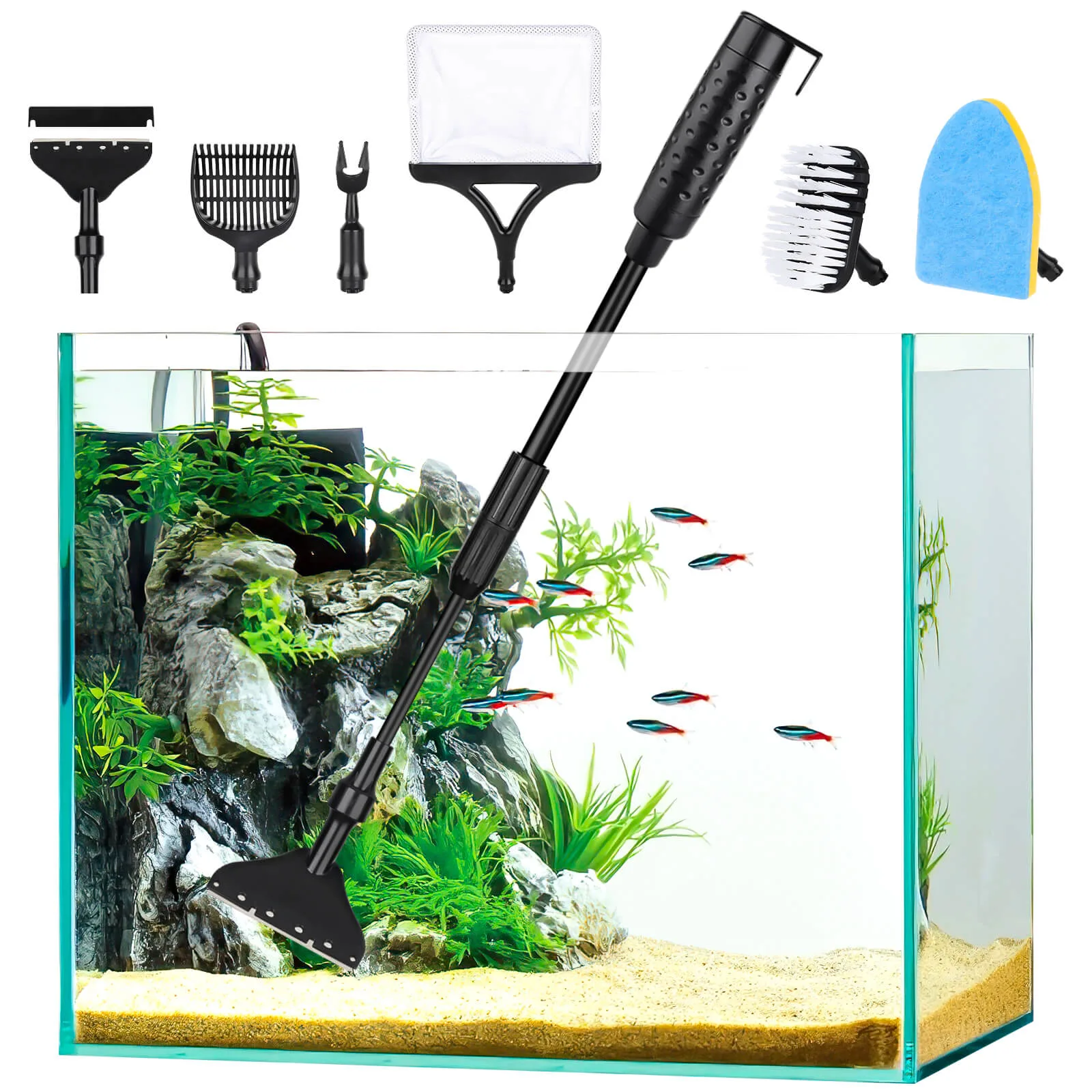
Using the wrong tools risks chemical contamination and bacterial die-off. Dedicate these items exclusively to your tank:
- Gravel vacuum with adjustable flow: Choose one with a wide tube (1-1.5 inches) to lift debris without sucking up small fish or shrimp. Glass tanks can handle stronger suction; acrylic requires gentler models.
- Two 5-gallon buckets labeled “AQUARIUM ONLY”: One for dechlorinated new water, one for old tank water (used later for filter rinsing).
- Razor blade scraper (glass tanks) or plastic credit card (acrylic): Never use abrasive pads—they scratch surfaces, creating algae footholds.
- Seachem Prime or API Tap Water Conditioner: Neutralizes chlorine and chloramines instantly.
- New toothbrush: For scrubbing decorations in old tank water (never tap water).
Pro Tip: Store all tools in a dedicated caddy away from household cleaners. Even trace soap residue can suffocate fish by destroying their protective slime coat.
Step-by-Step: The 30-Minute Weekly Cleaning Routine
This sequence preserves bacteria while removing waste. Always follow this order:
Prepare Dechlorinated Water First (Critical Step)
Fill your “new water” bucket with room-temperature tap water (70-78°F). Add dechlorinator before starting cleanup—this ensures water is ready immediately after draining. For every 5 gallons, use:
– 5ml Seachem Prime (treats 50 gallons, but dosing for actual volume is safer)
– OR follow your product’s instructions precisely
Let water sit 15 minutes to reach temperature equilibrium. Skipping this causes thermal shock when refilling.
Vacuum Gravel Without Killing Bacteria Colonies
Start the siphon into your “dirty water” bucket. Insert the tube 0.5 inches into the substrate and wiggle gently. You’ll see debris swirl into the tube while gravel settles back. Key techniques:
– For gravel: Vacuum in slow zigzags, lifting only the top layer.
– For sand: Hover 1 inch above substrate—deep digging clouds water for days.
– Never exceed 50% coverage: Focus on high-waste zones (under filters, near feeding areas). Vacuuming the entire tank destroys bacterial hotspots.
Clean Filter Media in Old Tank Water Only
After draining 20-30% of tank water, unplug the filter. Remove sponges/ceramic rings and swish them only in the bucket of old tank water you just removed. Squeeze media gently until water runs light brown—not clear. This removes physical gunk while retaining 90% of bacteria. Replace mechanical filter pads only when falling apart; never touch biological media monthly.
Why Tap Water Kills Your Filter Media (And What to Do Instead)

Rinsing filter media under the tap is the fastest way to crash your tank. Municipal water contains chloramines—a chlorine-ammonia compound that lingers for weeks and sterilizes surfaces. One minute of tap water exposure can kill 80% of your nitrifying bacteria.
Safe Filter Maintenance Protocol
- When flow slows, remove 1/3 of media (e.g., the mechanical sponge)
- Swish in old tank water from your dirty bucket
- Reinsert immediately—never let media dry out
- Rotate which media you clean weekly (sponges one week, ceramic rings the next)
Never replace carbon or chemical media during water changes—do it 3 days later to avoid parameter swings.
Solving Cloudy Water After Cleaning: Bacterial Bloom Fixes
That milky haze appearing 12-24 hours post-cleaning is a bacterial bloom—usually from over-vacuuming or decaying organic matter. Do not do another water change; it worsens the imbalance. Instead:
The 72-Hour Recovery Plan
- Reduce feeding by 50% for 3 days (less waste = less bloom fuel)
- Add fast-growing plants like hornwort to consume excess nutrients
- Run carbon in filter for 48 hours to clear discoloration (remove after)
- Wait it out: Blooms typically clear in 3-5 days as bacteria stabilize
If water remains cloudy after 7 days, test for nitrates >40 ppm—indicating insufficient weekly water changes.
Deep Cleaning Decorations: What to Remove and What to Leave
Monthly deep cleans target algae-covered decor without disturbing the substrate ecosystem. Never remove all items at once—this strips bacterial surfaces.
Safe Decor Cleaning Process
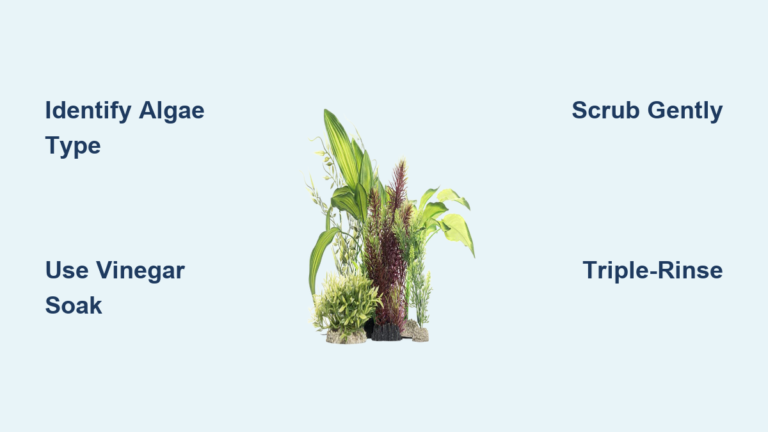
- Remove 1/3 of decorations (rocks, plastic plants) during your 30% water change
- Scrub in a bucket of old tank water using a dedicated toothbrush
- For hard-water stains on exterior glass, use 1:1 vinegar/water solution (never inside the tank)
- Reinsert items immediately—drying kills surface bacteria
Critical: Never boil or bleach decor in established tanks. This sterilizes beneficial microbes and leaches toxins.
Algae Removal: Safe Methods for Glass and Acrylic Tanks
Algae overgrowth signals imbalance—not dirty glass. Green spot algae on glass? That’s a phosphate/nitrate issue, not a cleaning failure.
Glass Tank Algae Removal
- Stubborn patches: Use a single-edge razor blade at 45° angle. Scrape in straight lines downward.
- Green water: Cover tank completely for 72 hours (no light = no algae growth).
- Hair algae: Manually remove strands with tweezers while vacuuming.
Acrylic Tank Algae Removal
- Never use blades—they scratch permanently.
- Use a melamine sponge (Magic Eraser) only on acrylic-safe versions labeled “non-abrasive.”
- For green water, add 2 fast-growing plants like java moss to outcompete algae.
Monthly Deep Clean Checklist: Beyond the Weekly Routine
Perform these tasks on alternating weeks from water changes:
| Task | Frequency | Critical Tip |
|---|---|---|
| Clean filter housing/impeller | Every 4-6 weeks | Use old tank water—never tap water |
| Wipe exterior glass/salt creep | Weekly | Vinegar solution on outside only |
| Thin live plants | Bi-weekly | Remove yellowing leaves at substrate |
| Test nitrates | Weekly | Keep below 20 ppm for sensitive species |
Never deep clean filter media, vacuum substrate, and scrub glass on the same day—this triple-threat overwhelms your tank’s resilience. Space tasks 3-4 days apart.
5 Deadly Cleaning Mistakes That Cause Ammonia Spikes
Mistake #1: Replacing All Filter Media Simultaneously
Fix: Rotate media replacement. Change 1/3 of mechanical media monthly; biological media lasts 1-2 years.
Mistake #2: Using Soaps or Household Cleaners
Fix: If disinfecting nets between tanks, soak in 10% bleach solution for 15 minutes, then rinse under tap water for 10+ minutes. Never use near active tanks.
Mistake #3: Draining More Than 30% Weekly
Fix: Stick to 20-30% changes. Larger changes shock fish and destabilize parameters.
Mistake #4: Cleaning Substrate and Filter Together
Fix: Vacuum gravel one week, clean filter media the next.
Mistake #5: Ignoring Water Temperature
Fix: Always match new water to tank temperature within 2°F. Use a floating thermometer.
The best way to clean aquarium ecosystems prioritizes bacterial survival over cosmetic perfection. By preserving your nitrogen cycle through strategic 20-30% water changes, filter media maintenance in old tank water, and avoiding total deep cleans, you’ll maintain crystal-clear water without risking fish health. Remember: a slightly algae-spotted tank with stable parameters beats a “spotless” tank in crisis. Commit to this routine for just 30 minutes weekly, and you’ll prevent 95% of common aquarium disasters—giving your fish the thriving habitat they deserve.