Best Aquarium Filter Media Setup (2026 Guide)
Your aquarium filter is the unsung hero of a thriving underwater ecosystem, but what really matters isn’t just the filter itself—it’s what you put inside it. An ineffective filter media setup transforms your filtration system into little more than a water circulator, leaving behind toxic waste and cloudy water. The best aquarium filter media setup creates a multi-stage defense system that captures debris, processes harmful compounds, and maintains water clarity. In this guide, you’ll discover exactly how to arrange mechanical, biological, and chemical media for maximum effectiveness in any filter type—whether you’re running a simple goldfish tank or a complex reef system.
When your water turns cloudy or your fish show signs of stress, the problem often starts with inadequate filtration. Most beginners make the critical mistake of cramming their filter with the wrong media in the wrong order, creating bottlenecks that reduce flow and compromise water quality. The truth is that successful aquarium keeping depends on understanding how different media types interact and building a layered system that works with your tank’s specific needs. By the end of this guide, you’ll know precisely which media to use, where to place it, and how to maintain it for a stable, healthy aquarium environment.
Mechanical Media: Trap Debris Before It Becomes a Problem
Mechanical filtration forms your first line of defense against visible waste, but not all mechanical media performs equally. The key to effective mechanical filtration is strategic layering from coarse to fine, preventing premature clogging of your finer media stages.
Why Mechanical Media Order Matters for Long-Term Clarity
Place coarse sponges (10-20 PPI) at your filter’s inlet to catch large debris like uneaten food and plant matter. As water flows through your system, progressively finer media takes over—medium sponges (20-30 PPI) capture smaller particles, while filter floss or fine sponges (30-45 PPI) polish the water to remove particles as small as 5-20 microns. This staged approach prevents your delicate biological media from becoming clogged with debris, maintaining optimal water flow and filtration efficiency.
Critical mechanical media mistakes to avoid:
– Placing fine media before coarse media (causes rapid clogging)
– Using only one type of mechanical media (reduces effectiveness)
– Overpacking mechanical stages (restricts water flow by 30%+)
Filter Socks Versus Sponge Media: Which Works Better?

Filter socks with 100-200 micron ratings excel as pre-filters in sump systems, catching fine particulate before it reaches your main filtration. For canister and HOB filters, sponge media provides superior mechanical filtration with the added benefit of hosting beneficial bacteria. The ideal setup combines both approaches—a 200-micron sock for initial filtration in sumps, followed by 30 PPI sponge as the first stage in your main filter chambers.
Biological Media: Build a Living Filter That Processes Toxins
Your biological media serves as the housing complex for billions of beneficial bacteria—the invisible workforce that converts deadly ammonia into less harmful compounds. Without sufficient high-quality biological media, your tank will struggle with toxic spikes regardless of how clean the water appears.
Ceramic Rings Versus K1 Media: Which Provides Better Bacterial Housing?
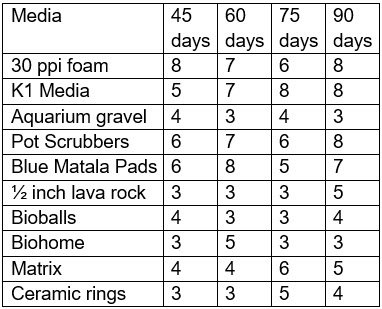
Ceramic rings offer 200-300 m²/L of surface area with pore sizes of 1-2mm, making them ideal for nitrifying bacteria colonization. High-performance alternatives like K1/K2 media provide 800-1000 m²/m³ surface area with 95% porosity, creating superior conditions for bacterial growth. One liter of quality biomedia can process 4-6 grams of ammonia daily—enough to support 1-5 million nitrifying bacteria per square centimeter.
Pro Tip: Place biological media after mechanical stages but before chemical filtration. This ensures water reaches your bacteria colony free of large debris while preserving chemical media effectiveness.
Chemical Media: Targeted Solutions for Specific Water Issues
Chemical filtration solves problems mechanical and biological media can’t address—removing dissolved impurities, medications, and compounds that cause yellowing or algae growth. Strategic use of chemical media makes the difference between adequate water quality and truly pristine conditions.
Carbon Versus Purigen: Which Chemical Media Lasts Longer?

Activated carbon (with 800-1200 mg/g iodine number) effectively removes organic compounds for 30-60 days before requiring replacement. Purigen offers longer-lasting performance—100mL treats 100L of water for 3-4 months—and can be regenerated multiple times. For phosphate control in reef tanks, GFO (Granular Ferric Oxide) removes 3-5 grams of phosphate per liter, with optimal flow rates of 50-100 GPH per liter of media.
When to use chemical media:
– After medicating your tank (carbon removes residual medication)
– When water develops yellow tint (indicates dissolved organics)
– In reef tanks with persistent algae issues (use GFO for phosphate control)
Canister Filter Media Stack: The Perfect Layered Configuration
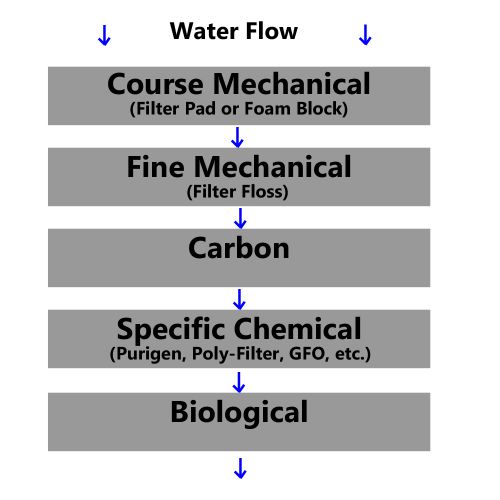
Your canister filter’s internal arrangement determines whether it functions as a simple water mover or a comprehensive purification system. The optimal media stack follows water flow direction from coarse to fine while prioritizing biological filtration.
Step-by-Step Canister Filter Media Installation
- Bottom tray (inlet): Place coarse sponge (10-20 PPI) to catch large debris
- Middle trays: Fill 60-70% with biological media (ceramic rings, K1 media, or Siporax)
- Upper trays: Add medium sponge (20-30 PPI) followed by fine filter floss
- Final stage (outlet): Insert chemical media (carbon or Purigen) in a media bag
This configuration ensures water passes through mechanical stages first, then biological media, with chemical filtration as the final step before water returns to your tank.
Sump Filter Setup: Maximizing Space for Optimal Filtration
Sumps provide unparalleled flexibility for creating specialized filtration zones. The strategic placement of media chambers transforms your sump from simple overflow into a comprehensive water treatment facility.
Marine Versus Freshwater Sump Media Arrangement
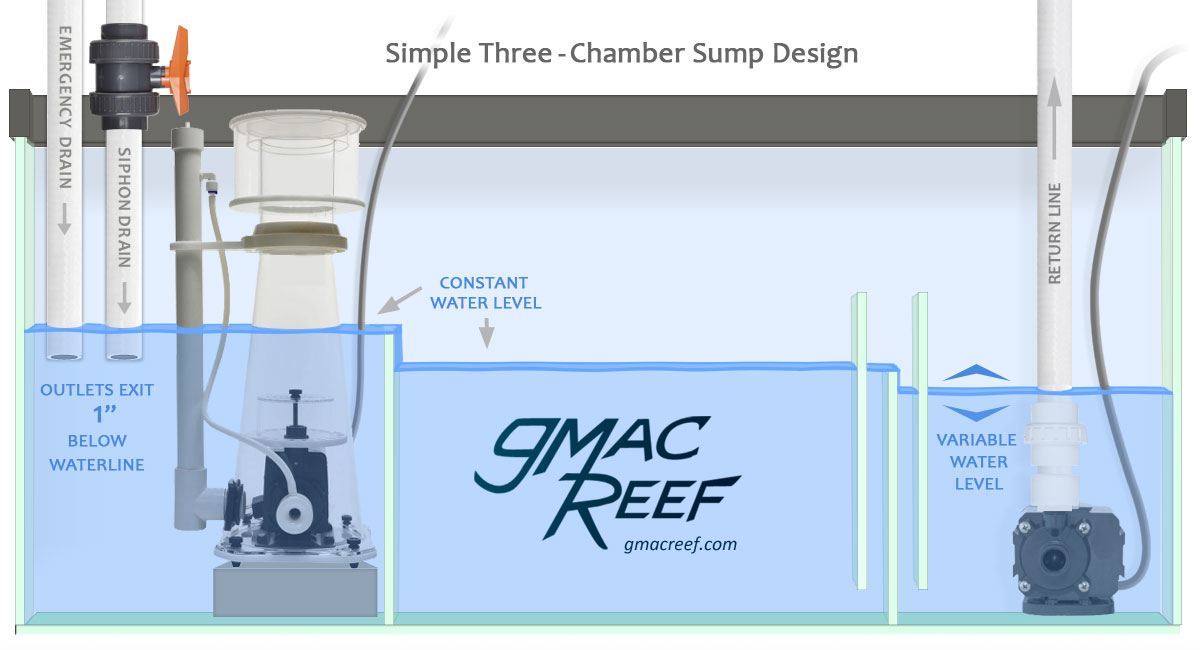
For marine systems:
1. First chamber: 100-200 micron filter sock
2. Second chamber: Protein skimmer
3. Third chamber: Refugium with macroalgae
4. Final chamber: Return pump with chemical media reactor
Freshwater sumps simplify this arrangement:
1. First chamber: 200-micron sock
2. Second chamber: Biological media (ceramic rings or bio-balls)
3. Third chamber: Chemical media in reactor
Media Maintenance: Preserve Your Filter’s Effectiveness
Improper maintenance ranks as the #1 cause of filter failures—even with the best aquarium filter media setup. Cleaning protocols vary dramatically by media type, and mistakes here can crash your entire tank’s biological balance.
Biological Media Cleaning Protocol That Won’t Kill Your Bacteria
Always rinse biological media in a bucket of old tank water—not tap water—to preserve beneficial bacteria. Gently swish ceramic rings or K1 media until loose debris releases, but never scrub or replace more than 30% of your biomedia at once. Replace mechanical media like sponges gradually—swap one piece every 2-3 weeks—to maintain bacterial colonies while refreshing filtration capacity.
Maintenance schedule:
– Coarse sponges: Rinse every 2-4 weeks in tank water
– Filter floss: Replace every 2-4 weeks
– Carbon: Replace every 30-60 days
– GFO: Replace every 1-3 months
Tank-Specific Media Setups: Match Filtration to Your Ecosystem
The “best” aquarium filter media setup varies dramatically depending on your tank type. A goldfish tank’s heavy bioload demands different filtration than a planted freshwater community or a delicate reef system.
Heavy Bioload Tanks: Goldfish and Cichlid Filtration Strategies
Overstocked tanks require 30-40% more biological media than standard calculations. Use a triple mechanical stage (30/30/45 PPI sponge) followed by ample K1 media and ceramic rings. For particularly messy tanks, add Purigen to capture excess organic waste before it breaks down into ammonia.
Reef Tank Media Configuration for Crystal Clear Water
Reef systems need specialized media arrangements:
1. 200-micron sock for initial mechanical filtration
2. Protein skimmer chamber
3. Media reactors with 500g GFO per 500L system
4. 500-750g carbon per 100L for chemical polishing
Flow rates must exceed 10-15x tank volume per hour to support corals while maintaining filtration efficiency.
Troubleshooting Common Filter Media Problems
Even with the best aquarium filter media setup, problems can arise. Understanding how to diagnose and fix common issues prevents minor setbacks from becoming tank disasters.
Cloudy Water: Is It Mechanical Failure or Bacterial Bloom?
Persistent cloudy water usually indicates mechanical filtration failure—replace clogged filter floss or clean filter socks immediately. In new tanks, cloudiness often signals a bacterial bloom during cycling. Avoid media replacement during cycling; instead, dose 2ppm ammonia and test daily until readings show 0 ammonia and 0 nitrite.
Algae Explosion: How Media Configuration Affects Growth
Algae outbreaks often trace back to phosphate accumulation. Add GFO media to your reactor or sump chamber, replacing it every 1-3 months. Reduce carbon usage if algae persists, as carbon can sometimes remove trace elements that compete with algae for nutrients.
Your best aquarium filter media setup isn’t about using the most expensive components—it’s about creating a balanced, multi-stage system that addresses mechanical, biological, and chemical filtration in the proper sequence. By following the strategic media arrangements outlined here, you’ll transform your filter from a simple water circulator into a precision purification system. Remember to match your media configuration to your specific tank type, maintain proper cleaning protocols, and replace chemical media on schedule. With the right filter media setup, you’ll enjoy crystal clear water, stable parameters, and thriving aquatic life—without constant water changes or chemical interventions. Start optimizing your filter today, and watch your aquarium ecosystem flourish with minimal effort.