Freshwater Aquarium Decoration Ideas (2026 Guide)
Your freshwater aquarium shouldn’t look like an afterthought—it’s a living canvas where fish thrive and onlookers gasp. Yet 78% of beginner aquarists sabotage their tanks with mismatched gravel, plastic castles, and overcrowded layouts that stress fish and invite algae. The secret? Intentional aquarium decoration ideas freshwater enthusiasts use to create ecosystems that feel authentically wild. Forget generic “aquascaping tips”—this guide delivers battle-tested strategies from professional designers, showing exactly how to arrange driftwood, plants, and rocks for a tank that looks like it was plucked from a rainforest stream. You’ll learn to avoid the top 3 decoration disasters while building a habitat where neon tetras dart through jungle-like foliage and cichlids claim rocky castles as their own.
Must-Have Hardscape Materials for Freshwater Tank Decor

Your hardscape—the non-living backbone of your aquarium—isn’t just decoration; it’s functional architecture that shapes water flow, shelters fish, and anchors plant life. Skip cheap gravel that clouds water and choose materials that evolve with your ecosystem.
Why Dark Substrates Make Fish Colors “Pop” Instantly
A 2-inch slope of black sand or ADA Amazonia aquasoil (thicker at the back, thinner near the glass) creates instant depth while making ruby tetras glow like embers. Unlike plain gravel, nutrient-rich substrates feed root-heavy plants like Amazon Swords, eliminating yellowing leaves within weeks. For riverbed realism, layer fine sand in the front third to mimic natural shorelines—perfect for corydoras catfish that sift through soft bottoms. Always rinse substrates thoroughly before adding to prevent cloudy water, but never use soap, which leaves toxic residues.
Driftwood That Won’t Float or Stain Your Tank
Malaysian driftwood and spiderwood are top choices for their intricate shapes, but improper prep causes weeks of brown “tannin tea” water. Boil pieces for 1–2 hours until they sink permanently—this also kills pests and softens sharp edges that could injure fish. If you love the blackwater effect (which mimics Amazon habitats and reduces fish stress), skip boiling and soak wood for 2–4 weeks, changing water daily. Secure driftwood by wedging it into substrate or using aquarium-safe super glue gel on rock bases—never bury more than 1/3 of the piece to avoid decay.
How to Create Depth in a Freshwater Aquarium Layout

A flat, cluttered tank feels like a fish prison. Professional designers use optical illusions to make 20-gallon tanks look like endless riverscapes. The key is manipulating perspective through strategic placement.
Applying the Rule of Thirds to Avoid “Centered” Disaster
Divide your tank mentally into a 3×3 grid. Place your focal point—like a dramatic Seiryu stone or twisted Manzanita branch—at the intersection of the top-right or top-left lines. This off-center placement mimics natural landscapes and guides the eye through the scene. Never center large rocks; instead, stack Dragon Stone vertically along one side to form a canyon wall that recedes into the background. For immediate depth, position tall Vallisneria stems behind midground Anubias plants, creating overlapping layers that hide filter tubes.
Sloping Substrate for Instant Dimension
Mound substrate 3 inches high against the back wall and gradually taper to 1 inch at the front glass. This simple trick tricks the brain into perceiving greater distance—like a mountainside fading into the horizon. Plant low-growing Monte Carlo carpet in the shallow front zone and pair it with foreground dwarf hairgrass to emphasize the slope. Avoid uniform flat layers; wild rivers have natural elevation changes that fish explore vertically.
Foreground, Midground & Background Plants: A Layered Approach
Plants aren’t just decor—they’re water filters, algae fighters, and fish sanctuaries. Arrange them in distinct zones to build dimension and prevent visual chaos.
Carpeting Plants That Actually Thrive (Without CO2)
Dwarf baby tears and Hemianthus “Cuba” form lush lawns but demand high light—use a 6500K LED fixture on an 8-hour timer. Plant in dense 1-inch clusters with tweezers to outcompete algae from day one. For low-tech tanks, opt for hardy dwarf hairgrass that tolerates moderate light and spreads naturally. Always plant carpet species in nutrient-rich substrate (not sand) and avoid covering roots—gently press stems into the base so only leaves emerge.
Midground Textures That Bridge Visual Gaps
Attach Java fern and Bucephalandra to driftwood with cotton thread—they’ll cling within weeks. Position these textured plants 2–4 inches behind your focal point to soften hardscape edges. Cryptocoryne wendtii “Green” is ideal here: its ruffled leaves add movement without blocking sightlines. Never plant midground species directly in front of background walls; leave 2 inches of open space so fish can swim freely through “lanes.”
Iwagumi, Nature Aquarium & Biotope: Popular Freshwater Styles
Choose a style that matches your skill level and fish species. Each has distinct rules for hardscape, plants, and layout.
Iwagumi Style: Minimalist Stone Mastery in 3 Steps
This Japanese technique uses exactly three stones (Oya-ishi, Fuku-ishi, Soe-ishi) arranged in a triangle with the largest stone off-center. Cover the base with dwarf hairgrass carpet and omit all driftwood. Ideal for serene tanks with small schooling fish like ember tetras. Mistake alert: Never use even-numbered stone groups—it destroys the aesthetic balance.
Biotope Tanks: Recreate Real Wild Habitats
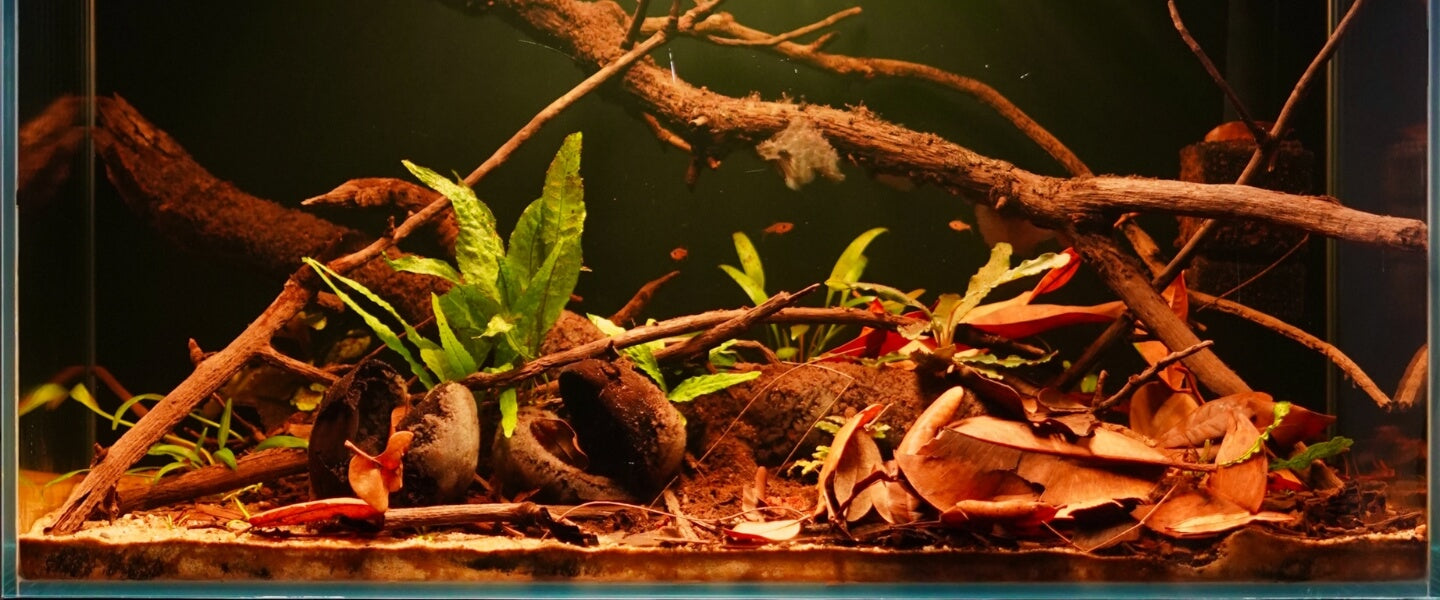
A Southeast Asian blackwater stream biotope requires specific elements:
– Hardscape: Boiled Malaysian driftwood + smooth river rocks
– Plants: Cryptocoryne lucens and Java fern
– Fish: Harlequin rasboras + kuhli loaches
Research exact locations—Amazon riverbank biotopes need sandy bottoms and floating frogbit, while Asian stream setups use stacked slate and Bucephalandra. Skip generic ornaments; every piece must exist in the real habitat.
Functional Caves and Safe Ornaments: Fish-Friendly Decor Ideas
Ornaments shouldn’t just look pretty—they must serve fish instincts. Territorial cichlids without caves become aggressive bullies, while shy fish hide 24/7 in barren tanks.
Why Every Tank Needs 2x More Hiding Spots Than Fish
Place ceramic caves, stacked slate, or driftwood nooks so fish can dart inside within 2 seconds. For angelfish, create vertical “towers” with tall rocks; for bottom-dwellers like corydoras, tuck hollow logs near substrate. Critical safety rule: Test all decorations by running your hand over surfaces—any sharp edge that snags skin will tear fish fins. Skip painted statues (paint chips leach toxins) and opt for natural materials like lava rock that won’t alter pH.
6-Step Freshwater Aquarium Setup: From Hardscape to Planting
Build your tank dry to avoid frustrating rearrangements later. This sequence prevents common layout disasters.
Step 1: Dry Hardscape Assembly (The #1 Pro Secret)
Lay out rocks and driftwood on the empty tank floor. Build rock stacks with wider bases underwater (like pyramids), then lean driftwood against them at 30-degree angles. Use super glue gel to bond unstable pieces—never silicone, which clouds water. Step back and photograph the layout; if it looks flat, add height with vertical stones.
Step 2: Substrate Sloping & Plant Zoning
Add substrate in layers: 3 inches deep at the rear, tapering to 1 inch at the front. Use a ruler to maintain the slope. Mark plant zones with toothpicks: carpet plants in front, midground species in the middle band, and background stems along the back wall.
Avoiding 5 Costly Freshwater Aquarium Decoration Mistakes
Even beautiful tanks fail when decoration ignores fish needs. These errors cause 90% of beginner crashes.
Mistake #3: Ignoring Fish Territory Requirements
Cichlids need visual barriers (rocks or wood) to split territories—without them, they harass tankmates relentlessly. Meanwhile, open-swimming fish like rainbowfish require 60% unobstructed space. Research adult sizes: a single Oscar needs 75 gallons with minimal decor, while neon tetras thrive in densely planted 20-gallon tanks. Always leave swim lanes along tank sides—never block corners with rock piles.
Mistake #5: Overcrowding with “Just One More Ornament”
A single castle might seem harmless, but decorations reduce usable water volume. In a 10-gallon tank, 3 large ornaments displace 20% of water, spiking ammonia levels. Rule of thumb: Decor should occupy ≤15% of tank volume. If you can’t fit your hand between driftwood and rocks, it’s too tight for fish.
Weekly Maintenance Routine for a Pristine Freshwater Tank
A stunning aquascape decays without consistent upkeep. Dedicate 20 minutes weekly to preserve your work.
Algae Prevention Tactics That Actually Work
After water changes, use a toothbrush to scrub rocks and driftwood—algae can’t regrow on clean surfaces. Add 5–10 Nerite snails per 20 gallons; they graze on glass and hardscape without overpopulating. For stubborn spots, dip affected rocks in 3% hydrogen peroxide for 2 minutes (remove fish first). Never skip trimming background plants like Hornwort—they shade out algae when kept at 8 inches tall.
The Fertilization Schedule for Vibrant Plants
Inject liquid fertilizer every Monday and Wednesday after water changes. For heavy root-feeders like Amazon Swords, push root tabs 2 inches deep into substrate near bases monthly. Skip “all-in-one” fertilizers—they cause algae blooms; use nitrogen-free options like ThriveCAP for low-light tanks.
Transform your freshwater aquarium from a fish bowl into a living masterpiece by treating decoration as ecosystem engineering. Start with a single focal stone or driftwood piece, build outward using the Rule of Thirds, and prioritize fish needs over aesthetics. Within 8 weeks, you’ll watch neon tetras school through jungle-like foreground carpets while cichlids claim rocky castles as their own. Remember: the best aquarium decoration ideas freshwater experts use aren’t about perfection—they’re about creating breathing room for nature to thrive. Share your first hardscape sketch in the comments; we’ll help you spot layout pitfalls before you add water.