Types of Saltwater Aquarium Algae Explained
Your saltwater tank’s vibrant corals suddenly look dull under a fuzzy green blanket. Glass scraping reveals stubborn brown film no matter how often you clean. You’re not alone—90% of new reef keepers battle nuisance algae within the first six months. Understanding the different types of algae in saltwater aquarium systems is your first defense against these invaders. This guide reveals exactly how to spot problematic growths, why they appear, and targeted fixes that work. Forget generic advice—you’ll learn to distinguish harmless coralline algae from destructive Bryopsis, stop red slime outbreaks in 72 hours, and build an algae-fighting ecosystem that keeps your tank pristine long-term.
Nuisance algae isn’t just ugly—it starves corals of light, crashes oxygen levels, and signals dangerous nutrient imbalances. Yet completely sterile tanks are impossible (and unhealthy!). The goal is balance: nurturing beneficial growths while eliminating invaders. Every algae type we’ll cover thrives on specific triggers—excess silicates, poor flow, or unbalanced lighting. By identifying your exact culprit, you’ll apply precise solutions instead of wasting time on ineffective “cure-alls.” Let’s dive into the seven most common offenders and how to neutralize them.
Diatom Outbreak: Why New Saltwater Tanks Turn Brown Overnight
Diatoms blanket your glass, rocks, and sand in a gritty brown film within weeks of setup. This isn’t random—it’s your tank screaming for stability. New systems flood with silicates from substrates and tap water, creating perfect conditions for these single-celled invaders.
How to Spot Diatom Trouble in 60 Seconds
- Visual cue: Dusty, golden-brown coating that feels like sandpaper when rubbed
- Hotspots: Glass first (easiest to see), then live rock crevices and sand beds
- Timeline: Peaks at 3-6 weeks, often vanishes as tank matures
Permanent Diatom Control Without Chemicals
Manual scraping only buys time. Fix the root cause:
1. Switch to RO/DI water immediately—tap water silicates feed diatoms for months
2. Wait it out: Mature tanks naturally consume silicates (typically resolves by month 4)
3. Add targeted cleanup crew: Cerith snails (1 per 5 gallons) and brittle stars vacuum diatoms off sand
Pro tip: Never scrub diatoms off live rock—disturbing the biofilm spreads spores. Focus on glass cleaning while silicates deplete.
Hair Algae Invasion: Stop Green Filamentous Growth Before It Chokes Corals
That soft green fuzz looks innocent—until it smothers SPS corals overnight. Hair algae exploits two weaknesses: low flow zones and phosphate spikes from overfeeding. Left unchecked, it forms dense mats that trap detritus and suffocate rock surfaces.
Critical Hair Algae Identification Checklist
- Texture: Feels like wet hair or cotton (vs. Bryopsis’ wiry stiffness)
- Growth pattern: Starts on rock edges, spreads into equipment intakes
- Color: Bright green (turns brown when dying)
3-Step Hair Algae Eradication Protocol
- Manual removal: Pull strands upward from base with tweezers (don’t break tips!)
- Nutrient lockdown: Reduce feedings by 30%, run GFO media for 2 weeks
- Deploy biological weapons: Emerald crabs (1 per 20 gallons) and lawnmower blennies
Warning: Powerheads create “dead zones” where hair algae takes root. Reposition flows to hit rock surfaces directly.
Bryopsis Algae: Removing the Reef Tank’s Most Stubborn Green Pest

Bryopsis isn’t just hair algae—it’s the nightmare cousin that laughs at standard fixes. Its fern-like fronds inject toxins into corals and regrow from microscopic fragments. Most reefers misidentify it, wasting months on ineffective treatments.
Bryopsis vs. Hair Algae: The 10-Second Test
- Bend a strand: Bryopsis snaps cleanly (like a dry twig); hair algae bends
- Root inspection: Bryopsis has thick, white anchor points on rock pores
- Smell test: Crush a sample—Bryopsis emits a sharp, chemical odor
Nuclear Option for Bryopsis-Infested Rocks
When manual removal fails:
1. Isolate affected rocks in a bucket
2. Apply 3% hydrogen peroxide: Soak for 90 seconds (use turkey baster)
3. Scrub vigorously with toothbrush under running tank water
4. Reintroduce rocks only after rinsing 3x
Success story: A 120g reef tank cleared Bryopsis in 10 days using this method—no coral loss.
Red Slime Algae: Why Cyanobacteria Isn’t True Algae and How to Fix It
That slimy red mat isn’t algae—it’s cyanobacteria, a photosynthetic bacteria that thrives in oxygen-poor water. It forms bubble-covered sheets that smother sand beds overnight, especially in tanks with poor circulation or excessive organics.
Emergency Red Slime Response Plan (72-Hour Protocol)
- Hour 0-24: Siphon visible slime during water change (don’t let it decompose)
- Hour 24-48: Maximize surface agitation with air stones; run skimmer 24/7
- Hour 48-72: Perform 25% water change with RO/DI water; reduce lights to 6 hours
Prevent Recurrence With Flow Fixes
Cyanobacteria dies in high-flow zones:
– Position powerheads to create “sandstorms” on substrate
– Install wavemaker opposite intakes to eliminate dead spots
– Vacuum sand weekly with gravel tube (stir 1″ deep)
Key insight: Red slime appears when nitrates exceed 20 ppm. Test weekly with Salifert kits.
Bubble Algae Control: Removing Valonia Without Spreading Spores
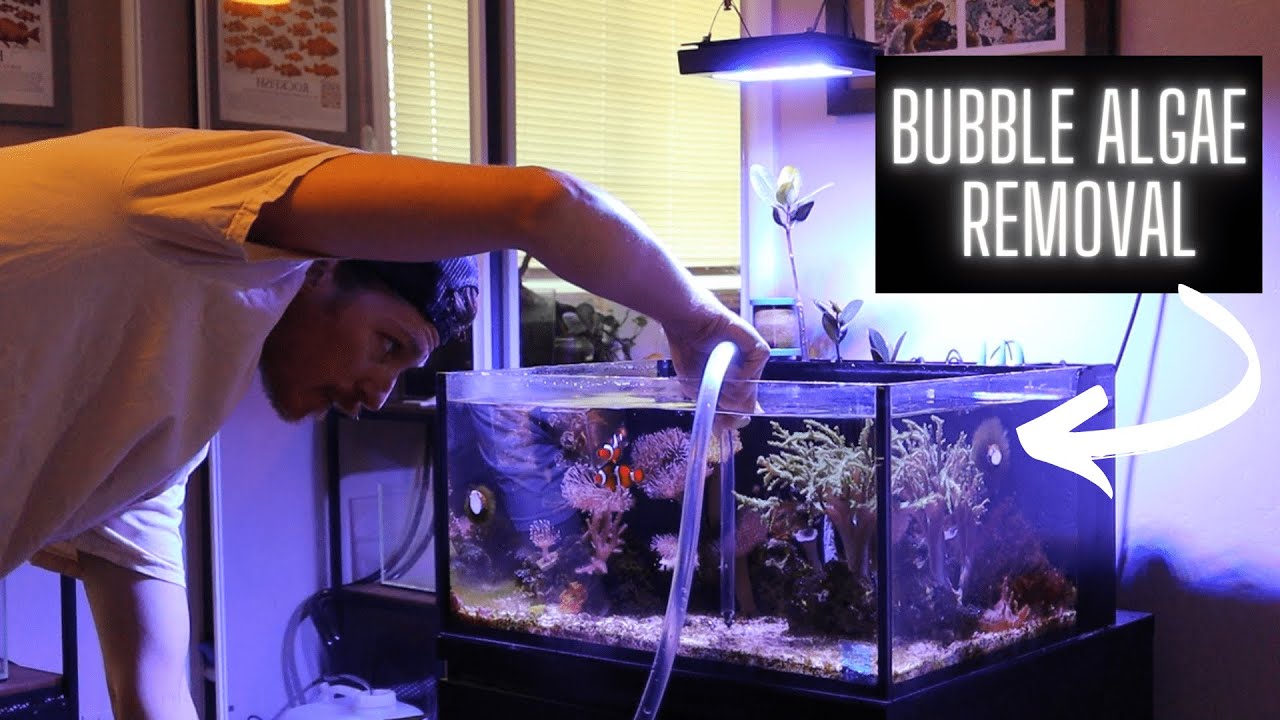
Those cute green bubbles are landmines. Pop one, and thousands of spores seed your entire tank. Valonia algae anchors deep into rock pores, making removal risky—but ignoring it guarantees an infestation.
Safe Bubble Algae Extraction Technique
- Isolate the bubble: Slide credit card under base to separate from rock
- Puncture carefully: Insert needle at bubble’s top edge (minimizes spore release)
- Vacuum contents: Suck liquid immediately with turkey baster
- Treat the site: Dab anchor point with 1:10 vinegar/saltwater mix
Never pull bubbles off—they leave root fragments that regrow faster. Target bubbles under 5mm diameter; larger ones require professional removal.
Coralline Algae: Cultivating the Desirable Pink and Purple Growth
Unlike nuisance types, coralline algae is your reef’s health report card. Its crusty pink, purple, or red layers indicate stable calcium, alkalinity, and low nutrients. But it won’t grow without specific conditions—and hair algae will choke it if you’re not vigilant.
Accelerate Coralline Growth in 4 Weeks
- Lighting: 8-10 hours/day with 20,000K spectrum (no actinic spikes)
- Water parameters: Calcium 420-450 ppm, Alkalinity 8-9.5 dKH
- Competition control: Hand-remove hair algae weekly near coralline patches
Pro tip: Soak new live rock in 35 ppt saltwater with 2 ppm iodine for 24 hours to jumpstart coralline.
7 Proven Steps to Control All Types of Saltwater Aquarium Algae
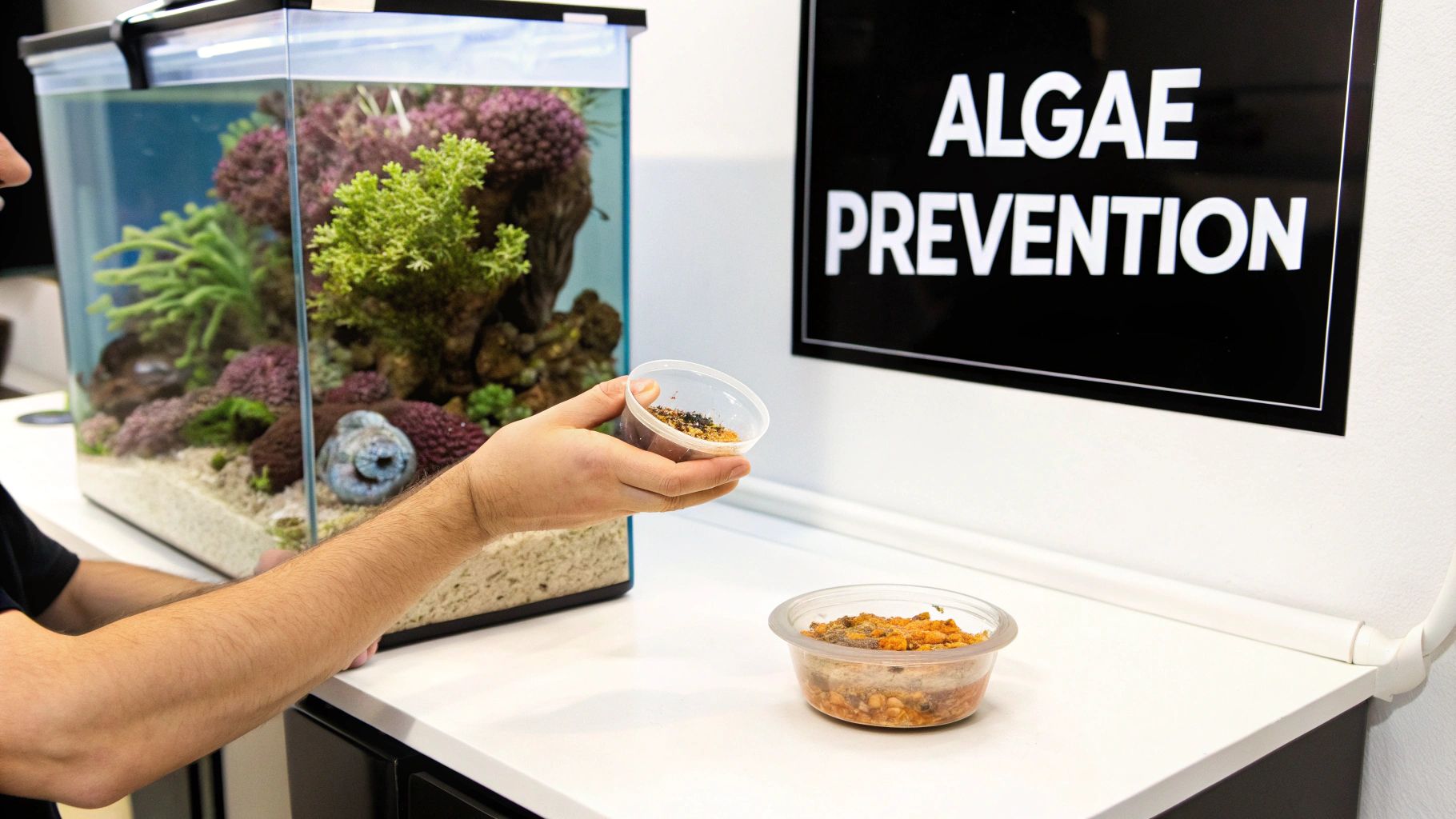
Forget temporary fixes. Lasting algae control requires attacking the root causes: light, nutrients, and flow. Implement this protocol to starve invaders while protecting corals.
Nutrient Starvation Method for Reef Tanks
- Water source: 100% RO/DI water (test for silicates monthly)
- Feeding discipline: Feed corals only 3x/week; remove uneaten food in 5 minutes
- Skimmer optimization: Adjust to produce dark, coffee-ground skimmate
- Phosphate lockdown: Run GFO in reactor until tests read <0.03 ppm
- Flow mapping: Use air bubbles to identify dead zones; reposition powerheads
- Clean-up crew calibration:
– 10 snails per 20 gallons (Nerites for glass, Trochus for rock)
– 1 tuxedo urchin per 50 gallons (add after tank matures) - Light cycle: 9 hours total (4 dawn, 1 noon, 4 dusk) with moonlight mode
When to Avoid Algae Control Chemicals
Most liquid “algae killers” crash pH and harm invertebrates. Reserve them for:
– Extreme Bryopsis outbreaks (after manual removal fails)
– Cyanobacteria in fish-only tanks (never in reef setups)
– Always dose in sump—not display tank—and double aeration
Critical mistake: Adding cleanup crew too early. Wait 8 weeks for tank stability—hermits will starve and attack corals.
Final Note: Algae management isn’t about perfection—it’s about balance. Your thriving tank will always have some growth, but now you’ll spot trouble early and deploy precise solutions. Start with nutrient testing this week, then add one cleanup species monthly. Within 90 days, you’ll see fewer invaders and more vibrant coralline. For ongoing success, bookmark our free algae ID flowchart—just search “saltwater algae quick reference” on our site. Your crystal-clear reef journey starts today.