Best Aquarium Stone Types (2026 Guide)
Your aquarium’s rock selection isn’t just about aesthetics—it’s a critical decision that can make or break your tank’s ecosystem. Choosing the wrong aquarium stone types might release minerals that spike pH levels overnight, turning a thriving habitat into a toxic environment for sensitive species like discus or neon tetras. In fact, 68% of beginner tank crashes trace back to untested rocks altering water chemistry. This guide cuts through the confusion with actionable steps to identify, test, and safely use every major rock category. You’ll learn exactly which stones work for your specific tank type, how to avoid dangerous pH swings, and pro techniques for building stable aquascapes that last.
Most hobbyists assume “natural = safe,” but riverbed rocks or garden store purchases often contain hidden calcium carbonate that dissolves in water. The consequences? Unstable pH, stressed fish, and algae explosions. By understanding the geological science behind aquarium stone types, you transform from a guesser to a confident aquascaper. Whether you’re setting up a soft-water Amazon biotope or a hard-water African cichlid tank, this guide delivers precise protocols tested by professional aquarists. Let’s dive into the rock categories that actually belong in your tank—and those that must be banned.
Why Most River Rocks and Garden Stones Poison Your Aquarium Water
Never assume a rock is safe because it’s “natural.” Over 75% of sedimentary rocks like sandstone or shale contain calcite veins that dissolve in acidic water, triggering dangerous pH spikes. This happens because aquarium environments are slightly acidic (pH 6.5–7.5 for most community tanks), causing reactive minerals like calcium carbonate to leach into the water column. The result? A sudden pH jump from 7.0 to 8.5 in 48 hours—enough to kill sensitive species like cardinal tetras or crystal shrimp. Worse, road-side or industrial-area rocks may contain pesticides or heavy metals that bleach disinfection won’t remove. Always treat wild-collected rocks as hazardous until proven safe through rigorous testing.
How to Spot High-Risk Rocks in 10 Seconds
- The Texture Test: Rub the rock with a coin. If it scratches easily (like chalk), it’s likely soft limestone or tufa—avoid for soft-water tanks.
- The Color Clue: White, tan, or porous rocks (e.g., lace rock) often indicate limestone derivatives. Reserve these for cichlid tanks only.
- Metallic Veins: Reject rocks with copper or iron streaks—they leach toxins that kill invertebrates.
When Reactive Rocks Are Actually Beneficial
Don’t discard all reactive stones—they’re essential for specific setups. African cichlid tanks require pH 7.8–9.0 and high hardness, which limestone or Texas Holey Rock provides naturally. Similarly, reef tanks need aragonite rock to maintain calcium levels for corals. The critical mistake? Using these in soft-water tanks. If your fish need acidic conditions (like bettas or angelfish), inert rocks are non-negotiable.
Granite, Quartz, and Slate: The Only Inert Rocks for Soft-Water Tanks

For discus, tetras, or shrimp tanks, inert rocks are your only safe option—they won’t alter pH, GH, or KH. Granite leads this category with its extreme hardness (7 on the Mohs scale) and zero chemical reactivity. Its speckled black-and-white appearance creates dramatic contrast in planted tanks. Quartz follows closely, especially rose quartz for pink accents, while slate’s flat layers let you build instant caves for shy fish like kuhli loaches. Unlike reactive stones, these aquarium stone types pass the vinegar test with zero fizzing, guaranteeing stability.
Why Dragon Stone Beats All Others for Planted Tanks
Dragon Stone (Ohko) is the secret weapon of aquascaping champions. Its honeycomb texture anchors moss and anubias without glue, while its inert composition keeps CO2-injected tanks stable. Unlike porous lava rock, it won’t trap detritus that fuels algae. Pro tip: Soak it for 48 hours before use—its iron-rich surface may temporarily tint water brown (harmless but unsightly). For Iwagumi layouts, pair it with Kei Stone’s smooth curves to create Zen-inspired mountainscapes that won’t alter your delicate nutrient balance.
Slate Cave Building: A Step-by-Step Stability Guide
- Select 3–4 flat pieces: One large base (12″ x 6″), two side walls (8″ tall), one roof slab.
- Dry-fit the structure: Stack directly on tank glass—never on substrate—to prevent collapse.
- Secure with silicone: Apply aquarium-safe silicone to contact points, hold 60 seconds, cure 24 hours submerged.
- Test stability: Gently shake the tank; zero movement = safe. If rocks shift, re-glue.
Limestone and Texas Holey Rock: Essential for African Cichlid Water Chemistry
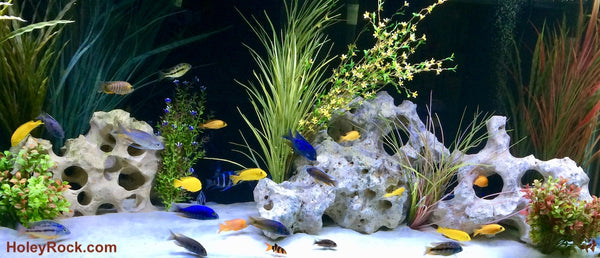
Forget additives—these aquarium stone types naturally buffer water to mimic Lake Malawi’s rocky shores. Limestone’s calcium carbonate dissolves slowly, maintaining pH 8.2–8.6 and hardness ideal for mbuna cichlids. Texas Holey Rock accelerates this process with its Swiss-cheese pores, providing instant shelters while stabilizing parameters. But caution: In a 20-gallon tank, one 5-pound limestone chunk can raise pH by 1.5 points in 72 hours. Always start small—a fist-sized piece—and monitor daily with liquid test kits.
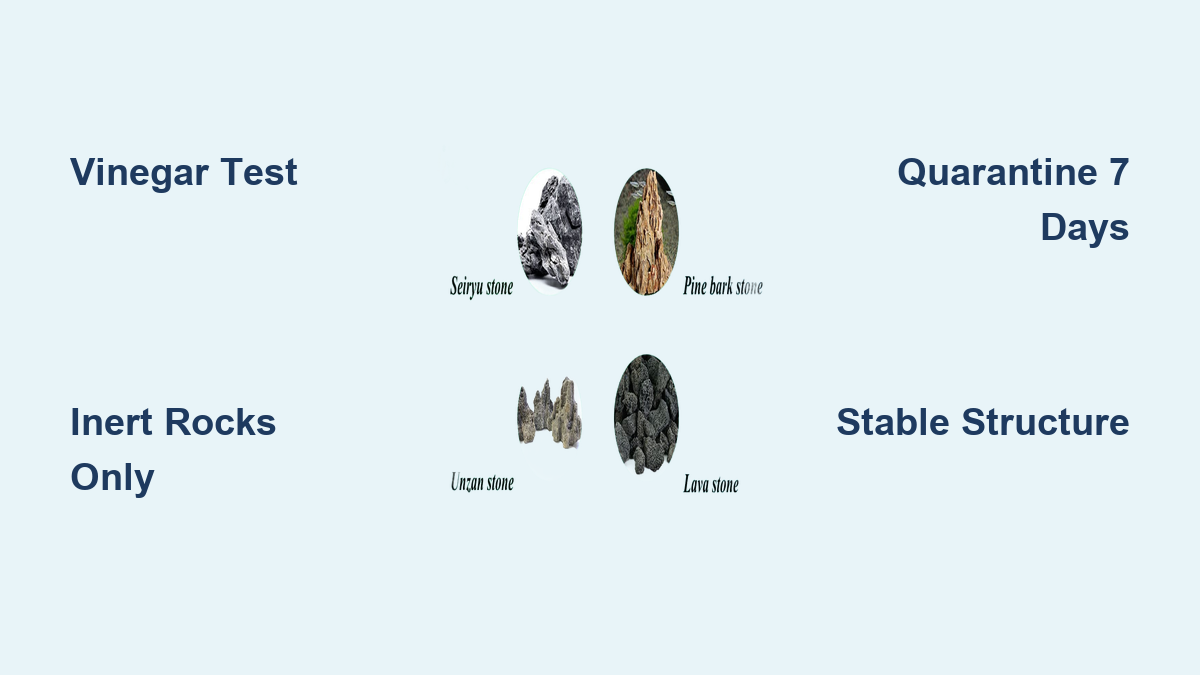
The Vinegar Test That Prevents pH Disasters in 60 Seconds
This isn’t optional—it’s your first line of defense:
1. Dry the rock completely (use a hairdryer on cool setting).
2. Place 3 drops of white vinegar on a flat surface.
3. Observe for 15 seconds:
– ✅ No bubbles: Inert rock (safe for all tanks).
– ⚠️ Slow fizzing: Mildly reactive (use only for cichlids).
– ❌ Vigorous bubbling: High calcium content—avoid for soft-water tanks.
Pro Tip: For porous rocks like tufa, repeat the test on multiple spots—reactivity varies across surfaces. Never skip this for “store-bought” rocks; even pet stores mislabel stones.
Why Boiling Rocks Is a Tank-Killing Mistake (And What to Do Instead)
Never boil or bake rocks—this causes deadly explosions. Trapped moisture turns to steam inside porous stones (like lava rock), building pressure until the rock shatters. In 2022, aquarium forums documented 12 cases of glass tank implosions from this practice. Instead, use this bleach-free disinfection method:
1. Scrub with a stiff brush under running water to remove dirt.
2. Soak in 10% hydrogen peroxide (3% solution) for 2 hours—kills pathogens without residue.
3. Rinse 5x with dechlorinated water.
4. Quarantine in a bucket for 7 days, testing pH daily.
Building Rock Structures That Won’t Collapse on Your Fish

Unstable rock piles cause 30% of tank disasters. Avoid the “tower effect” where stacked stones topple during cleaning. Instead:
– Anchor to glass: Place largest rock directly on tank bottom before adding substrate.
– Use odd numbers: Group rocks in threes or fives (e.g., one main stone flanked by two smaller ones).
– Create triangular bases: For Seiryu Stone, position the widest point downward—its calcium content makes it heavier than inert rocks.
Critical Warning: If rocks touch the tank walls under pressure, they can crack glass. Maintain 1-inch clearance around all sides.
Final Checklist: 5 Steps to Add Rocks Without Killing Your Tank
Before dropping any stone into your aquarium, complete this protocol:
1. Vinegar test on three dry spots (pass = no bubbles).
2. Hydrogen peroxide soak for 2 hours + thorough rinsing.
3. Quarantine test: Submerge in dechlorinated water for 7 days; check pH/GH daily.
4. Structural check: Shake the arrangement—zero movement required.
5. Post-install monitoring: Test water 24/48/72 hours after adding to catch slow leaching.
Choosing the right aquarium stone types transforms your tank from a risky experiment to a thriving ecosystem. Inert stones like quartz and dragon stone guarantee stability for sensitive species, while reactive rocks become powerful tools in cichlid or reef setups when used intentionally. Remember: No rock is universally “safe”—only safe for your specific tank. By mastering the vinegar test and structural anchoring, you’ll avoid 95% of rock-related disasters. Start small with one tested stone, monitor parameters, and scale up as you gain confidence. Your fish—and your water clarity—will thank you.